
Quick answer
What Is Peripheral Artery Aneurysm?
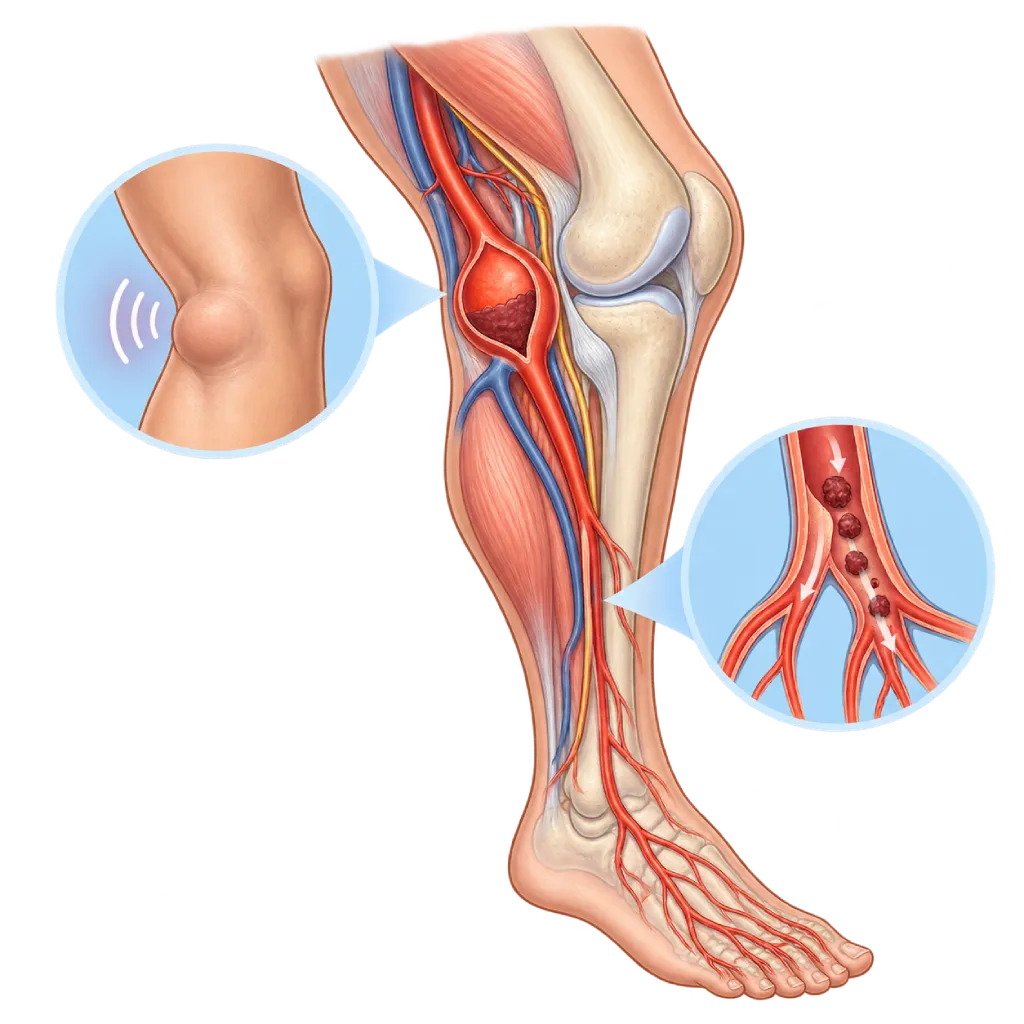
A peripheral artery aneurysm is a localized widening of an artery outside the aorta and brain, usually behind the knee or in the groin. Its main danger is a blood clot that can suddenly block blood flow to the leg.
SourcesSigns That Need Urgent Help
- Sudden severe pain in the calf, foot, or whole leg
- The foot looks pale or bluish and feels cold
- The pulse in the foot can no longer be felt
- The foot is numb or hard to move
- A pulsating lump that suddenly grows larger and becomes very painful
If these signs appear, go to the nearest emergency department right away or call Heart Attack Center 1500 258.
01 / Understanding the condition
About Peripheral Artery Aneurysm
Peripheral arteries are the arteries outside the heart, aorta, and brain, for example in the legs, arms, and neck. A peripheral artery aneurysm occurs when one of these arteries becomes permanently widened, usually to one and a half times its normal size or more. The more common type is a popliteal artery aneurysm behind the knee, followed by a femoral artery aneurysm in the groin. Aneurysms can also develop in the arteries of the arm, neck, kidney, or spleen, although less often.
Features of an Aneurysm Behind the Knee
Popliteal artery aneurysms are almost always found in older men. In about half of the people who have one, there is also an aneurysm behind the other knee, and quite a few also have an abdominal aortic aneurysm. Unlike aortic aneurysms, these aneurysms rarely rupture. The main problem is a blood clot that forms inside the aneurysm sac. The clot can suddenly block the artery or break off bit by bit into the small arteries of the calf and foot.
False Aneurysm After a Procedure
Besides true aneurysms, there are also false aneurysms (pseudoaneurysms). This happens when the artery wall leaks after an injury, for example at a catheter puncture site in the groin, and blood collects in a sac bounded by the surrounding tissue. A false aneurysm appears as a pulsating, painful lump at the puncture site and is generally treated differently from a true aneurysm.
Why It Needs Treatment
Peripheral artery aneurysms often cause no symptoms until a blockage occurs. A sudden blockage makes the foot painful, pale, and cold, and can threaten the leg if it is not treated right away. For this reason, repair is generally recommended for an aneurysm behind the knee that is about 2 cm or more in diameter or already contains a clot, even before it causes symptoms. Smaller aneurysms are monitored with regular ultrasound. An overview of all types of aneurysm is covered on the Aneurysm page.
After Repair
After bypass surgery or stent graft placement, duplex ultrasound is still done regularly to make sure the new route stays open and the aneurysm sac no longer fills with blood. Antiplatelet medicines and statins are usually continued, and quitting smoking remains an important part of long-term care.
02 / Understanding the condition
Symptoms to Recognize.
Common Symptoms
Many peripheral artery aneurysms cause no symptoms and are found during an examination of the knee, blood vessels, or aorta.
- A pulsating lump behind the knee or in the groin
- Pain or a feeling of fullness behind the knee, especially when bending it
- Calf pain when walking that eases with rest
- Swelling in the lower leg from pressure on a nearby vein
- Tingling or numbness in the foot from pressure on a nerve
- Bluish toes or small painful sores caused by clot fragments
03 / Understanding the condition
What Causes This Condition?
- Aging and atherosclerosis that weaken the artery wall
- An inherited tendency to develop aneurysms in several places at once, such as the aorta and behind the knee
- Artery injury, including a catheter puncture site that forms a false aneurysm
- Infection of the artery wall, for example from bacteria spreading through the blood
- Inherited connective tissue disorders or inflammation of the blood vessels
- Repeated pressure on an artery, for example under the collarbone or behind the knee
04 / Understanding the condition
Who Is at Higher Risk?
Lifestyle
Smoking damages the artery walls and is common among people with popliteal and femoral artery aneurysms.
Medical
High blood pressure, atherosclerosis, and having an aneurysm elsewhere, especially an abdominal aortic aneurysm, increase the likelihood of a peripheral artery aneurysm.
Genetic
A family history of aneurysms and inherited connective tissue disorders increase the tendency to develop aneurysms.
Age
Popliteal and femoral artery aneurysms are usually found after age 60.
Other
Men are affected far more often. A history of catheter procedures through the groin increases the likelihood of a false aneurysm at the puncture site.
Groups at Higher Risk
- Older Men: Popliteal and femoral artery aneurysms are almost always found in men, usually after age 60.
- People with an Abdominal Aortic Aneurysm: Some of them also have an aneurysm behind the knee or in the groin, so both areas need to be checked.
- Current or Former Smokers: Smoking damages the artery walls and is linked to aneurysms in various places.
- Patients After a Catheter Procedure: An artery puncture in the groin or wrist can leave a false aneurysm, especially if you take blood thinners.
05 / Understanding the condition
How Is It Diagnosed?
An aneurysm behind the knee or in the groin can sometimes be felt as a wide pulse during a physical examination, but the diagnosis is confirmed with duplex ultrasound. This test measures the diameter of the aneurysm, checks whether there is a clot inside the sac, and assesses blood flow to the calf and foot. Because aneurysms often occur in several places, the doctor usually checks the other knee, the groin, and the abdominal aorta at the same time.
If repair is planned, CT angiography or MR angiography is used to map the arteries above and below the aneurysm. Open calf arteries are important for the outcome of the repair. In a sudden blockage, catheter angiography may be done at the same time to break up or remove the clot.
Physical Examination
The doctor feels for the pulse behind the knee and in the groin; a wide pulse that is easy to feel behind the knee should raise suspicion.
Duplex Ultrasound
A radiation-free ultrasound to measure the diameter, look for a clot inside the aneurysm, and assess blood flow to the foot; the other knee is also checked.
Peripheral CT Angiography
A CT scan with contrast dye to map the aneurysm and the arteries below it before surgery or a procedure.
Peripheral MR Angiography
An option without X-rays to map the leg arteries.
Peripheral Angiography
An examination using a catheter and contrast dye, especially when an artery is suddenly blocked and a procedure needs to be planned right away.
Vascular Ultrasound
An abdominal ultrasound to look for an abdominal aortic aneurysm, which often accompanies a popliteal artery aneurysm.
06 / Understanding the condition
Treatment Options.
Treatment is decided by a doctor after an assessment. The categories below can help you follow the conversation with your doctor.
Ultrasound Monitoring
Small aneurysms without a clot are monitored with regular duplex ultrasound, along with quitting smoking and controlling risk factors.
Bypass Surgery and Aneurysm Closure
Blood flow is rerouted through a new channel, usually made from a vein in your own leg, and the aneurysm is then tied off or excluded from the bloodstream.
Peripheral Stent Graft
A fabric tube with a metal frame is placed inside the artery through a catheter, mainly in patients who are less suited to surgery. Regular monitoring is needed.
Clearing a Sudden Blockage
In an acute blockage, the clot is removed or broken up through a catheter or surgery before the aneurysm is repaired.
Antiplatelet Medicines and Statins
Your doctor may prescribe antiplatelet medicines and statins to protect your blood vessels and heart. The type and dose are determined by your doctor.
07 / Understanding the condition
Complications to Watch For.
Sudden Blockage of a Leg Artery
A clot inside the aneurysm blocks the artery so the leg is suddenly deprived of blood, an emergency that needs treatment within hours.
Embolism to the Foot Arteries
Clot fragments break off into the small arteries of the calf and foot, gradually damaging blood flow. Covered on the Arterial Embolism page.
Leg Ischemia
Steadily decreasing blood flow can cause pain at rest and wounds that are slow to heal, covered on the Critical Limb Ischemia page.
Pressure on Veins and Nerves
A large aneurysm can press on the vein behind the knee, causing leg swelling or a vein clot, and press on nerves, causing tingling in the foot.
Aneurysm Rupture
Rare in aneurysms behind the knee, but more likely in false aneurysms or aneurysms caused by infection.
08 / Understanding the condition
What Can You Do?
- Quit smoking to protect your artery walls
- Control your blood pressure and cholesterol according to your doctor's targets
- If you have an abdominal aortic aneurysm, ask whether you need an ultrasound of the arteries behind your knees
- If you have an aneurysm behind the knee, have the other knee and your abdominal aorta checked too
- After a catheter procedure through the groin, follow the instructions for caring for the puncture site
- Keep your follow-up ultrasound appointments, including after bypass surgery or stent graft placement
09 / Understanding the condition
When Should You See a Doctor?
A peripheral artery aneurysm can be found before it causes problems if it is checked at the right time. A foot that suddenly becomes very painful, pale, cold, or hard to move is an emergency sign: go to the nearest emergency room right away. Make an appointment if you:
- Feel a pulsating lump behind your knee or in your groin
- Have an abdominal aortic aneurysm or an aneurysm behind the other knee
- Have calf pain when walking, tingling, or leg swelling that does not go away
- Notice bluish toes or small painful sores without a clear cause
- Feel a painful, pulsating lump at a catheter puncture site
Don't Wait in an Emergency.
If symptoms are severe or come on suddenly, go to the nearest emergency department right away or call Heart Attack Center 1500 258, rather than waiting for an appointment.
10 / Common questions
Questions You May Have.
Frequently asked questions about peripheral artery aneurysms.
Can an aneurysm behind the knee rupture?
It can, but this is rare. Unlike an aortic aneurysm, the main problem with an aneurysm behind the knee is a blood clot. The clot can suddenly block the artery or break off into the small arteries of the foot. That is why the decision to repair it depends not only on size but also on whether there is a clot and on the condition of the arteries below it. Your doctor will explain your ultrasound results.
Why does the doctor also check the abdominal aorta and the other knee?
Peripheral artery aneurysms often occur in more than one place. About half of people with an aneurysm behind one knee also have one behind the other knee, and quite a few have an abdominal aortic aneurysm. An ultrasound of several areas at once helps find other aneurysms before they cause problems, so monitoring and treatment can be planned together.
When does a popliteal artery aneurysm need to be repaired?
The American vascular surgery guideline recommends repair when the diameter is 2 cm or more, even without symptoms, to prevent blockage and embolism. Smaller aneurysms that already contain a clot or are sending fragments to the foot may also be repaired. Aneurysms that cause symptoms or a sudden blockage are treated sooner. Your doctor weighs the size, any clot, the condition of the calf arteries, and your overall health.
Which is chosen, bypass surgery or a stent graft?
Bypass surgery using a vein from the patient's own leg has been used for a long time and tends to last longer, especially in younger and active patients. A stent graft needs only a small incision and a shorter recovery, so it may be considered for patients with a higher surgical risk and a suitable artery shape. Both require regular ultrasound monitoring. The choice is discussed with your doctor based on your condition.
What is a false aneurysm after catheterization?
A false aneurysm forms when a catheter puncture in the groin artery does not seal completely, so blood leaks out and collects in a sac bounded by the surrounding tissue. Signs include a pulsating lump, pain, or a spreading bruise around the puncture site, usually a few days after the procedure. It is confirmed with ultrasound and can often be treated without major surgery. Contact your doctor right away if you notice these signs.
Do I need to take medicine after aneurysm repair?
Usually, yes. Doctors usually prescribe an antiplatelet medicine to keep the bypass or stent graft open, along with a statin to protect the blood vessels. In certain situations, another type of blood thinner may be considered. Take your medicines as prescribed, do not stop them on your own, and keep your follow-up ultrasound appointments to make sure blood keeps flowing well.
Sources and Medical Review
Translated from the Indonesian edition medically reviewed by dr. Emanoel Oepangat, Sp.JP(K).
Sources as cited in the Indonesian edition.
- Farber A, Angle N, Avgerinos E, et al. The Society for Vascular Surgery clinical practice guidelines on popliteal artery aneurysms. J Vasc Surg. 2022;75(1S):109S-120S.
- Björck M, Earnshaw JJ, Acosta S, et al. European Society for Vascular Surgery (ESVS) 2020 Clinical Practice Guidelines on the Management of Acute Limb Ischaemia. Eur J Vasc Endovasc Surg. 2020;59(2):173-218.
- Mazzolai L, Teixido-Tura G, Lanzi S, et al. 2024 ESC Guidelines for the management of peripheral arterial and aortic diseases. Eur Heart J. 2024;45(36):3538-3700.
- Wanhainen A, Van Herzeele I, Bastos Goncalves F, et al. European Society for Vascular Surgery (ESVS) 2024 Clinical Practice Guidelines on the Management of Abdominal Aorto-Iliac Artery Aneurysms. Eur J Vasc Endovasc Surg. 2024;67(2):192-331.
- Chaer RA, Abularrage CJ, Coleman DM, et al. The Society for Vascular Surgery clinical practice guidelines on the management of visceral aneurysms. J Vasc Surg. 2020;72(1S):3S-39S.
Doctors Who Treat This Condition

dr. Emanoel Oepangat, Sp.JP(K)
Interventional Cardiology
Vascular Diagnostic and Therapeutic Center +1 center
Clinical focusCoronary Intervention · Peripheral Vascular Intervention
View Profile
dr. Suko Adiarto, Sp.JP(K), Ph.D.
Interventional Cardiology
Vascular Diagnostic and Therapeutic Center +1 center
Clinical focusCoronary Intervention · Peripheral Vascular Intervention
View Profile
Dr. dr. Dudy A. Hanafy, Sp.BTKV, Subsp. JD(K), MARS
Adult Cardiac Surgery
Advanced Cardiovascular Surgical Care +1 center
Clinical focusMinimally Invasive Cardiac Surgery · Coronary Artery Bypass Surgery
View Profile