
Quick answer
What Is Peripheral Bypass Surgery?
Peripheral bypass surgery is an operation that creates a detour for blood flow around a blocked leg artery. The surgeon connects a replacement vessel, usually a vein from your own leg, above and below the blockage. This surgery is considered when the blockage is long or a catheter-based procedure is not suitable.
Sources01 / Understanding the procedure
About Peripheral Bypass Surgery
What Is Peripheral Bypass Surgery
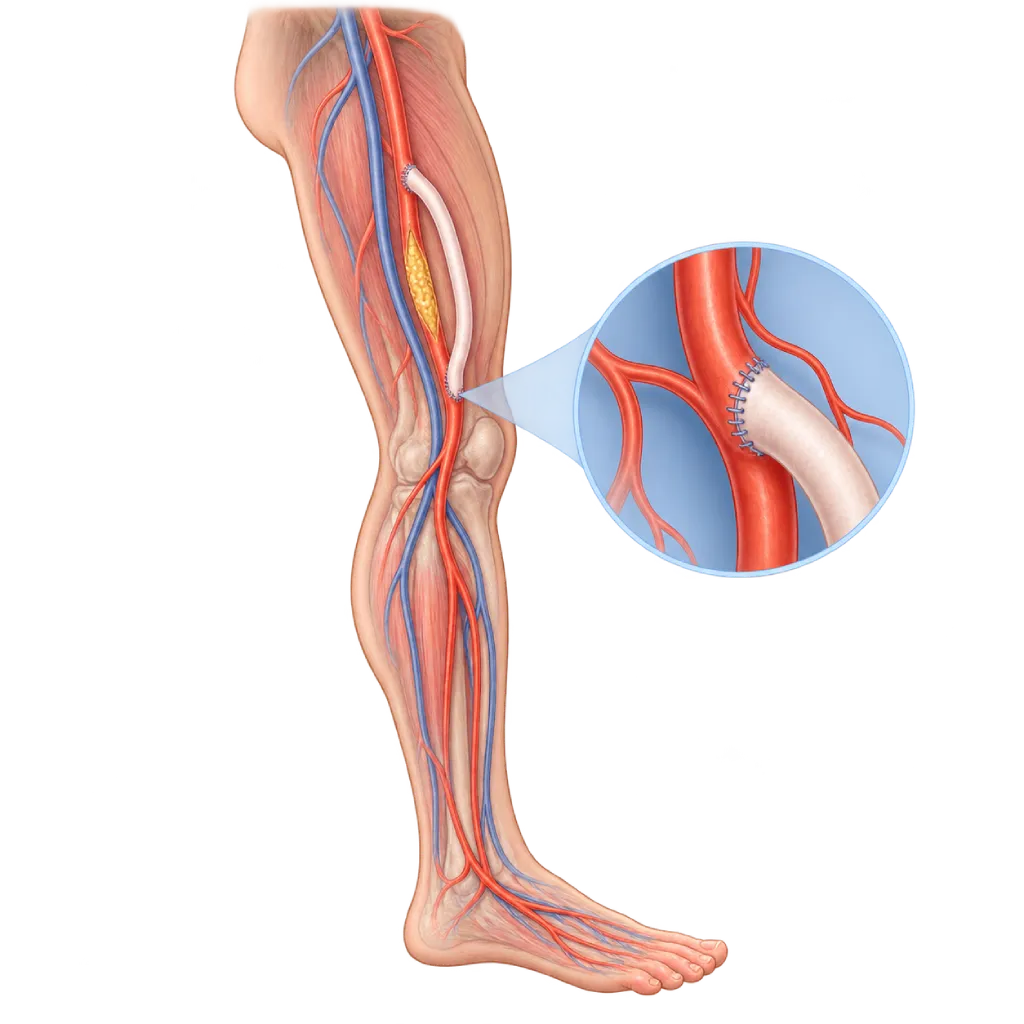
In peripheral artery disease, plaque narrows or blocks the leg arteries, reducing blood flow to the calf and foot. Peripheral bypass surgery creates a new route around the blocked section. The upper end of the replacement vessel is connected to the artery above the blockage, and the lower end to the artery below the blockage, so blood flows again to the lower leg and foot.
How It Works at a Glance
The replacement vessel is connected above and below the blockage, so blood flows through the new route without passing through the blocked section.
Types of Bypass
- Femoropopliteal bypass: from the artery in the groin to the artery around the knee. This type is commonly performed.
- Bypass to a calf artery: reaching the small arteries in the calf or ankle, mainly for foot wounds that are slow to heal.
- Aortofemoral bypass: from the abdominal aorta to the artery in the groin, when the blockage is in the pelvic vessels.
The Replacement Vessel
The main choice is usually the saphenous vein from your own leg, especially for a bypass that crosses the knee. This vein can be taken without disrupting the return of blood from the leg because there are other, deeper veins. If the vein is not good enough, the surgeon uses a synthetic graft. Before surgery, the vein is usually mapped with ultrasound to assess its size.
Bypass or Catheter-Based Treatment
Many narrowings can be opened through a catheter with a balloon or stent, without a large incision. Bypass is considered more often when the blockage is long, a previous catheter procedure has failed, or a good vein is available. Large studies show that each approach has advantages in certain groups of patients, so the choice is made together with the heart and vascular team and the surgeon.
02 / Understanding the procedure
When Is This Procedure Considered?
A doctor may consider this procedure in the situations below. The decision is always made after a thorough assessment.
- Foot Wounds That Will Not HealWounds or blackened tissue on the foot caused by severely reduced blood flow, to prevent amputation.
- Foot Pain at RestPain in the foot or toes, especially at night, which signals severely reduced blood flow.
- Severely Limiting Pain When WalkingWhen it does not improve with walking exercise and medicines, and a catheter-based procedure is not suitable.
- Long or Complex BlockagesLong or recurrent blockages, or previous balloon and stent procedures that were not successful.
- Artery Aneurysm Behind the KneeA widened popliteal artery can be treated by excluding it from the blood flow and placing a bypass.
Situations to Consider First
- Very High Surgical RiskSevere heart or lung disease can make major surgery too risky. A catheter-based procedure may be considered.
- No Suitable Target ArteryIf the artery below the blockage is too damaged, the bypass connection cannot last.
- Severe Leg InfectionThe infection is treated beforehand, because it can spread to the connection or the synthetic graft.
- Tissue Damage That Is Too ExtensiveIf the leg can no longer be saved, the doctor will discuss other options openly.
- Unable to Walk Before SurgeryThe benefit of bypass for people who have not been able to walk for a long time is discussed carefully with the family.
03 / Before the procedure
How Should You Prepare?
The team will explain the preparation in writing. In general, preparation includes the following.
Tests before surgery. Blood tests, an ECG, and heart tests, because leg artery disease often occurs together with coronary artery disease. The leg arteries are mapped with CT angiography or angiography, and the saphenous vein is assessed with ultrasound.
Medicines. Aspirin and cholesterol medicines are usually continued. Other blood thinners and some diabetes medicines may need to be stopped temporarily. Follow your doctor's instructions and do not stop any medicine on your own.
Stop smoking. Stopping smoking as soon as possible helps wounds heal and helps the bypass last longer.
Blood sugar. If you have diabetes, your blood sugar needs to be under control before surgery to lower the risk of wound infection.
Fasting. You usually do not eat or drink for several hours before surgery, as instructed by the anesthesia team.
Plan for going home. Arrange for someone to accompany you and help at home during the early weeks, because you will need more rest.
Unsure about the preparation instructions? Ask our team before the procedure.
04 / During the procedure
How Is the Procedure Done?
The surgery usually takes about 2 to 4 hours, depending on the length of the bypass and the type of replacement vessel. It is performed under general anesthesia or, in some patients, under regional anesthesia given through the spine.
Incisions
The surgeon makes an incision in the groin to reach the artery above the blockage, and an incision around the knee or calf to reach the artery below the blockage.
Preparing the Replacement Vessel
If your own vein is used, the saphenous vein is removed through an incision along the leg, or used in place with its valves removed. If the vein is not suitable, a synthetic graft is prepared.
Connecting the Bypass
A blood-thinning medicine is given and blood flow is stopped temporarily. Then the upper end of the replacement vessel is sewn to the artery above the blockage and the lower end to the artery below the blockage.
Checking the Flow
Once the connections are complete, blood flow is restored. The surgeon checks the flow through the bypass with a Doppler device or angiography before closing the incisions.
After Surgery
You are monitored in the recovery room. The pulses, color, and temperature of your foot are checked regularly to make sure the bypass is working.
05 / Benefits and risks
Benefits and Risks Should Be Discussed Together.
Every medical procedure has benefits and risks. Your doctor will explain both for your situation before the procedure.
Benefits You Can Expect
- Restored Blood Flow to the FootThe new route carries blood around the blockage so your foot again gets enough oxygen.
- Helps Wounds HealImproved blood flow helps foot wounds heal and lowers the risk of amputation.
- Less PainPain at rest and pain when walking usually ease once blood flow is restored.
- Long-Lasting ResultsA bypass using your own vein can work well for years, especially when it is monitored regularly.
- An Option for Long BlockagesCan treat blockages that are too long or complex to be opened with a catheter.
The benefits of a procedure are not a promise of a cure. Ask how the results will affect your care plan.
Risks You Should Know
- Infection or Poor Wound HealingMore common with diabetes, excess weight, or wounds in the groin. Usually treatable with wound care and antibiotics.
- Bleeding or BruisingAt the surgical site, mainly because of blood-thinning medicines. Sometimes an additional procedure is needed.
- Narrowing or Blockage of the BypassThis can happen early or years later, which is why regular ultrasound is important. It can often be fixed with a follow-up procedure.
- Heart Attack or StrokeA risk of major surgery in patients with blood vessel disease. A heart evaluation before surgery helps lower it.
- Swelling, Numbness, or Lymph Fluid LeakageLeg swelling, numbness around the incision, or clear fluid from the groin wound, which usually improves gradually.
Risks can differ from person to person. A full explanation and consent are given after an individual assessment.
06 / After the procedure
What Is Recovery Like?
Patients usually stay in the hospital for a few days to about one week, longer if there is a foot wound that needs care.
Getting moving. You are usually helped to sit up and walk within one to two days after surgery, with help from a physiotherapist if needed.
Leg swelling. The operated leg often swells for several weeks. Raise your leg when sitting or lying down, and avoid sitting with your legs crossed for long periods.
Wound care. Keep the incisions clean and dry as instructed. The groin needs extra attention because it stays moist more easily.
Long-term medicines. Antiplatelet and cholesterol medicines are taken every day to keep the bypass open and protect your heart.
Follow-up visits and regular ultrasound. The bypass is checked regularly with duplex ultrasound, especially during the year after surgery, so that any new narrowing can be treated before the bypass becomes blocked.
Returning to activities. The majority of patients return to light activities within a few weeks. Regular walking exercise and stopping smoking greatly help long-term results.
Warning signs. Go to the emergency room right away or contact the medical team if you have:
- A foot that suddenly becomes painful, pale, cold, or numb
- A surgical wound that is red, swollen, oozing pus, or opening
- Bleeding or a growing lump in the groin
- Fever, chest pain, or shortness of breath
Know the Signs That Need Prompt Care.
Follow the team's guidance on warning signs. If severe or sudden symptoms appear after the procedure, go to the nearest emergency department right away or call Heart Attack Center 1500 258.
07 / Team and support
Doctors and Procedure Support
The doctors below are listed for this procedure. Listed by name, not by ranking.
Dr. dr. Dudy A. Hanafy, Sp.BTKV, Subsp. JD(K), MARS
Adult Cardiac Surgery
Advanced Cardiovascular Surgical Care +1 center
Clinical focusMinimally Invasive Cardiac Surgery · Coronary Artery Bypass Surgery
View Profile
dr. Emanoel Oepangat, Sp.JP(K)
Interventional Cardiology
Vascular Diagnostic and Therapeutic Center +1 center
Clinical focusCoronary Intervention · Peripheral Vascular Intervention
View Profile
dr. Salomo Purba, Sp.BTKV, Subsp.JPK(K)
Pediatric and Congenital Heart Surgery
Congenital and Structural Heart Center +2 centers
Clinical focusPediatric Heart Surgery · Congenital Heart Defect Surgery
View Profile08 / Common questions
Before You Plan the Procedure.
Frequently asked questions about peripheral bypass surgery. The decision to operate is made together with the heart and vascular team and the surgeon.
What is the difference between peripheral bypass and stent placement?
Balloon or stent placement is done through a catheter inserted into a blood vessel in the groin, without a large incision, to open the narrowing from the inside. Bypass surgery creates a new route around the blockage, so it requires incisions and a longer hospital stay. Bypass is often chosen for long blockages or when a catheter procedure has not succeeded.
Where is the replacement vessel taken from?
The usual choice is the saphenous vein, a vein near the surface of your own leg. Your leg can still drain blood back to the heart because the deep veins remain. If the saphenous vein is too small or has been used before, the surgeon may use a vein from the arm or a synthetic graft. The vein is assessed with ultrasound before surgery.
How long will I stay in the hospital?
Usually a few days to about one week. The length of your stay depends on the type of bypass, how quickly you are walking again, and whether there is a foot wound that needs care. After going home, the majority of patients return to light activities within a few weeks, with wound checks and ultrasound scans scheduled by the team.
How long can a bypass last?
A bypass using your own vein can work well for years. How long it lasts depends on the type of replacement vessel, the location of the connections, smoking habits, and taking your medicines as prescribed. Regular duplex ultrasound helps detect new narrowing early, so it can be repaired before the bypass becomes blocked. For this reason, do not skip your follow-up visits.
Why is my leg swollen after surgery?
Leg swelling after a bypass is common because blood flow returns to the leg and the flow of lymph fluid is disrupted during surgery. The swelling usually goes down gradually over a few weeks. Raise your leg when resting. Contact the team if the swelling comes with severe pain, redness, or fever.
Do I still need to take medicines after a bypass?
Yes. Surgery creates a new route, but it does not cure the underlying hardening of the arteries. Antiplatelet and cholesterol medicines need to be taken long term to keep the bypass open and to protect your heart and brain. Stopping smoking and controlling your blood sugar are just as important.
Sources and Medical Review
Translated from the Indonesian edition medically reviewed by Dr. dr. Dudy A. Hanafy, Sp.BTKV, Subsp. JD(K), MARS.
Sources as cited in the Indonesian edition.
- Mazzolai L, Teixido-Tura G, Lanzi S, et al. 2024 ESC Guidelines for the management of peripheral arterial and aortic diseases. Eur Heart J. 2024;45(36):3538-3700.
- Gornik HL, Aronow HD, Goodney PP, et al. 2024 ACC/AHA/AACVPR/APMA/ABC/SCAI/SVM/SVN/SVS/SIR/VESS Guideline for the Management of Lower Extremity Peripheral Artery Disease. Circulation. 2024;149(24):e1313-e1410.
- Conte MS, Bradbury AW, Kolh P, et al. Global vascular guidelines on the management of chronic limb-threatening ischemia. J Vasc Surg. 2019;69(6S):3S-125S.e40.
- Farber A, Menard MT, Conte MS, et al. Surgery or Endovascular Therapy for Chronic Limb-Threatening Ischemia. N Engl J Med. 2022;387(25):2305-2316.
- Bradbury AW, Moakes CA, Popplewell M, et al. A vein bypass first versus a best endovascular treatment first revascularisation strategy for patients with chronic limb threatening ischaemia who required an infra-popliteal, with or without an additional more proximal infra-inguinal revascularisation procedure to restore limb perfusion (BASIL-2). Lancet. 2023;401(10390):1798-1809.