
Quick answer
What Is Tricuspid Stenosis?
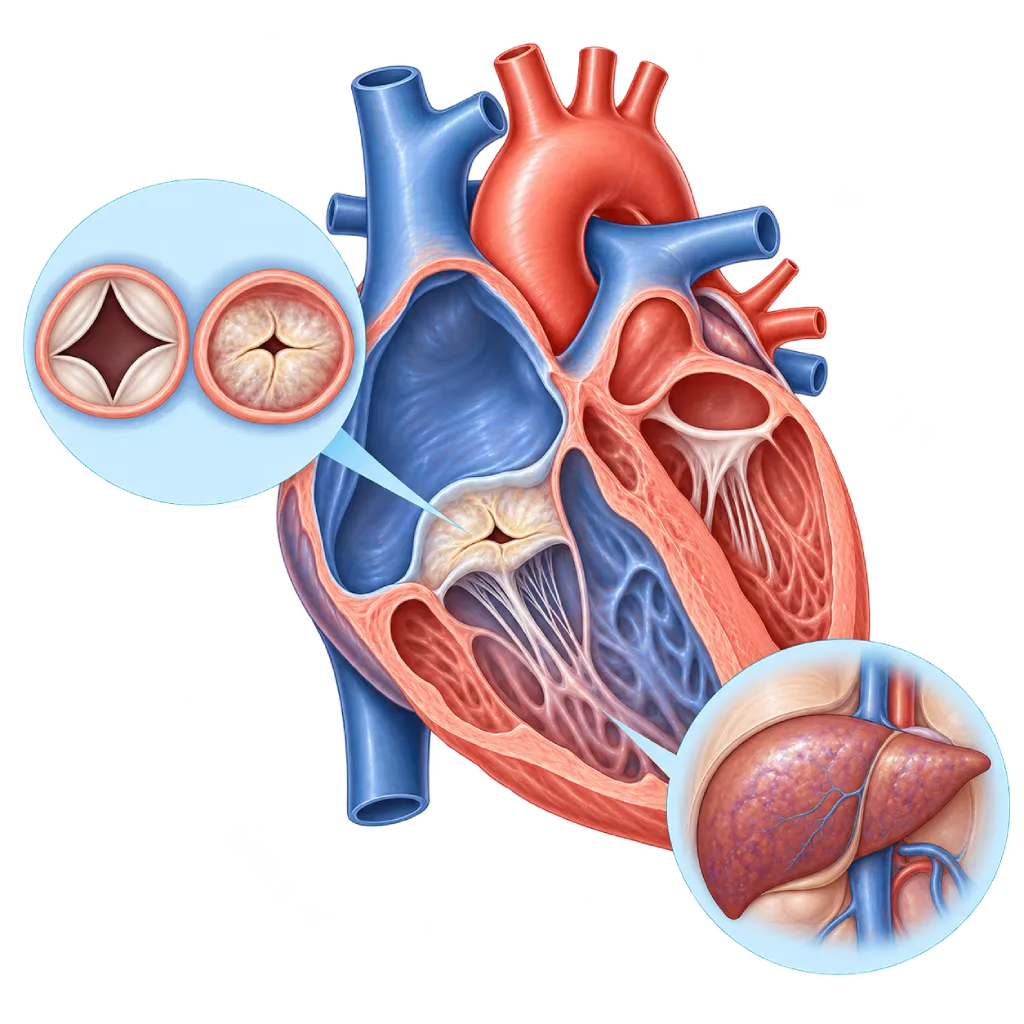
Tricuspid stenosis is a narrowing of the tricuspid valve, the opening between the right atrium and right ventricle of the heart. It is rare, usually caused by rheumatic heart disease together with mitral valve problems, and causes swelling, an enlarged abdomen, and fatigue.
SourcesSigns That Need Urgent Help
- Severe shortness of breath at rest or being unable to lie down
- Yellowing of the skin or the whites of the eyes
- Fainting or nearly fainting
- A very fast heartbeat with dizziness
- Swelling and rapid weight gain over a few days
If these signs appear, go to the nearest emergency department right away or call Heart Attack Center 1500 258.
01 / Understanding the condition
About Tricuspid Stenosis
The tricuspid valve sits between the right atrium and the right ventricle of the heart. Blood from the whole body enters the right atrium, then passes through this valve into the right ventricle to be pumped to the lungs. In tricuspid stenosis, the valve leaflets thicken and fuse at their edges, so the opening becomes smaller. Blood is held back in the right atrium and the body's veins, so fluid builds up in the legs, abdomen, and liver. Tricuspid stenosis is a type of valve narrowing, covered on the Heart Valve Stenosis page.
A Rare Condition That Usually Does Not Occur Alone
Tricuspid stenosis is rarely found. Its main cause is rheumatic heart disease, and it is almost always accompanied by mitral stenosis or aortic valve disease. This is why its symptoms often overlap with those of left-sided valve disease. Other, rare causes are carcinoid syndrome, a neuroendocrine tumor that releases substances that damage the valves, congenital abnormalities, pacemaker leads that cause scar tissue on the valve, and tumors or masses in the right atrium that block blood flow.
Symptoms Caused by Blood Congestion
The typical symptoms come from blood backing up on the right side of the heart: a feeling of fullness or discomfort in the upper right abdomen because the liver is enlarged, an enlarged abdomen from fluid, swollen legs, and a pulse that can be seen in the neck. Tiredness occurs because the amount of blood the heart pumps is reduced. Shortness of breath is usually milder than in mitral stenosis, unless both are present.
Treatment Follows the Other Valve Problems
Diuretics help reduce excess fluid, and the underlying cause is treated according to its type. If tricuspid stenosis is severe and causes symptoms, the valve is repaired or replaced through surgery, usually at the same time as mitral or aortic valve surgery. Balloon widening of the valve through a catheter may be considered in certain situations, for example when the stenosis occurs on its own without significant leakage.
Because the symptoms resemble liver or kidney disease, some people are first examined for those organs. A careful echocardiography helps find the real cause in the heart. If you have rheumatic heart disease, make sure your tricuspid valve is also assessed at every checkup.
02 / Understanding the condition
Symptoms to Recognize.
Common Symptoms
- Tiring easily and feeling weak
- Swollen legs and ankles
- A feeling of fullness or discomfort in the upper right abdomen
- An abdomen that enlarges because of fluid
- Reduced appetite or feeling full quickly
- A pulse that is clearly visible in the neck
- Shortness of breath during activity, especially if mitral stenosis is also present
03 / Understanding the condition
What Causes This Condition?
- Rheumatic heart disease, usually together with mitral or aortic valve disease
- Carcinoid syndrome, a neuroendocrine tumor that releases substances that make the valves thick and stiff
- A congenital tricuspid valve abnormality, which is rare
- Scar tissue from pacemaker or ICD leads that pass through the valve
- A large tumor, clot, or infected mass in the right atrium that blocks blood flow
- An artificial tricuspid valve made of biological tissue that has narrowed due to wear
04 / Understanding the condition
Who Is at Higher Risk?
Medical
A history of rheumatic fever, rheumatic heart disease with mitral valve disease, neuroendocrine tumors, and having pacemaker or ICD leads.
Age
Rheumatic tricuspid stenosis is usually detected in young to middle-aged adults, years after rheumatic fever.
Other
Living in an area where rheumatic fever is still common and having limited access to health care in childhood increase the risk of rheumatic valve damage.
Groups at Higher Risk
- People with Rheumatic Heart Disease: Especially those who already have mitral stenosis; the tricuspid valve should also be assessed at every echocardiography.
- People with Neuroendocrine Tumors: Tumors that have spread to the liver can release serotonin into the bloodstream and damage the valves on the right side of the heart, so regular echocardiography is recommended.
- People with a Pacemaker or ICD: Leads that pass through the tricuspid valve sometimes cause scar tissue that restricts valve movement, although they more often cause leakage.
05 / Understanding the condition
How Is It Diagnosed?
Tricuspid stenosis is easily missed because its murmur is soft and often masked by the sounds of mitral valve disease. The doctor suspects it from signs of congestion on the right side of the heart, such as bulging neck veins, an enlarged liver, and leg swelling, especially in people with rheumatic heart disease.
Echocardiography confirms the diagnosis by showing thickened valve leaflets and a narrow opening, and by measuring the mean pressure gradient and the valve opening area. This test also assesses the mitral and aortic valves at the same time, because problems in them often occur together. Echocardiography through the esophagus or three-dimensional echocardiography helps when the images are unclear. An ECG and chest X-ray look for enlargement of the right atrium and rhythm disturbances. Right heart catheterization is used when the results of other tests do not agree, while a special urine test is done if carcinoid syndrome is suspected.
Physical Examination
Assesses the neck veins, liver, leg swelling, and a soft heart murmur at the lower left edge of the breastbone that gets louder when you breathe in.
Echocardiography
The main test to see the valve leaflets, measure the pressure gradient and opening area, and assess the mitral and aortic valves at the same time.
Electrocardiogram (ECG)
Looks for enlargement of the right atrium and atrial fibrillation, which often accompanies it.
Chest X-Ray
Shows enlargement of the right atrium and accompanying left heart abnormalities.
Right Heart Catheterization
Measures the pressures in the right atrium and right ventricle directly when echocardiography results and symptoms do not agree.
Urine Tests
Measures a serotonin breakdown product (5-HIAA) in 24-hour urine when carcinoid syndrome is suspected as the cause.
06 / Understanding the condition
Treatment Options.
Treatment is decided by a doctor after an assessment. The categories below can help you follow the conversation with your doctor.
Diuretics and Salt Restriction
Diuretics help remove excess fluid so that swelling and abdominal fullness decrease. Your doctor decides the type and dose and monitors your kidney function.
Treating the Cause
Preventing rheumatic fever from recurring with regular antibiotics, treatment of carcinoid syndrome by the oncology team, or management of problematic pacemaker leads.
Heart Rhythm Control
If atrial fibrillation is present, your doctor chooses heart rate control medicines and blood thinners suited to your condition.
Valve Repair or Replacement Surgery
Chosen for severe tricuspid stenosis with symptoms, usually performed at the same time as mitral or aortic valve surgery.
Balloon Valvuloplasty
May be considered in certain situations, for example when the stenosis occurs on its own without significant leakage and the surgical risk is high.
07 / Understanding the condition
Complications to Watch For.
Body Fluid Congestion
Blood that backs up on the right side for a long time causes leg swelling, fluid in the abdomen, and tiring quickly. Covered on the Heart Failure page.
Impaired Liver Function
A liver that is congested with blood for a long time can enlarge, become painful, and lose function, sometimes to the point of yellowing of the skin.
Atrial Fibrillation
An enlarged atrium triggers an irregular rhythm that worsens symptoms. Covered on the Atrial Fibrillation page.
Low Cardiac Output
The blood entering the right ventricle is limited, so the amount of blood pumped to the body falls and prolonged tiredness occurs.
Weight Loss
Congestion in the digestive tract makes you feel full quickly and reduces food absorption, so body weight and muscle shrink.
08 / Understanding the condition
What Can You Do?
- Have a child with a sore throat and fever checked so that a bacterial infection is fully treated.
- If you have had rheumatic fever, take preventive antibiotics on your doctor's schedule without interruption.
- If you have rheumatic heart disease, have regular echocardiography that also assesses the tricuspid valve.
- If you have a neuroendocrine tumor, ask your doctor whether you need echocardiography.
- Limit salt and weigh yourself every day if you swell easily.
- Keep your teeth and mouth clean to reduce the risk of valve infection.
09 / Understanding the condition
When Should You See a Doctor?
See a cardiologist if you have a history of rheumatic fever or heart valve disease and start to notice swelling, a feeling of fullness in the abdomen, or tiring quickly. Regular checkups are still needed even if your symptoms are mild, because tricuspid stenosis often occurs together with other valve problems.
- Leg swelling or an enlarging abdomen without a clear cause
- A feeling of fullness or pain in the upper right abdomen
- Weight gain of more than 2 kilograms in a few days
- Shortness of breath or tiredness that increases during activity
- Yellowing of the skin or eyes, or fainting: go to the emergency room right away
Don't Wait in an Emergency.
If symptoms are severe or come on suddenly, go to the nearest emergency department right away or call Heart Attack Center 1500 258, rather than waiting for an appointment.
10 / Common questions
Questions You May Have.
Frequently asked questions about tricuspid stenosis.
Why is tricuspid stenosis rarely found on its own?
Its main cause is rheumatic heart disease, which almost always damages the mitral valve first and often the aortic valve as well. The tricuspid valve is usually affected later and less severely. This is why tricuspid stenosis is almost always found together with other valve problems. Tricuspid stenosis that occurs on its own more often points to another cause, such as carcinoid syndrome or a congenital abnormality, so your doctor will look for one.
Does tricuspid stenosis need surgery?
Not always. Mild stenosis can simply be monitored, and swelling can be reduced with diuretics and salt restriction. Surgery is considered when the stenosis is severe and causes symptoms, or when fairly severe stenosis is found while you are about to have mitral or aortic valve surgery, so both can be treated at once. The decision is made together with the heart team, weighing the condition of all the valves and your overall health.
What is the link between tricuspid stenosis and carcinoid syndrome?
Carcinoid syndrome occurs in some people with neuroendocrine tumors, especially tumors that have spread to the liver. The tumor releases serotonin and other substances into the bloodstream that make the valves on the right side of the heart thick, stiff, and shrunken. As a result, the tricuspid and pulmonary valves can leak, narrow, or both. People with these tumors are advised to have regular echocardiography, and their care involves cardiologists and the oncology team.
What is the difference between tricuspid stenosis and tricuspid regurgitation?
In stenosis, the tricuspid valve does not open wide, so blood flow from the right atrium to the right ventricle is obstructed. In regurgitation, the valve does not close tightly, so blood flows back into the right atrium. Both can cause swelling and an enlarged abdomen, and in rheumatic disease they are often found together. Tricuspid valve leakage is covered on the Tricuspid Regurgitation page.
Do I need to limit salt and fluids?
Limiting salt is generally recommended if you swell easily, because salt makes the body hold on to fluid. Limiting fluids is not always necessary and should follow your doctor's advice, because drinking too little can harm the kidneys, especially if you take diuretics. Weighing yourself every morning helps you and your doctor spot fluid buildup earlier.
Sources and Medical Review
Translated from the Indonesian edition medically reviewed by dr. Sri Diniharini, Sp.JP(K).
Sources as cited in the Indonesian edition.
- Vahanian A, Beyersdorf F, Praz F, Milojevic M, Baldus S, Bauersachs J, et al. 2021 ESC/EACTS Guidelines for the management of valvular heart disease. Eur Heart J. 2022;43(7):561-632.
- Praz F, et al. 2025 ESC/EACTS Guidelines for the management of valvular heart disease. Eur Heart J. 2025;46(44):4635-4736.
- Otto CM, Nishimura RA, Bonow RO, Carabello BA, Erwin JP 3rd, Gentile F, et al. 2020 ACC/AHA Guideline for the Management of Patients With Valvular Heart Disease: A Report of the American College of Cardiology/American Heart Association Joint Committee on Clinical Practice Guidelines. Circulation. 2021;143(5):e72-e227.
- Baumgartner H, Hung J, Bermejo J, Chambers JB, Evangelista A, Griffin BP, et al. Echocardiographic Assessment of Valve Stenosis: EAE/ASE Recommendations for Clinical Practice. J Am Soc Echocardiogr. 2009;22(1):1-23.
- Kumar RK, Antunes MJ, Beaton A, Mirabel M, Nkomo VT, Okello E, et al. Contemporary Diagnosis and Management of Rheumatic Heart Disease: Implications for Closing the Gap: A Scientific Statement From the American Heart Association. Circulation. 2020;142(20):e337-e357.
- Davar J, Connolly HM, Caplin ME, Pavel M, Zacks J, Bhattacharyya S, et al. Diagnosing and Managing Carcinoid Heart Disease in Patients With Neuroendocrine Tumors: An Expert Statement. J Am Coll Cardiol. 2017;69(10):1288-1304.
Doctors Who Treat This Condition

dr. Sri Diniharini, Sp.JP(K)
Echocardiography & Cardiovascular Imaging
Cardiovascular Diagnostic Center +1 center
Clinical focusAdvanced Echocardiography · Transesophageal Echocardiography
View Profile
Dr. dr. Dudy A. Hanafy, Sp.BTKV, Subsp. JD(K), MARS
Adult Cardiac Surgery
Advanced Cardiovascular Surgical Care +1 center
Clinical focusMinimally Invasive Cardiac Surgery · Coronary Artery Bypass Surgery
View Profile
Dr. dr. Dafsah A. Juzar, Sp.JP(K)
Interventional Cardiology
Coronary Intervention Procedures +1 center
Clinical focusComplex Coronary Intervention · Cardiac Catheterization
View Profile