
Quick answer
What Is Hypotensive Shock?
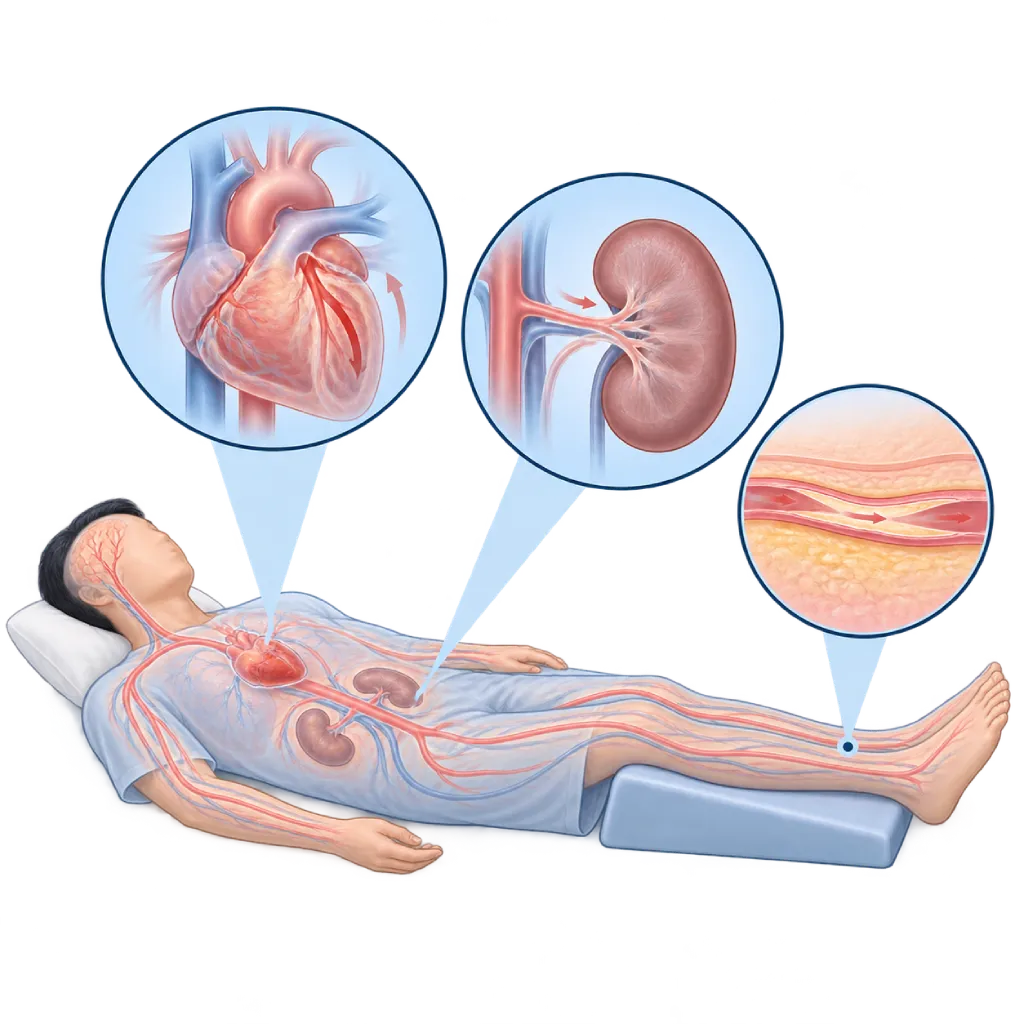
Hypotensive shock is a severe drop in blood pressure that leaves the body's organs without enough blood flow and oxygen. It is an emergency: get to the emergency room right away or call emergency services.
Sources01 / Understanding the condition
About Hypotensive Shock
Shock is a condition in which blood flow is not enough to meet the oxygen needs of the body's organs. Low blood pressure, usually an upper (systolic) pressure below 90 mmHg or a mean pressure below 65 mmHg, is one of its main signs. However, early in shock, blood pressure may still be normal because the body tries to compensate by speeding up the heart rate and narrowing the blood vessels in the skin. For this reason, doctors also look for other signs: cold and pale skin, rapid breathing, restlessness or confusion, and passing little urine.
Four Types of Shock
Hypovolemic shock happens when the volume of blood or body fluid drops sharply, for example from bleeding, severe diarrhea and vomiting, extensive burns, or plasma leakage in dengue hemorrhagic fever. Distributive shock happens when blood vessels widen extensively, as in a severe infection that spreads (septic shock), a severe allergic reaction (anaphylaxis), or a spinal cord injury. Cardiogenic shock happens when the heart's pump fails, often due to a heart attack, and is covered on the Cardiogenic Shock page. Obstructive shock happens when blood flow is blocked, for example by a clot in the lungs or fluid pressing on the heart, covered on the Pulmonary Embolism and Cardiac Tamponade pages.
What Happens in the Body
When blood flow is not enough, the body's cells are forced to produce energy without enough oxygen and build up lactic acid. The kidneys reduce urine production, the brain slows down so the person appears restless or confused, and the heart itself also runs short of oxygen. If this continues for a long time, damage can affect several organs at once. That is why time matters so much.
Treatment in the Emergency Room
In the emergency room, the medical team assesses the airway, breathing, and circulation, gives oxygen, places an IV line for fluids, and continuously monitors blood pressure, heart rhythm, and urine output. If blood pressure does not recover with fluids, the doctor gives medicines that raise blood pressure through an IV. At the same time, the cause is treated: stopping the bleeding, antibiotics for infection, medicines for anaphylaxis, or opening a blocked coronary artery in a heart attack. Further care usually takes place in the intensive care unit.
An overview of other types of hypotension, from mild forms to those that need further evaluation, is covered on the Hypotension page.
02 / Understanding the condition
Symptoms to Recognize.
Common Symptoms
Signs of shock can appear gradually or suddenly.
- Pale, cold, clammy, or blotchy skin
- A fast, weak pulse
- Rapid, shallow breathing
- Restlessness, confusion, or extreme drowsiness
- Severe dizziness or fainting, especially when sitting or standing up
- Passing very little or no urine
- Intense thirst, dry mouth, and weakness
- Bluish lips or fingertips
Symptoms in Children
In children, blood pressure often stays normal until shock is already severe, so other signs are more meaningful.
- A heartbeat that is very fast for the child's age
- Cold hands and feet with mottled skin
- Weakness, not wanting to play, or being hard to wake
- Fussiness followed by becoming very quiet
- A dry diaper or no urination for hours
- Fingertip skin that is slow to turn pink again after being pressed, taking more than 2 seconds
Symptoms in Older Adults
In older adults, signs of shock can be subtle, especially in people taking medicines that slow the heart rate.
- Sudden confusion or drowsiness as an early sign
- A normal or low body temperature despite a severe infection
- A pulse that is not always fast in people taking beta blockers
- Severe weakness, refusing to eat, or falling
03 / Understanding the condition
What Causes This Condition?
- Severe bleeding, either from a wound or inside the body, such as in the digestive tract
- Heavy fluid loss from diarrhea, vomiting, or extensive burns
- Plasma leakage in dengue hemorrhagic fever
- A severe infection that spreads throughout the body (sepsis)
- A severe allergic reaction (anaphylaxis) to food, medicine, or an insect sting
- A heart attack, inflammation of the heart muscle, or a severe rhythm disorder that weakens the heart's pumping
- A blood clot in the lungs (pulmonary embolism) or fluid pressing on the heart (tamponade)
- Spinal cord injury or severe adrenal hormone deficiency
04 / Understanding the condition
Who Is at Higher Risk?
Medical
Heart disease, diabetes, chronic kidney or liver disease, cancer, and a weakened immune system increase the risk of shock during a serious illness.
Age
Babies, young children, and older adults go into shock more quickly when they lose fluids or have a severe infection.
Lifestyle
Smoking, excessive alcohol, and uncontrolled heart attack risk factors increase the chance of shock caused by heart disease.
Other
Severe injury, major surgery, a history of severe allergies, and use of medicines that suppress the immune system, such as chemotherapy.
Groups at Higher Risk
- Older Adults: The body's reserves are smaller and signs of shock can be subtle, so an infection or fluid loss can worsen quickly.
- Babies and Children: Their body fluid reserves are relatively small, so diarrhea, vomiting, or dengue fever can quickly lead to shock.
- People with Heart Disease: A heart attack or worsening heart failure can cause cardiogenic shock.
- People with a Weakened Immune System: People with cancer, those receiving chemotherapy, or those taking immunosuppressive medicines are more vulnerable to sepsis.
- People with Severe Allergies: People who have had anaphylaxis can have it again if they are exposed to the same trigger.
05 / Understanding the condition
How Is It Diagnosed?
In shock, testing and treatment happen at the same time. As soon as the patient arrives at the emergency room, the medical team measures blood pressure, pulse, breathing, oxygen level, and consciousness, and then places an IV line. Blood tests check lactate as a marker of oxygen shortage in the tissues, a complete blood count, electrolytes, kidney and liver function, blood clotting, and cultures if an infection is suspected.
An ECG and a troponin test look for a heart attack. Bedside ultrasound and echocardiography assess the heart's pumping, fluid around the heart, and the filling of the large blood vessels. A chest X-ray or CT scan is done depending on the suspected cause. In severe shock, pressures inside the heart and lungs can be measured directly with a catheter to guide fluids and medicines.
Physical Examination
A rapid assessment of blood pressure, pulse, breathing, consciousness, skin temperature, and urine output to recognize shock and its severity.
Laboratory Tests
Blood tests including lactate, complete blood count, electrolytes, kidney and liver function, blood clotting, and cultures if an infection is suspected.
Electrocardiogram (ECG)
A heart recording to look for a heart attack or a rhythm disorder causing the shock.
Cardiac Troponin Test
A blood test to confirm or rule out heart muscle damage as the cause of shock.
Echocardiography
Heart ultrasound to assess pumping strength, the valves, fluid around the heart, and signs of strain from a clot in the lungs.
Right Heart Catheterization
Measurement of pressures in the right heart and pulmonary artery in severe shock to help guide fluids and medicines.
06 / Understanding the condition
Treatment Options.
Treatment is decided by a doctor after an assessment. The categories below can help you follow the conversation with your doctor.
First Aid
Call emergency services, lay the person down, raise their legs if there is no injury, keep them warm, and do not give food or drink.
IV Fluids
Fluids are given through an IV to fill the blood vessels, with the amount reassessed repeatedly based on the body's response.
Blood Transfusion
In shock caused by bleeding, blood and clotting components are given while the source of bleeding is stopped.
Medicines to Raise Blood Pressure
Vasopressors or medicines that strengthen the heart's pumping are given through an IV in the emergency room or intensive care unit with close monitoring.
Treating the Cause
Antibiotics for sepsis, epinephrine (adrenaline) for anaphylaxis, opening the coronary arteries for a heart attack, or treating clots and fluid around the heart.
Breathing Support and Assist Devices
Oxygen, a breathing machine, and in certain cases of cardiogenic shock, a temporary heart pump assist device in the intensive care unit.
07 / Understanding the condition
Complications to Watch For.
Acute Kidney Failure
Reduced blood flow makes the kidneys stop filtering blood; some patients need temporary dialysis.
Multiple Organ Dysfunction
Prolonged shock can disrupt the lungs, liver, intestines, brain, and blood clotting at the same time.
Heart Muscle Damage
Low blood pressure reduces coronary blood flow, so the heart muscle also runs short of oxygen.
Cardiac Arrest
Severe shock that is not treated can progress to cardiac arrest, which is why early care is so important.
Long Recovery After Intensive Care
Some patients have muscle weakness, difficulty concentrating, or anxiety after leaving the intensive care unit and need rehabilitation.
08 / Understanding the condition
What Can You Do?
- Recognize and treat infections early, especially in older adults, babies, and people with chronic illnesses.
- During diarrhea or vomiting, drink oral rehydration solution a little at a time and see a doctor right away if you cannot drink.
- With dengue fever, watch for warning signs as the fever starts to go down and get checked as your doctor advises.
- If you have had anaphylaxis, avoid its triggers and always carry the emergency medicine your doctor prescribed.
- Control heart attack risk factors: blood pressure, cholesterol, blood sugar, and smoking.
- Complete the vaccinations your doctor recommends to prevent serious infections, such as influenza and pneumonia.
09 / Understanding the condition
When Should You See a Doctor?
Shock cannot be waited out at home. Call emergency services at 119 or get to the nearest emergency room right away if the following signs appear, especially in someone who is ill, recently injured, or recently exposed to an allergy trigger. While waiting for help, lay the person down, keep them warm, and do not give food or drink.
- Pale, cold, and clammy skin with a fast, weak pulse
- Restlessness, confusion, extreme drowsiness, or fainting
- Rapid breathing, shortness of breath, or bluish lips
- No urination for hours along with weakness
- Heavy bleeding, vomiting blood, or black stools
- Swelling of the face, lips, or throat with shortness of breath after eating, taking a medicine, or being stung
- Chest pain with cold sweat and weakness
10 / Common questions
Questions You May Have.
Frequently asked questions about shock and severe drops in blood pressure.
What is the difference between shock and ordinary fainting?
Ordinary fainting, for example from a vasovagal reflex, is brief, and the person quickly comes to after lying down, with blood pressure recovering fast. In shock, blood pressure and blood flow stay low, so the skin stays cold and pale, breathing is rapid, the person looks confused, and urine output drops. Shock always needs emergency room care, while ordinary fainting still needs to be evaluated by a doctor.
What should be done while waiting for the ambulance?
Lay the person flat on their back and raise both legs about 30 cm if there is no head, neck, back, or leg injury. If they are short of breath, let them sit in a comfortable position. Cover them to keep them warm and do not give food or drink. Press on any bleeding wound with a clean cloth. If they are not breathing normally, start CPR following the emergency dispatcher's guidance.
Does everyone with very low blood pressure have shock?
No. Shock is defined by a lack of blood flow to the organs, not just a blood pressure number. Some healthy people have low blood pressure without any problems. On the other hand, early in shock, blood pressure may still be normal because the body is compensating. Signs such as cold skin, a fast pulse, confusion, and little urine help doctors recognize shock.
How is shock related to a heart attack?
A large heart attack can weaken the heart's pump so that not enough blood is delivered throughout the body. This is called cardiogenic shock, covered on the Cardiogenic Shock page. Treatment includes medicines that raise blood pressure, opening the blocked coronary artery as quickly as possible, and sometimes a temporary heart pump assist device in the intensive care unit.
Can dengue fever cause shock?
Yes. In dengue hemorrhagic fever, blood plasma can leak out of the blood vessels, especially as the fever starts to go down, around the third to seventh day. Watch for abdominal pain, persistent vomiting, restlessness, cold hands and feet, bleeding from the gums or nose, and infrequent urination. These signs need to be checked right away at the nearest health facility.
Can people recover fully after shock?
Many people recover well, especially when shock is recognized and treated early. The length of recovery depends on the cause, how severe the shock was, and which organs were affected. Some patients need rehabilitation for muscle weakness, difficulty concentrating, or anxiety after intensive care. Regular follow-up helps monitor the function of the heart, kidneys, and other organs.
Sources and Medical Review
Translated from the Indonesian edition medically reviewed by dr. Debby C. Soemitha, Sp.PD.
Sources as cited in the Indonesian edition.
- Vincent JL, De Backer D. Circulatory shock. N Engl J Med. 2013;369(18):1726-1734.
- Cecconi M, De Backer D, Antonelli M, Beale R, Bakker J, Hofer C, et al. Consensus on circulatory shock and hemodynamic monitoring. Task force of the European Society of Intensive Care Medicine. Intensive Care Med. 2014;40(12):1795-1815.
- Evans L, Rhodes A, Alhazzani W, Antonelli M, Coopersmith CM, French C, et al. Surviving sepsis campaign: international guidelines for management of sepsis and septic shock 2021. Intensive Care Med. 2021;47(11):1181-1247.
- van Diepen S, Katz JN, Albert NM, Henry TD, Jacobs AK, Kapur NK, et al. Contemporary management of cardiogenic shock: a scientific statement from the American Heart Association. Circulation. 2017;136(16):e232-e268.
- Muraro A, Worm M, Alviani C, Cardona V, DunnGalvin A, Garvey LH, et al. EAACI guidelines: Anaphylaxis (2021 update). Allergy. 2022;77(2):357-377.
- Spahn DR, Bouillon B, Cerny V, Duranteau J, Filipescu D, Hunt BJ, et al. The European guideline on management of major bleeding and coagulopathy following trauma: fifth edition. Crit Care. 2019;23(1):98.
Doctors Who Treat This Condition

dr. Debby C. Soemitha, Sp.PD
Internal Medicine
Clinical focusDiabetes and Diabetes Complications · Obesity and Metabolic Disease
View Profile
dr. Emanoel Oepangat, Sp.JP(K)
Interventional Cardiology
Vascular Diagnostic and Therapeutic Center +1 center
Clinical focusCoronary Intervention · Peripheral Vascular Intervention
View Profile
Dr. med. dr. Denio A. Ridjab, Sp.JP(K)
Interventional Cardiology
Coronary Intervention Procedures +2 centers
Clinical focusInterventional Cardiology · Coronary Artery Disease
View Profile