
Quick answer
What Is Tachycardia?
Tachycardia is a heart rate of more than 100 beats per minute at rest. It can be a normal response of the body, or a sign of a rhythm disorder from the upper or lower chambers of the heart that needs to be checked with an ECG.
SourcesSigns That Need Urgent Help
- Fainting or nearly losing consciousness
- Severe chest pain or chest pain that feels like pressure
- Severe shortness of breath, including at rest
- A very fast heartbeat with cold sweats and paleness
- Sudden confusion or difficulty responding when spoken to
- A racing heart that does not stop, with weakness or severe dizziness
If these signs appear, go to the nearest emergency department right away or call Heart Attack Center 1500 258.
01 / Understanding the condition
About Tachycardia
Tachycardia means a heart rate faster than 100 beats per minute while the body is at rest. In adults, a normal resting heart rate ranges from 60 to 100 beats per minute. Tachycardia is not a single disease but a general term for various conditions that make the heart beat too fast.
When Tachycardia Is Normal and When It Needs Checking
Your heart rate naturally rises when you exercise, have a fever, feel anxious, are low on fluids, or drink coffee. This is called sinus tachycardia, the normal rhythm from the heart's natural pacemaker (the sinus node) working faster. The heart rate usually comes back down once the trigger is gone. If the heart rate stays fast for no clear reason, your doctor will look for other causes, such as an overactive thyroid gland, anemia, or a problem with the heart's electrical system.
Types of Tachycardia by Where the Signal Starts
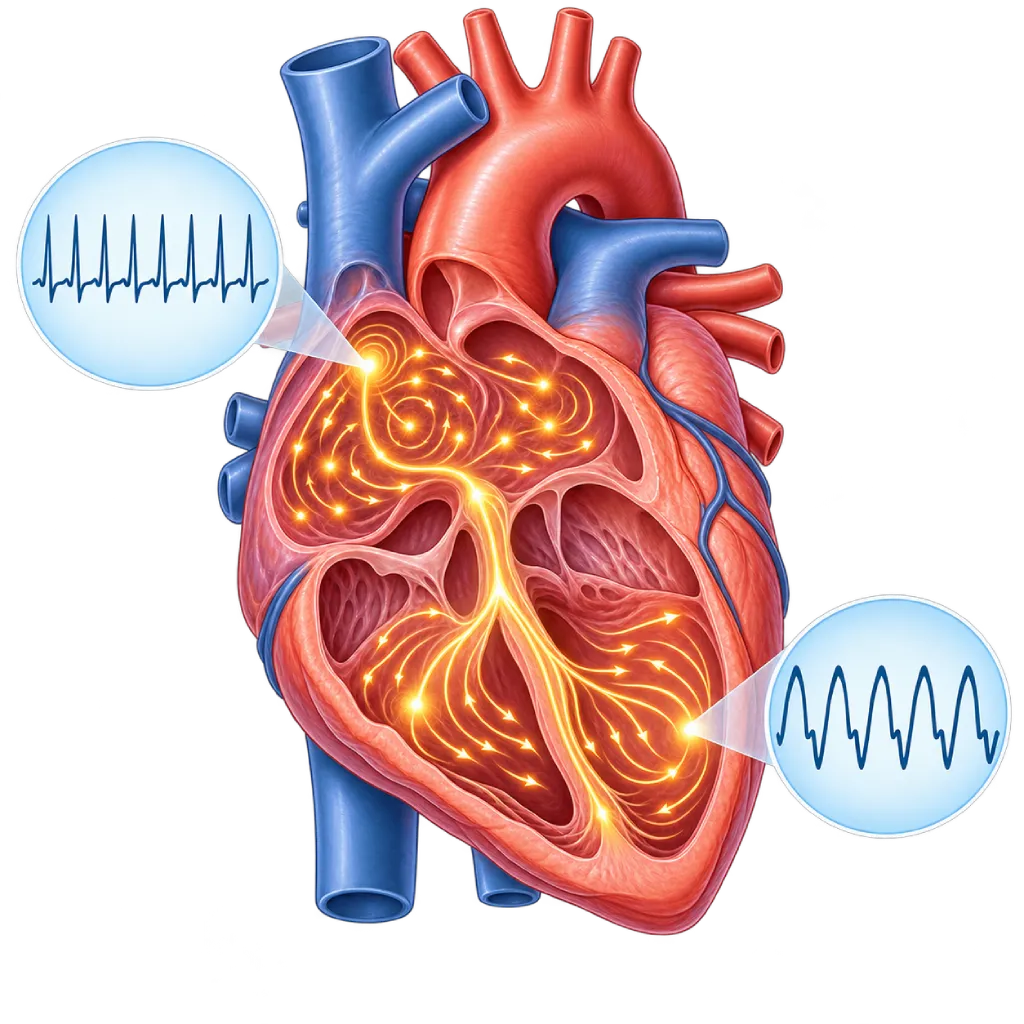
The heart has an electrical system that controls when the atria (upper chambers) and ventricles (lower chambers) contract. Tachycardia that starts in the atria or in the AV node, the electrical gate between the atria and the ventricles, is called supraventricular tachycardia. This group includes atrial tachycardia, atrial flutter, and types that involve an extra electrical pathway. Tachycardia that starts in the ventricles is called ventricular tachycardia. This type is generally more serious, especially if the heart already has scar tissue or a weak heart muscle. A fast, irregular rhythm from the atria is covered on the Atrial Fibrillation page.
Why Tachycardia Needs to Be Recognized
When the heart beats too fast, the ventricles do not have enough time to fill with blood. As a result, blood flow to the brain and body drops, causing dizziness, weakness, shortness of breath, or chest discomfort. Some people feel nothing, and the tachycardia is only discovered during a routine checkup. Tachycardia that lasts for weeks can weaken the heart muscle, a condition that usually improves once the rhythm is under control. Some types also raise the risk of stroke or cardiac arrest, so the type needs to be confirmed.
The majority of tachycardias can be identified with an ECG recording and treated with medicine, catheter ablation, or a device implanted in the chest. A very helpful first step is to record an ECG while the symptoms are happening, because that recording is often the key to the diagnosis. Palpitations in general are covered on the Palpitations page.
02 / Understanding the condition
Types and Related Conditions
The following conditions belong to the Tachycardia group. Open each one for a full explanation.
03 / Understanding the condition
Symptoms to Recognize.
Common Symptoms
- A fast or pounding heartbeat
- A pulse of more than 100 beats per minute at rest
- Dizziness or light-headedness
- Shortness of breath, especially with activity
- Discomfort or pressure in the chest
- Weakness and tiring easily
- Anxiety or restlessness when the heart is racing
Symptoms in Children
Children often cannot yet describe a racing heart, so parents need to watch for changes in their behavior and appearance.
- Complaining of chest pain, a pounding heart, or a heart that feels like it is racing
- Suddenly stopping play and looking weak
- A pale, sweaty face
- Breathing faster than usual
- Complaining of dizziness or stomach discomfort during an episode
Symptoms in Older Adults
In older adults, tachycardia is sometimes not felt as a racing heart but shows up as general symptoms.
- Weakness or tiring easily without feeling the heart racing
- Worsening shortness of breath or leg swelling
- Confusion or trouble concentrating
- Falling easily or nearly fainting when standing up
- Reduced ability to carry out daily activities
04 / Understanding the condition
What Causes This Condition?
- A normal response of the body to exercise, fever, pain, anxiety, or low fluid levels
- Low red blood cells (anemia) or a severe infection
- An overactive thyroid gland
- Caffeine, alcohol, nicotine, energy drinks, or stimulants
- Side effects of certain medicines, such as some breathing reliever medicines and decongestants
- An extra electrical pathway or a double electrical circuit in the heart that is present from birth
- Scar tissue after a heart attack, cardiomyopathy, or heart surgery
- Blood potassium or magnesium levels that are too low
05 / Understanding the condition
Who Is at Higher Risk?
Lifestyle
Drinking too much coffee or energy drinks, drinking alcohol, smoking, using stimulants, and lack of sleep can trigger episodes of tachycardia in susceptible people.
Medical
Coronary artery disease, a history of heart attack, heart failure, cardiomyopathy, high blood pressure, thyroid disorders, anemia, chronic lung disease, and sleep apnea increase the chance of tachycardia.
Genetic
A family history of heart rhythm disorders, inherited cardiomyopathy, or sudden death at a young age may point to an inborn abnormality that needs to be checked.
Age
Atrial fibrillation and atrial flutter become more common with age, while supraventricular tachycardia often first appears in children, teenagers, or young adults.
Groups at Higher Risk
- People Who Have Had a Heart Attack: Scar tissue in the heart muscle can become a source of ventricular tachycardia, so the heart rhythm needs to be monitored regularly.
- People with Heart Failure or Cardiomyopathy: An enlarged or weakened heart muscle is more prone to electrical problems, in both the atria and the ventricles.
- People with Thyroid Disorders: Too much thyroid hormone speeds up the heart rate and can trigger atrial fibrillation.
- Older Adults: Age-related changes in heart tissue increase the risk of atrial fibrillation and atrial flutter, often together with high blood pressure.
- Pregnant Women: The heart rate naturally rises during pregnancy, and in some women episodes of supraventricular tachycardia recur more often.
06 / Understanding the condition
How Is It Diagnosed?
The first step is a medical interview and physical examination: when the racing heart starts, how long it lasts, whether it starts and stops suddenly, and what triggers it. Your doctor also asks about medicines, coffee, alcohol, and family history. The key to diagnosis is an ECG recorded while the heart is racing, because the shape of the waves shows where the signal comes from. If the symptoms have gone by the time you arrive, a Holter recording over 24 to 48 hours or a recorder worn for longer helps capture the next episode. An ECG recording from a smartwatch can be brought along as supporting information, but it still needs to be assessed by a doctor.
Echocardiography assesses the size of the heart chambers, the valves, and pumping strength. Blood tests check thyroid hormone levels, electrolytes, and blood cells. In certain situations, your doctor may recommend a treadmill test, a cardiac MRI, or an electrophysiology study to map the source of the signal from inside the heart, especially if ablation is being considered.
Electrocardiogram (ECG)
Records the heart's electrical activity to show the rate, regularity, and wave shape. A recording during an episode helps tell tachycardia from the atria apart from tachycardia from the ventricles.
Holter Monitoring
A small device that records the heart rhythm for 24 to 48 hours during your usual activities, to capture episodes that come and go.
Long-Term Heart Rhythm Monitoring
Recording over several days to several weeks, or a recorder placed under the skin, if episodes are infrequent.
Echocardiography
An ultrasound of the heart to assess chamber size, the valves, and pumping strength, and to look for underlying heart disease.
Thyroid Function Test
A blood test to look for an overactive thyroid gland as a trigger of a fast heart rate.
Blood Electrolyte Test
Measures potassium, magnesium, and other electrolytes that affect the stability of the heart rhythm.
Electrophysiology Study
A catheter-based test to trigger and map the source of the tachycardia in a controlled way, often followed by ablation in the same session.
07 / Understanding the condition
Treatment Options.
Treatment is decided by a doctor after an assessment. The categories below can help you follow the conversation with your doctor.
Treating Triggers and Causes
Sinus tachycardia usually improves when the trigger is treated, such as fever, low fluid levels, anemia, or an overactive thyroid. Your doctor also reviews medicines and habits that act as triggers.
Vagal Maneuvers
In supraventricular tachycardia, special techniques such as straining in a certain position can stimulate the vagus nerve and stop an episode. Your doctor will teach you a method that is safe for you.
Medicines to Control Heart Rate and Rhythm
Beta blockers, calcium channel blockers, or antiarrhythmic drugs are used to slow the heart rate or prevent recurrence. Your doctor decides on the type and dose.
Electrical Cardioversion
A controlled electric shock under brief anesthesia to restore a normal rhythm, especially when an episode comes with a drop in blood pressure or does not stop with medicine.
Catheter Ablation
The faulty signal source is disabled with a catheter inserted through a blood vessel in the groin. For many types of supraventricular tachycardia, ablation can eliminate symptoms over the long term.
Implantable Cardioverter Defibrillator (ICD)
A device placed under the skin of the chest that monitors the rhythm and stops dangerous ventricular tachycardia, for patients at risk of cardiac arrest.
08 / Understanding the condition
Complications to Watch For.
Tachycardia-Induced Cardiomyopathy
A fast heart rate that lasts for weeks can weaken the heart muscle. Pumping function usually improves once the rhythm or heart rate is under control.
Heart Failure
In a heart that is already weak or stiff, tachycardia can trigger shortness of breath, swelling, and a hospital stay.
Stroke and Blocked Blood Vessels
In atrial fibrillation and atrial flutter, clots can form in the atria and travel to the brain or other organs.
Fainting and Injury
Reduced blood flow to the brain during an episode can cause fainting and injury from a fall, especially in older adults.
Sudden Cardiac Arrest
Ventricular tachycardia can turn into ventricular fibrillation, so this type needs prompt treatment and steps to prevent it from coming back.
09 / Understanding the condition
What Can You Do?
- Limit coffee, strong tea, and energy drinks if you notice they trigger a racing heart
- Avoid excessive alcohol, smoking, and stimulants
- Get enough sleep and manage stress in ways that work for you
- Keep your blood pressure, blood sugar, cholesterol, and weight under control
- Take your heart medicines on schedule and do not stop them without talking to your doctor
- Ask your doctor before taking cold medicines, weight-loss pills, or new supplements
- Get checked if you snore loudly and often feel sleepy during the day
10 / Understanding the condition
When Should You See a Doctor?
Make an appointment with a doctor if you often feel your heart racing for no clear reason, especially if it keeps coming and going. If possible, note the time, duration, and triggers, and ask for an ECG recording while you still have symptoms. Go to the emergency room right away if tachycardia comes with warning signs.
- A resting heart rate that is often above 100 beats per minute without fever, exercise, or anxiety
- A racing heart that starts and stops suddenly
- A racing heart with dizziness, shortness of breath, or chest discomfort
- You have heart disease, have had a heart attack, or have a family member who died suddenly at a young age
- Fainting, severe chest pain, or severe shortness of breath: go to the emergency room right away
Don't Wait in an Emergency.
If symptoms are severe or come on suddenly, go to the nearest emergency department right away or call Heart Attack Center 1500 258, rather than waiting for an appointment.
11 / Common questions
Questions You May Have.
Frequently asked questions about tachycardia.
What heart rate is considered tachycardia?
In adults, a normal resting heart rate ranges from 60 to 100 beats per minute. A rate above 100 beats per minute at rest is called tachycardia. This limit is different for children and babies, whose normal heart rates are naturally faster. A single high reading is not necessarily a problem, for example after climbing stairs or drinking coffee. What needs to be checked is a heart rate that stays fast while you are calm and resting.
Is tachycardia always dangerous?
Not always. A fast heart rate during exercise, fever, or anxiety is a normal response of the body. Supraventricular tachycardia is generally not life-threatening, but it can disrupt your activities and needs treatment. Ventricular tachycardia is more serious because it can suddenly disrupt the heart's pumping. Because the symptoms can be similar, the type of tachycardia can only be confirmed with an ECG recording and a doctor's examination.
What should I do when my heart suddenly starts racing?
Stop what you are doing, sit or lie down, and breathe calmly. If your doctor has taught you vagal maneuvers, you can try them. If possible, record an ECG with a smartwatch or ask for a recording at the nearest healthcare facility while the symptoms are still present, because that recording greatly helps with the diagnosis. Go to the emergency room right away if it comes with fainting, chest pain, or severe shortness of breath, or if it does not stop.
Can coffee and energy drinks trigger tachycardia?
Large amounts of caffeine and energy drinks can speed up the heart rate and trigger episodes in susceptible people. For many people, moderate amounts of coffee do not cause problems. Notice whether your symptoms appear after certain drinks. Alcohol, smoking, and lack of sleep are also common triggers, so cutting back on these habits often helps.
Can tachycardia be cured?
It depends on the type and cause. Sinus tachycardia usually goes away once the trigger is treated. Many supraventricular tachycardias can be eliminated over the long term with catheter ablation. Ventricular tachycardia in a heart that already has scar tissue is usually controlled with a combination of medicine, ablation, and an ICD. Your doctor will explain the options that fit your test results.
Can people with tachycardia still exercise?
For many people, regular exercise is still recommended once the type of tachycardia is known and treatment is underway. Your doctor may recommend a treadmill test to see how your heart responds to activity. If tachycardia has ever come with fainting or chest pain, postpone strenuous exercise until you have been checked. Start gradually, and stop if you feel dizzy, short of breath, or an unusual racing heartbeat.
Sources and Medical Review
Translated from the Indonesian edition medically reviewed by Dr. dr. Dicky A. Hanafy, Sp.JP(K).
Sources as cited in the Indonesian edition.
- Brugada J, Katritsis DG, Arbelo E, et al. 2019 ESC Guidelines for the management of patients with supraventricular tachycardia. The Task Force for the management of patients with supraventricular tachycardia of the European Society of Cardiology (ESC). Eur Heart J. 2020;41(5):655-720.
- Zeppenfeld K, Tfelt-Hansen J, de Riva M, et al. 2022 ESC Guidelines for the management of patients with ventricular arrhythmias and the prevention of sudden cardiac death. Eur Heart J. 2022;43(40):3997-4126.
- Van Gelder IC, Rienstra M, Bunting KV, et al. 2024 ESC Guidelines for the management of atrial fibrillation developed in collaboration with the European Association for Cardio-Thoracic Surgery (EACTS). Eur Heart J. 2024;45(36):3314-3414.
- Sheldon RS, Grubb BP 2nd, Olshansky B, et al. 2015 Heart Rhythm Society Expert Consensus Statement on the Diagnosis and Treatment of Postural Tachycardia Syndrome, Inappropriate Sinus Tachycardia, and Vasovagal Syncope. Heart Rhythm. 2015;12(6):e41-e63.
- Huizar JF, Ellenbogen KA, Tan AY, Kaszala K. Arrhythmia-Induced Cardiomyopathy: JACC State-of-the-Art Review. J Am Coll Cardiol. 2019;73(18):2328-2344.
- Kotadia ID, Williams SE, O'Neill M. Supraventricular tachycardia: An overview of diagnosis and management. Clin Med (Lond). 2020;20(1):43-47.
Doctors Who Treat This Condition

dr. Sunu B. Raharjo, Sp.JP(K), Ph.D.
Arrhythmia and Electrophysiology
Arrhythmia and Device Center
Clinical focusClinical and Interventional Electrophysiology · Cardiac Arrhythmia Ablation
View Profile
Dr. dr. Dicky A. Hanafy, Sp.JP(K)
Arrhythmia and Electrophysiology
Arrhythmia and Device Center +1 center
Clinical focusElectrophysiology and Arrhythmia Ablation · Pacemaker and ICD Implantation
View Profile
Dr. dr. Faris Basalamah, Sp.JP(K)
Interventional Cardiology
Coronary Intervention Procedures +1 center
Clinical focusComplex Coronary Intervention · Cardiac Electrophysiology
View Profile