
Quick answer
What Is Post-Procedural Arrhythmia?
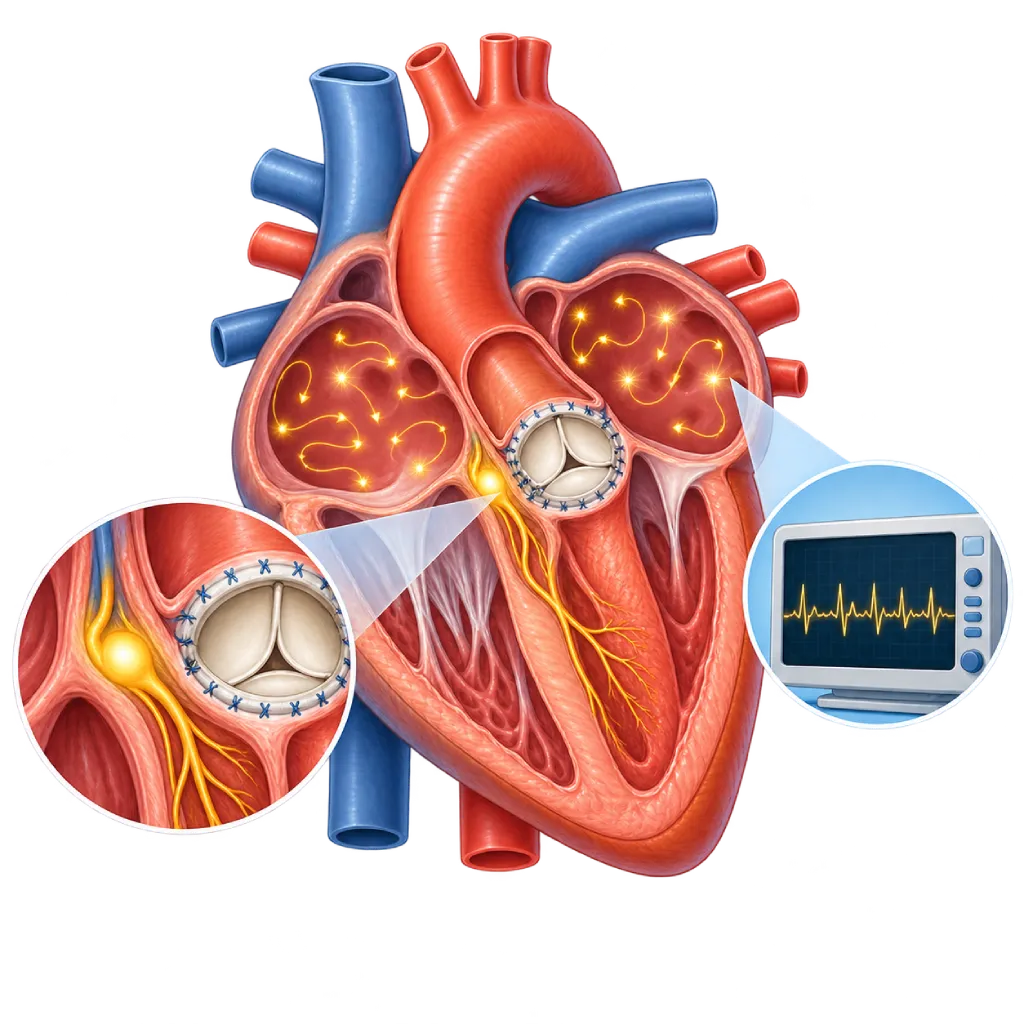
Post-procedural arrhythmia is a heart rhythm disorder that appears after heart surgery or a heart procedure, for example atrial fibrillation after bypass surgery or heart block after valve replacement. Many cases are temporary, but they still need to be monitored and treated.
SourcesSigns That Need Urgent Help
- Fainting or nearly fainting
- A very fast heartbeat that does not stop, with weakness or a cold sweat
- Chest pain or severe shortness of breath
- Facial drooping, slurred speech, or weakness on one side of the body
- A very slow pulse with severe dizziness
If these signs appear, go to the nearest emergency department right away or call Heart Attack Center 1500 258.
01 / Understanding the condition
About Post-Procedural Arrhythmia
Heart surgery and heart procedures involve tissue close to the heart's electrical system. Incisions, stitches, catheters, inflammation after surgery, changes in fluids and electrolytes, and physical stress can disrupt how electrical signals are generated or conducted. As a result, the heart rhythm can become too fast, too slow, or irregular. This is called post-procedural arrhythmia.
Common Types
Postoperative atrial fibrillation is a common type, especially after coronary bypass surgery or valve surgery. It usually appears on the second to fourth day after surgery, and the rhythm often returns to normal within a few days to weeks. Atrial fibrillation in general is covered on the Atrial Fibrillation page.
Conduction disorders, such as bundle branch block or atrioventricular block, can appear after aortic valve replacement through a catheter (TAVI), valve surgery, or closure of a hole in the wall between the heart chambers. Some improve on their own, while others require a pacemaker. This block is covered on the Atrioventricular Block page. After atrial fibrillation ablation, some patients develop atrial flutter or atrial tachycardia, which may settle down or require a repeat procedure. In children after congenital heart surgery, a tachycardia arising from the AV node area can occur and is treated in the intensive care unit.
Why It Still Needs Attention
Although often temporary, post-procedural arrhythmia can prolong the hospital stay, lower blood pressure, and increase the risk of stroke. Postoperative atrial fibrillation also signals a risk of atrial fibrillation coming back later in life. For this reason, the heart rhythm is monitored after the procedure, and the doctor weighs blood thinners and a schedule for rhythm follow-up after you go home.
Some arrhythmias only appear after the patient goes home. Before discharge, the team usually explains the warning signs to watch for, how to check your pulse, and when to come back. If you have a pacemaker or an implanted recorder, your rhythm data can also be checked remotely. Similar arrhythmias can occur after major surgery outside the heart, such as lung surgery, although less often.
This page covers arrhythmias caused by a procedure. An overview of all types of rhythm disorders is covered on the Heart Rhythm Disorders / Arrhythmia page.
02 / Understanding the condition
Symptoms to Recognize.
Common Symptoms
- Fast or irregular heartbeat after the procedure
- Dizziness or lightheadedness when sitting up or standing
- Weakness and tiring easily, more than expected during recovery
- Shortness of breath
- A pulse that feels very slow or irregular
- No symptoms, but seen on the rhythm monitor in the ward
Symptoms in Children
In children after congenital heart surgery, the team often recognizes arrhythmia from the monitor and from changes in the child's behavior.
- Fussiness or being hard to settle
- Reluctance to eat or breastfeed
- Fast breathing or appearing short of breath
- Paleness, weakness, or sweating
03 / Understanding the condition
What Causes This Condition?
- Inflammation of the heart tissue and the sac around the heart after surgery
- Injury, swelling, or pressure on the electrical pathways near the valves and the wall between the heart chambers
- Disturbed potassium and magnesium levels after surgery
- A surge in stress hormones and sympathetic nervous activity during recovery
- Fluid overload, low oxygen, or infection after the procedure
- Scar tissue from incisions or ablation that becomes a new electrical pathway
- Effects of medicines used during and after the procedure
04 / Understanding the condition
Who Is at Higher Risk?
Age
The risk of postoperative atrial fibrillation increases with age, especially after age 65.
Medical
A history of atrial fibrillation, an enlarged left atrium, heart failure, hypertension, chronic obstructive pulmonary disease, kidney disease, and obesity.
Lifestyle
Smoking and drinking too much alcohol before surgery are linked to a higher risk of arrhythmia after the procedure.
Other
The type of procedure matters: valve surgery or combined bypass and valve surgery carries a higher risk, and right bundle branch block before TAVI increases the risk of AV block.
Groups at Higher Risk
- Patients After Bypass or Valve Surgery: A group with a high rate of postoperative atrial fibrillation, especially on the second to fourth day.
- Patients After TAVI: At risk of bundle branch block and AV block, so the rhythm is monitored for several days after the procedure.
- Patients After Atrial Fibrillation Ablation: Early recurrence in the first three months is common and does not necessarily mean the ablation failed.
- Children After Congenital Heart Surgery: May develop tachycardia or heart block after surgery, and some arrhythmias appear years later.
05 / Understanding the condition
How Is It Diagnosed?
After heart surgery or a heart procedure, your rhythm is usually monitored continuously for several days. If the monitor shows a change or you notice symptoms, a 12-lead ECG is recorded to confirm the type of arrhythmia.
The team then looks for triggers: potassium and magnesium levels, oxygen levels, signs of infection, fluid in the sac around the heart, or valve and pumping function on echocardiography. After TAVI or valve surgery, the ECG is repeated to see whether a new bundle branch block or AV block has appeared. After you go home, the doctor may use a Holter monitor, a long-term recorder, or remote pacemaker monitoring to make sure the arrhythmia has not come back.
Continuous rhythm monitoring in the intensive care unit and the ward after the procedure to detect arrhythmia early.
Electrocardiogram (ECG)
Confirms the type of arrhythmia, such as atrial fibrillation, flutter, or AV block, when symptoms appear or the monitor shows a change.
Blood Electrolyte Test
Checks potassium and magnesium, which often change after surgery and need to be corrected.
Echocardiography
Looks for fluid in the sac around the heart, valve problems, or reduced pumping function that can trigger arrhythmia.
Long-Term Heart Rhythm Monitoring
After you go home, records your rhythm for several days to weeks to see whether the arrhythmia still occurs.
Remote Heart Monitoring
Checks a pacemaker or implanted recorder from home to detect arrhythmia after the procedure.
06 / Understanding the condition
Treatment Options.
Treatment is decided by a doctor after an assessment. The categories below can help you follow the conversation with your doctor.
Correcting Triggers
Correcting potassium and magnesium levels, and treating pain, low oxygen, infection, and fluid overload.
Rate and Rhythm Control
Beta blockers or antiarrhythmic drugs, as decided by the doctor, to slow the heart rate or restore a normal rhythm.
Cardioversion
A controlled electrical shock to restore a normal rhythm if the arrhythmia persists or blood pressure drops.
Blood Thinners
Considered for postoperative atrial fibrillation after weighing the risk of stroke against the risk of bleeding from the surgical wound.
Temporary Pacing and Permanent Pacemaker
Temporary pacing wires placed during surgery are used for a slow heart rate. If the block persists, a permanent pacemaker is implanted.
Prevention Around the Time of Surgery
In selected patients, the doctor may give medicine to prevent atrial fibrillation around the time of heart surgery, such as beta blockers or amiodarone.
07 / Understanding the condition
Complications to Watch For.
Stroke
Postoperative atrial fibrillation can lead to blood clots forming in the left atrium. The doctor considers blood thinners based on the risk of bleeding after surgery.
Low Blood Pressure
A heartbeat that is too fast or too slow reduces the amount of blood pumped, which can disrupt recovery.
Longer Hospital Stay
Treating the arrhythmia can lengthen the hospital stay and add tests before discharge.
Recurrent Atrial Fibrillation
People who have postoperative atrial fibrillation are more likely to have it again later, so rhythm follow-up is needed.
Need for a Permanent Pacemaker
AV block that persists after TAVI or valve surgery requires a permanent pacemaker.
08 / Understanding the condition
What Can You Do?
- Follow the preparation before surgery, including quitting smoking and avoiding alcohol
- Continue the heart medicines recommended before surgery; do not stop them on your own
- Tell the team about any history of atrial fibrillation, fainting, or a pacemaker before the procedure
- Move around and do breathing exercises as directed by the team after surgery
- Attend your first follow-up visit and bring notes of any rhythm symptoms since going home
- Learn how to check your pulse and make a note when it feels irregular
09 / Understanding the condition
When Should You See a Doctor?
After going home from heart surgery or a heart procedure, contact the doctor treating you or make an earlier appointment if you notice an irregular heartbeat, a pulse that feels very slow, dizziness, or fatigue that keeps getting worse, even if the symptoms are mild. Bring notes of when the symptoms occurred and your pulse readings or smartwatch recordings, if you have them.
Go to the emergency room right away if:
- You faint or nearly faint
- A very fast heartbeat does not stop and comes with weakness, shortness of breath, or chest pain
- Signs of stroke appear, such as facial drooping, slurred speech, or weakness on one side of the body
- You develop a fever, worsening chest pain, or shortness of breath after surgery
Don't Wait in an Emergency.
If symptoms are severe or come on suddenly, go to the nearest emergency department right away or call Heart Attack Center 1500 258, rather than waiting for an appointment.
10 / Common questions
Questions You May Have.
Frequently asked questions about arrhythmia after heart surgery or a heart procedure.
How common is arrhythmia after heart surgery?
Atrial fibrillation is a common arrhythmia after heart surgery, affecting about 20 to 40 out of every 100 patients after bypass or valve surgery. The rate is lower after catheter-based procedures and surgery outside the heart. Most cases appear within the first five days, and the rhythm often returns to normal before or shortly after going home.
Will atrial fibrillation after surgery go away on its own?
Often, yes. Many patients return to a normal rhythm within a few days to weeks, with or without medicine. However, this episode signals that the atria are vulnerable, so atrial fibrillation may come back later. The doctor usually schedules follow-up visits and rhythm recordings, and weighs whether long-term blood thinners are needed.
Why do I need a pacemaker after TAVI?
The aortic valve sits very close to the heart's electrical conduction pathway. The new valve can press on this pathway, causing bundle branch block or AV block. Some cases improve within a few days, so the team usually monitors first. If high-grade block persists, a permanent pacemaker is implanted to prevent a very slow heartbeat and fainting.
Do palpitations after ablation mean the ablation did not work?
Not necessarily. In the first three months after atrial fibrillation ablation, the tissue is still healing, and inflammation can trigger palpitations or brief episodes of atrial fibrillation. This is called the blanking period, and early recurrences often settle on their own. Still, report any symptoms to your doctor. The result of the ablation is usually assessed after this recovery period ends.
Do I need blood thinners if I develop atrial fibrillation after surgery?
It depends on your stroke risk, your bleeding risk after surgery, and how long the atrial fibrillation lasts. Current guidelines advise doctors to consider long-term blood thinners in selected patients, especially when the stroke risk is high. This decision is made together by the surgical team and the cardiologist. Do not start or stop any medicine on your own without your doctor's guidance.
Sources and Medical Review
Translated from the Indonesian edition medically reviewed by dr. Sunu B. Raharjo, Sp.JP(K), Ph.D..
Sources as cited in the Indonesian edition.
- Van Gelder IC, Rienstra M, Bunting KV, Casado-Arroyo R, Caso V, Crijns HJGM, et al. 2024 ESC Guidelines for the management of atrial fibrillation developed in collaboration with the European Association for Cardio-Thoracic Surgery (EACTS). Eur Heart J. 2024;45(36):3314-3414.
- Gaudino M, Di Franco A, Rong LQ, Piccini J, Mack M. Postoperative atrial fibrillation: from mechanisms to treatment. Eur Heart J. 2023;44(12):1020-1039.
- Dobrev D, Aguilar M, Heijman J, Guichard JB, Nattel S. Postoperative atrial fibrillation: mechanisms, manifestations and management. Nat Rev Cardiol. 2019;16(7):417-436.
- Rodés-Cabau J, Ellenbogen KA, Krahn AD, Latib A, Mack M, Mittal S, et al. Management of Conduction Disturbances Associated With Transcatheter Aortic Valve Replacement: JACC Scientific Expert Panel. J Am Coll Cardiol. 2019;74(8):1086-1106.
- Glikson M, Nielsen JC, Kronborg MB, Michowitz Y, Auricchio A, Barbash IM, et al. 2021 ESC Guidelines on cardiac pacing and cardiac resynchronization therapy. Eur Heart J. 2021;42(35):3427-3520.
Doctors Who Treat This Condition

dr. Sunu B. Raharjo, Sp.JP(K), Ph.D.
Arrhythmia and Electrophysiology
Arrhythmia and Device Center
Clinical focusClinical and Interventional Electrophysiology · Cardiac Arrhythmia Ablation
View Profile
Dr. dr. Dicky A. Hanafy, Sp.JP(K)
Arrhythmia and Electrophysiology
Arrhythmia and Device Center +1 center
Clinical focusElectrophysiology and Arrhythmia Ablation · Pacemaker and ICD Implantation
View Profile
Dr. dr. Faris Basalamah, Sp.JP(K)
Interventional Cardiology
Coronary Intervention Procedures +1 center
Clinical focusComplex Coronary Intervention · Cardiac Electrophysiology
View Profile