
Quick answer
What Is Pulmonary Hypertension?
Pulmonary hypertension is high pressure in the blood vessels of the lungs, which is different from the high blood pressure measured on your arm. It strains the right side of the heart and causes shortness of breath during activity. Treatment depends on its type and cause.
SourcesSigns That Need Urgent Help
- Shortness of breath at rest or being unable to lie flat
- Fainting, especially during or after physical activity
- Severe or prolonged chest pain
- Coughing up blood
- Lips and fingertips that look bluish
- Swelling in the legs or abdomen that increases quickly over a few days
- A very fast heartbeat with weakness or dizziness
If these signs appear, go to the nearest emergency department right away or call Heart Attack Center 1500 258.
01 / Understanding the condition
About Pulmonary Hypertension
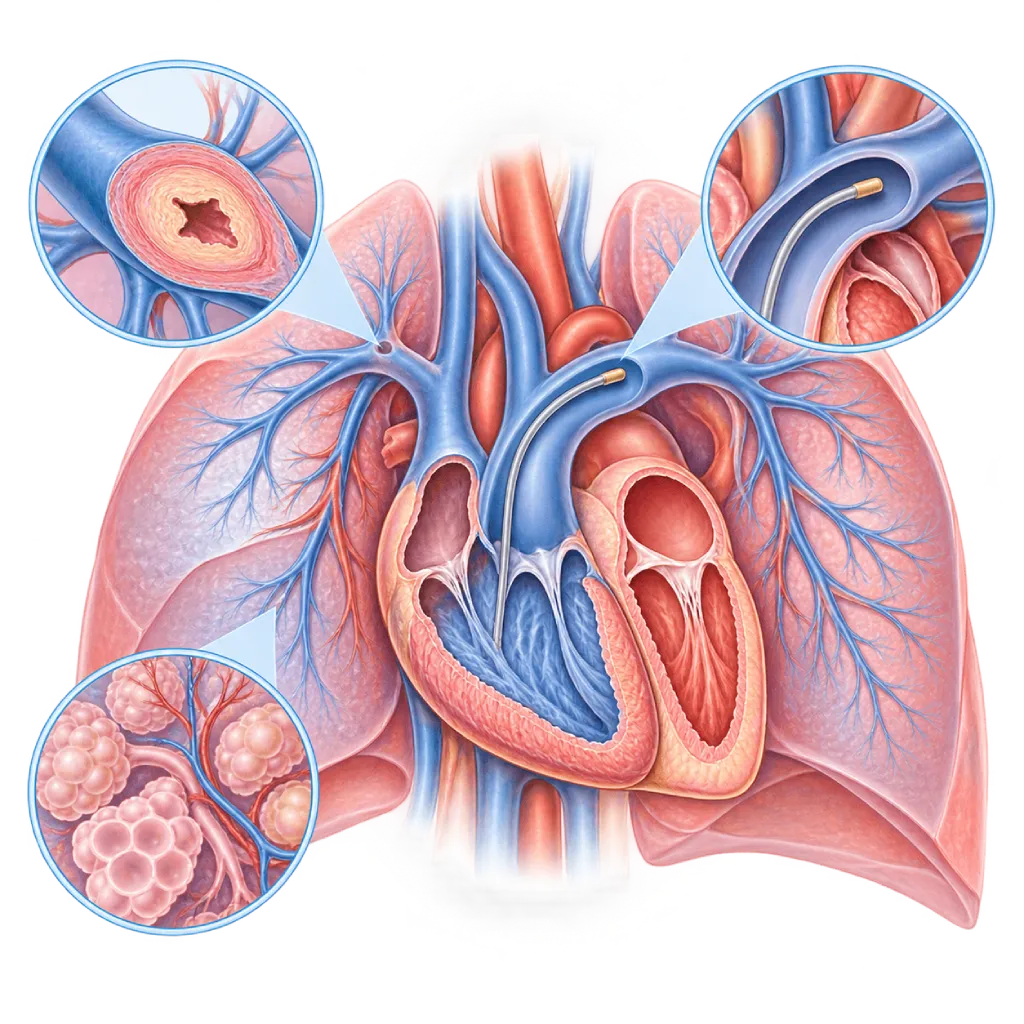
Pulmonary hypertension is high pressure in the pulmonary arteries, the vessels that carry blood from the right side of the heart to the lungs to pick up oxygen. According to the 2022 ESC/ERS guidelines, the condition is defined as a mean pulmonary artery pressure at rest of more than 20 mmHg, measured by right heart catheterization. In healthy people, this pressure is about 14 mmHg.
Different from Ordinary High Blood Pressure
The commonly known form of hypertension is high pressure in the arteries throughout the body, measured with a blood pressure cuff on the arm. Pulmonary hypertension occurs in the lung circulation, does not show up on a blood pressure cuff, and can affect people whose arm blood pressure is normal. Its causes, tests, and treatment are also different, so ordinary blood pressure medication is not a treatment for this condition. An overview of high blood pressure measured on the arm is covered on the Hypertension page.
Five Groups of Causes
Guidelines divide pulmonary hypertension into five groups. Group 1 is pulmonary arterial hypertension, in which the walls of the small pulmonary arteries thicken and narrow, whether without a clear cause, inherited, caused by drugs, or related to congenital heart disease or autoimmune disease. Group 2 is caused by left heart disease, such as heart failure or valve disease, and is common. Group 3 is caused by lung disease or a lack of oxygen, such as COPD and sleep apnea. Group 4 is caused by long-standing blockages in the pulmonary arteries after a pulmonary embolism. Group 5 covers various other or mixed causes. The types are covered in more detail on the Primary Pulmonary Hypertension, Secondary Pulmonary Hypertension, and Chronic Thromboembolic Pulmonary Hypertension pages.
Effects on the Right Side of the Heart
The right side of the heart is used to pumping into the low-pressure lung circulation. When the pressure rises, the right ventricle thickens, then enlarges and weakens, so blood backs up into the liver, abdomen, and legs. This is called right heart failure or cor pulmonale. Pulmonary hypertension is estimated to affect about 1 in 100 people worldwide and is more common over the age of 65, mainly because of left heart disease and lung disease. Because the symptoms resemble simply being out of shape, diagnosis is often delayed.
02 / Understanding the condition
Types and Related Conditions
The following conditions belong to the Pulmonary Hypertension group. Open each one for a full explanation.
03 / Understanding the condition
Symptoms to Recognize.
Common Symptoms
Early symptoms are often mild and resemble being out of shape, so they are easily mistaken for ordinary tiredness.
- Shortness of breath during activity that gets worse over time
- Tiring easily and feeling weak
- Chest pain or pressure during activity
- Dizziness or nearly fainting during activity
- Palpitations
- Swelling in the ankles or legs
- A bloated or swollen abdomen due to fluid buildup
Symptoms in Children
In children, pulmonary hypertension is often related to congenital heart disease or lung disease present from birth.
- Fast breathing or shortness of breath while feeding, eating, or playing
- Poor weight gain and slowed growth
- Tiring quickly and wanting to rest or be carried more often
- Lips or nails that look bluish
- Fainting while crying or playing
04 / Understanding the condition
What Causes This Condition?
- Left heart disease, such as heart failure, mitral or aortic valve disease, and a stiff heart caused by long-standing hypertension
- Chronic lung disease and a lack of oxygen, such as COPD, pulmonary fibrosis, and sleep apnea
- Long-standing blockages in the pulmonary arteries after a pulmonary embolism (chronic thromboembolic pulmonary hypertension)
- Thickening of the walls of the small pulmonary arteries without a clear cause or due to inherited factors
- Congenital heart disease with a shunt, such as a hole in the wall of the heart, which causes too much blood flow to the lungs
- Autoimmune diseases such as scleroderma and lupus, liver cirrhosis, HIV, and schistosomiasis
- Certain drugs or substances, such as methamphetamine and some weight-loss drugs that have been withdrawn from the market
- Blood disorders, metabolic disorders, sarcoidosis, and other mixed causes
05 / Understanding the condition
Who Is at Higher Risk?
Medical
Heart failure, valve disease, COPD, pulmonary fibrosis, sleep apnea, a history of pulmonary embolism, congenital heart disease, scleroderma, liver cirrhosis, and HIV.
Genetic
Some pulmonary arterial hypertension is inherited, for example due to changes in the BMPR2 gene. Family members of affected people may need genetic counseling and regular checkups.
Lifestyle
Smoking increases the risk of COPD, while severe obesity increases the risk of sleep apnea and breathing problems during sleep that can trigger pulmonary hypertension.
Age
Pulmonary hypertension caused by left heart disease and lung disease is more common over the age of 65. Pulmonary arterial hypertension can appear at any age and is more common in women.
Other
Use of methamphetamine or certain weight-loss drugs, and living for a long time at very high altitudes.
Groups at Higher Risk
- People with Left Heart Disease: Heart failure and valve disease raise the pressure in the lungs as well. This type is common, especially in older adults.
- People with Chronic Lung Disease: COPD, pulmonary fibrosis, and sleep apnea can lower oxygen levels, causing the pulmonary arteries to narrow.
- Pulmonary Embolism Survivors: A small proportion of pulmonary embolism survivors develop long-standing blockages. Shortness of breath that persists after 3 months of treatment needs to be checked.
- People with Congenital Heart Disease: A hole in the wall of the heart or a vessel that stays open can flood the lungs with excess blood flow.
- People with Scleroderma: Guidelines recommend a yearly assessment of the risk of pulmonary arterial hypertension in people with systemic sclerosis.
06 / Understanding the condition
How Is It Diagnosed?
Because its symptoms resemble other heart or lung diseases, pulmonary hypertension is diagnosed in stages. The doctor starts with a medical interview, a physical examination, an ECG, a chest X-ray, and blood tests including NT-proBNP. Echocardiography then determines how likely pulmonary hypertension is and assesses the right side of the heart.
If the likelihood is intermediate or high, further tests look for the group of causes: lung function tests, a chest CT scan, and a ventilation-perfusion scan to rule out long-standing blockages from a pulmonary embolism. Right heart catheterization confirms the diagnosis by measuring the pressure directly in the pulmonary arteries. In certain types of pulmonary arterial hypertension, a test with a blood vessel-widening drug (vasodilator test) during catheterization helps determine the right medication. Guidelines recommend that people with suspected pulmonary arterial hypertension or long-standing blockages be referred to a center experienced in managing pulmonary hypertension.
Echocardiography
The first step to estimate pulmonary artery pressure from a leaking tricuspid valve, assess the size and function of the right side of the heart, and look for left heart disease or congenital heart disease.
NT-proBNP and BNP Test
Measures a heart strain hormone to help assess how severe the condition is and monitor the results of treatment.
Electrocardiogram (ECG)
Looks for signs of strain on the right side of the heart and rhythm disturbances.
Lung Function Test (Spirometry)
Looks for underlying lung disease, including assessing how well the lungs absorb oxygen.
Ventilation-Perfusion Scan
Recommended for every patient to look for long-standing blockages in the pulmonary arteries from old clots.
A chest CT scan, with or without contrast, to assess the lung tissue, the size of the pulmonary arteries, and blocked vessels.
Right Heart Catheterization
The test that confirms the diagnosis: it measures pulmonary artery pressure, the pressure from the left side of the heart, and the resistance of the lung vessels, sometimes with a vasodilator test.
07 / Understanding the condition
Treatment Options.
Treatment is decided by a doctor after an assessment. The categories below can help you follow the conversation with your doctor.
Treating the Underlying Disease
In groups 2 and 3, treating heart failure, valve disease, or lung disease is key. Medications specific to the pulmonary arteries are generally not recommended for these groups.
Specific Medications for Pulmonary Arterial Hypertension
Classes include endothelin receptor antagonists, PDE5 inhibitors, guanylate cyclase stimulators, prostacyclin pathway drugs, and activin signaling inhibitors, often in combination. Your doctor chooses among them based on your risk level.
Blood Thinners and Procedures for Long-Standing Blockages
Chronic thromboembolic pulmonary hypertension requires long-term blood thinners and can be treated with pulmonary endarterectomy surgery, balloon pulmonary angioplasty, or medication.
Diuretics, Oxygen, and Iron
Diuretics reduce swelling, oxygen is given when blood oxygen levels are low, and iron deficiency is corrected.
Supervised Exercise and Support
A supervised exercise program, influenza and pneumococcal vaccination, and psychological support help improve your ability to be active and your quality of life.
Lung Transplant
Considered when the condition remains severe despite maximum combination medication.
08 / Understanding the condition
Complications to Watch For.
Right Heart Failure
The right ventricle enlarges and weakens, so fluid backs up in the legs, liver, and abdomen. Covered on the Cor Pulmonale page.
Heart Rhythm Disorders
An enlarged right atrium is prone to flutter or atrial fibrillation, which can quickly worsen shortness of breath.
Coughing Up Blood
Small blood vessels in the airways can rupture. Coughing up blood needs to be checked right away.
Blood Clots in the Pulmonary Arteries
Slow blood flow in widened pulmonary arteries makes blood clots more likely to form.
Fainting During Physical Activity
The right side of the heart cannot increase blood flow when needed, so the brain briefly does not get enough blood. This symptom indicates a more severe condition.
High Risk During Pregnancy
Changes in blood flow during pregnancy and delivery place a heavy strain on the right side of the heart. Guidelines recommend effective contraception and a consultation before planning a pregnancy.
09 / Understanding the condition
What Can You Do?
- Manage heart failure, valve disease, and chronic lung disease according to your doctor's plan
- Stop smoking to protect your lungs
- Get loud snoring and pauses in breathing during sleep checked
- Complete your pulmonary embolism treatment, and get checked if shortness of breath persists after 3 months
- Avoid methamphetamine and weight-loss drugs with unclear ingredients
- Have regular screening if you have scleroderma or a family history of pulmonary arterial hypertension
- Get influenza and pneumococcal vaccines once you have been diagnosed
10 / Understanding the condition
When Should You See a Doctor?
Shortness of breath that is out of proportion to your activity needs to be checked, especially if you have risk factors. Make an appointment if:
- Shortness of breath or tiredness during light activity gets worse over a few months without a clear cause
- You have had a pulmonary embolism and are still short of breath after 3 months of treatment
- You have scleroderma, congenital heart disease, liver cirrhosis, or HIV and are starting to get short of breath easily
- A family member has pulmonary arterial hypertension
- Swelling in your legs or abdomen appears along with shortness of breath
- You have been diagnosed and are planning a pregnancy
Go to the emergency room right away if you faint, are short of breath at rest, cough up blood, have severe chest pain, or your lips look bluish.
Don't Wait in an Emergency.
If symptoms are severe or come on suddenly, go to the nearest emergency department right away or call Heart Attack Center 1500 258, rather than waiting for an appointment.
11 / Common questions
Questions You May Have.
Frequently asked questions about pulmonary hypertension, or high blood pressure in the lungs.
What is the difference between pulmonary hypertension and ordinary high blood pressure?
Ordinary high blood pressure is high pressure in the arteries throughout the body, measured with a blood pressure cuff on the arm. Pulmonary hypertension is high pressure in the pulmonary arteries that strains the right side of the heart. A person can have normal blood pressure on the arm but still have pulmonary hypertension, or the other way around. The two conditions differ in their causes, tests, and treatment.
How is pulmonary hypertension confirmed?
Echocardiography can estimate the pressure in the pulmonary arteries and show how likely pulmonary hypertension is. However, the diagnosis is confirmed by right heart catheterization, a direct pressure measurement through a thin tube inserted through a vein in the neck, arm, or groin. Other tests, such as lung function tests, a chest CT scan, and a ventilation-perfusion scan, are used to find the cause.
Can ordinary blood pressure medication treat pulmonary hypertension?
Generally not. Ordinary blood pressure medication works on blood vessels throughout the body and can lower the blood pressure in your arm too much. Pulmonary arterial hypertension is treated with specific classes of medication that act on the pulmonary arteries. High-dose calcium channel blockers are given only to a small proportion of patients who show a positive result on the vasodilator test during catheterization.
Can people with pulmonary hypertension exercise?
Yes, with some adjustments. Guidelines recommend supervised exercise for patients whose condition is stable on treatment, because it can improve their ability to be active and their quality of life. Avoid strenuous exercise, heavy lifting, and activities that cause severe shortness of breath, chest pain, or dizziness. Stop the activity if these symptoms appear, then discuss a safe program with your doctor.
Is it safe to get pregnant with pulmonary hypertension?
Pregnancy places a heavy strain on the right side of the heart and carries a high risk for women with pulmonary arterial hypertension. For this reason, guidelines recommend effective contraception and a consultation with the medical team before planning a pregnancy. If you become pregnant, contact your doctor right away so care can be planned together with an obstetrician and the heart team.
Can pulmonary hypertension be cured?
It depends on the type. Certain cases of chronic thromboembolic pulmonary hypertension can improve markedly after pulmonary endarterectomy surgery or balloon angioplasty. In the groups caused by left heart disease or lung disease, the condition can improve when the underlying disease is treated. Pulmonary arterial hypertension is generally a long-term disease, but combination medication can slow its progression and improve your ability to be active.
Sources and Medical Review
Translated from the Indonesian edition medically reviewed by dr. Santi R. Dewayanti, Sp.P.
Sources as cited in the Indonesian edition.
- Humbert M, Kovacs G, Hoeper MM, et al. 2022 ESC/ERS Guidelines for the diagnosis and treatment of pulmonary hypertension. Eur Heart J. 2022;43(38):3618-3731.
- Simonneau G, Montani D, Celermajer DS, et al. Haemodynamic definitions and updated clinical classification of pulmonary hypertension. Eur Respir J. 2019;53(1):1801913.
- Hoeper MM, Humbert M, Souza R, et al. A global view of pulmonary hypertension. Lancet Respir Med. 2016;4(4):306-322.
- Hoeper MM, Badesch DB, Ghofrani HA, et al. Phase 3 Trial of Sotatercept for Treatment of Pulmonary Arterial Hypertension. N Engl J Med. 2023;388(16):1478-1490.
- Kim NH, Delcroix M, Jais X, et al. Chronic thromboembolic pulmonary hypertension. Eur Respir J. 2019;53(1):1801915.
Doctors Who Treat This Condition

dr. Santi R. Dewayanti, Sp.P
Pulmonology
Clinical focusLung and Respiratory Disease · Asthma and COPD
View Profile
dr. BRM Ario S. Kuncoro, Sp.JP(K)
Echocardiography & Cardiovascular Imaging
Cardiovascular Diagnostic Center +2 centers
Clinical focusAdvanced and 3D Echocardiography · Transesophageal Echocardiography
View Profile
Dr. med. dr. Denio A. Ridjab, Sp.JP(K)
Interventional Cardiology
Coronary Intervention Procedures +2 centers
Clinical focusInterventional Cardiology · Coronary Artery Disease
View Profile