
Quick answer
What Is Heart Transplant?
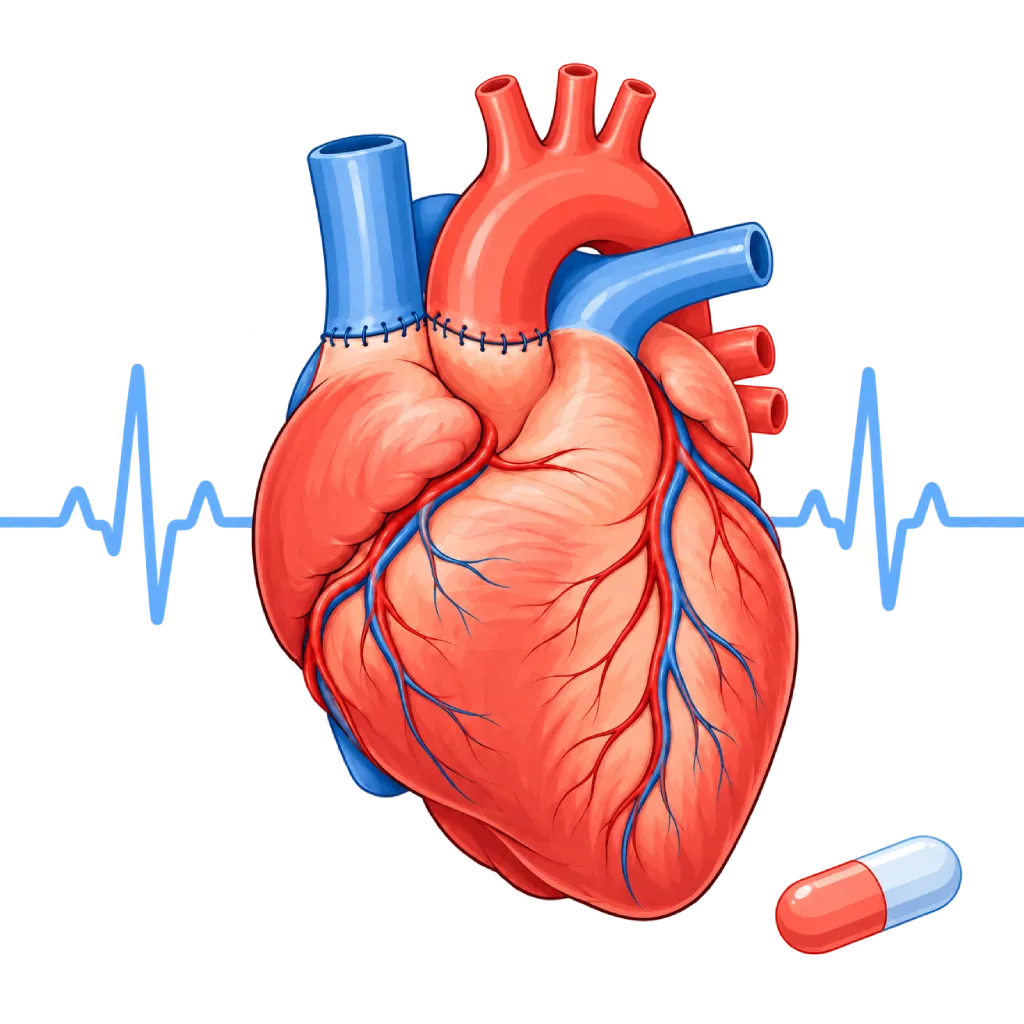
A heart transplant is surgery to replace a severely damaged heart with a healthy heart from a deceased donor. It is considered for people with advanced heart failure that does not improve with medicines, devices, or other surgery. Afterward, recipients need to take anti-rejection medicines for life and have regular follow-up visits.
Sources01 / Understanding the procedure
About Heart Transplant
What Is a Heart Transplant
A heart transplant is major surgery to replace a severely damaged heart with a healthy heart from a deceased donor. It becomes an option when heart failure is advanced and medicines, special pacing devices, or other surgery no longer help enough. The decision is made together with the medical team after a thorough evaluation.
How It Works in Brief
During surgery, a heart-lung machine takes over the work of the heart and lungs. The damaged heart is removed, and the donor heart is sewn to the patient's upper chambers (atria) and large blood vessels. Once blood flow is restored, the new heart starts beating and the machine is gradually removed. From then on, anti-rejection medicines keep the immune system from attacking the new heart.
Who Is Considered
A transplant is usually considered for people with:
- Advanced heart failure: severe shortness of breath and fatigue even though medicines, devices, and other treatments have been optimized.
- Repeated hospital stays: frequent hospitalization for heart failure, or dependence on intravenous medicines that support the heart.
- Severe cardiomyopathy: heart muscle that is weakened, thickened, or stiff and cannot be corrected in other ways.
- Dangerous rhythm disorders: that keep occurring despite treatment with medicines, an implanted defibrillator, and ablation.
Evaluation and the Waiting List
Before being placed on the waiting list, transplant candidates undergo a complete evaluation, for example echocardiography, right heart catheterization to measure the pressure in the lung blood vessels, cardiopulmonary exercise testing, blood tests, and screening for infection and cancer. Mental readiness and family support are also assessed. Donor hearts are matched by blood type, body size, and immune compatibility, so the waiting time cannot be predicted. Some patients need a mechanical heart pump while they wait. In Indonesia, organ transplantation is regulated by the government, and organs may not be bought or sold.
Living with a New Heart
Transplant recipients take anti-rejection medicines for life, have regular heart biopsies, especially in the year after the transplant, and attend routine follow-up visits to monitor for rejection, infection, and medicine side effects. With regular care, many recipients can return to their activities, go back to work, and live more than 10 years after the transplant.
02 / Understanding the procedure
When Is This Procedure Considered?
A doctor may consider this procedure in the situations below. The decision is always made after a thorough assessment.
- Advanced Heart FailureSymptoms remain severe even though medicines, devices, and other treatments have been optimized.
- Frequent Hospital Stays for Heart FailureRepeated hospital stays indicate a disease that keeps getting worse.
- Dependence on Intravenous Medicines or a Pump DeviceThe heart can no longer work without the help of intravenous medicines or a device.
- Severe CardiomyopathyHeart muscle damage that cannot be corrected in other ways.
- Uncontrolled Dangerous Rhythm DisordersThey keep occurring despite treatment with medicines, an implanted defibrillator, and ablation.
- Complex Congenital Heart DiseaseIn certain cases, when other surgery is no longer possible.
Situations to Consider First
- Active CancerAnti-rejection medicines can make cancer worse.
- Uncontrolled InfectionThe infection must be treated before a transplant.
- Severe, Persistent Pulmonary HypertensionVery high pressure in the lung blood vessels can cause the donor heart to fail.
- Severe Damage to Other OrgansFor example, the kidneys, liver, or lungs, unless a combined transplant is being considered.
- Still Smoking, Drinking Alcohol, or Using DrugsThese habits must stop before the evaluation can continue.
- Difficulty Following Lifelong TreatmentAnti-rejection medicines must be taken regularly, so family support is also assessed.
03 / Before the procedure
How Should You Prepare?
Preparation for a transplant begins long before the day of surgery.
Complete evaluation. Complete all the tests the team requests, including a dental checkup and infection screening, because minor problems can become serious once you take anti-rejection medicines.
While you wait. Keep taking your heart failure medicines, attend your follow-up visits as scheduled, and keep your phone switched on, because the call can come at any time.
Lifestyle. Stop smoking and drinking alcohol, maintain your weight, follow the recommended diet, and stay active as far as you are able.
Vaccinations. Complete your vaccinations before the transplant as advised by your doctor.
Family support. Arrange for a companion, a travel plan to the hospital, and help at home during recovery.
When you are called. Stop eating and drinking as soon as the team contacts you, then bring your medicine list and the requested documents.
Unsure about the preparation instructions? Ask our team before the procedure.
04 / During the procedure
How Is the Procedure Done?
The surgery usually takes 4 to 6 hours, and it may take longer if you have had previous heart surgery or use a mechanical heart pump.
The Call and Final Checks
When a matching donor heart becomes available, the team contacts the patient. Blood tests and final checks are done to confirm compatibility and the patient's readiness.
Anesthesia and the Heart-Lung Machine
The patient is put under general anesthesia. The chest is opened through the breastbone, and a heart-lung machine is connected to circulate blood and oxygen throughout the body.
Replacing the Heart
The damaged heart is removed. The donor heart is then sewn to the patient's atria or large veins, aorta, and pulmonary artery.
The New Heart Starts Beating
Blood flow is restored and the new heart starts beating. Temporary pacing wires are placed, the heart-lung machine is gradually removed, and the chest is closed. The patient is then cared for in the intensive care unit.
05 / Benefits and risks
Benefits and Risks Should Be Discussed Together.
Every medical procedure has benefits and risks. Your doctor will explain both for your situation before the procedure.
Benefits You Can Expect
- Longer Life ExpectancyMany recipients can live more than 10 years after the transplant.
- Better Quality of LifeShortness of breath and fatigue decrease, so daily activities feel easier.
- Fewer Hospital StaysA new heart reduces repeated hospital stays due to heart failure.
- Return to Work and ActivitiesWith regular care, many recipients return to their daily activities.
- An Option When Other Treatments Do Not HelpOffers new hope when medicines, devices, and other surgery are no longer enough.
The benefits of a procedure are not a promise of a cure. Ask how the results will affect your care plan.
Risks You Should Know
- Heart RejectionThe immune system can attack the new heart, so medicines and regular biopsies are needed.
- InfectionAnti-rejection medicines lower the body's defenses against germs.
- Bleeding and Complications of Major SurgeryIncluding rhythm disorders, kidney problems, or problems with the surgical wound.
- Donor Heart Not Yet Working FullyIn the early period after surgery, some patients need medicines or a temporary support device.
- Narrowing of the New Heart's ArteriesThis can develop over the long term and often without chest pain, so routine checks are needed.
- Long-Term Medicine Side EffectsFor example, high blood pressure, kidney problems, diabetes, and a risk of skin cancer.
Risks can differ from person to person. A full explanation and consent are given after an individual assessment.
06 / After the procedure
What Is Recovery Like?
You are cared for in the intensive care unit for several days, then on a regular ward. The hospital stay is usually about 1 to 3 weeks.
Anti-rejection medicines. Taken on time for life, with regular blood tests to adjust the dose.
Heart biopsies. Taken regularly, especially in the year after the transplant, to detect rejection before it causes symptoms.
Cardiac rehabilitation. Gradual exercise helps restore your strength. Many recipients return to light activities within a few weeks.
Preventing infection. Wash your hands often, avoid people who are sick, eat well-cooked food, and follow the vaccination schedule from your doctor.
Warning signs. Go to the emergency room right away or contact the transplant team if you have:
- Fever, chills, or a cough that does not get better
- Shortness of breath or swelling that gets worse
- Rapid weight gain over a few days
- Palpitations, severe dizziness, or fainting
- A missed dose of anti-rejection medicine, or vomiting after taking it
Know the Signs That Need Prompt Care.
Follow the team's guidance on warning signs. If severe or sudden symptoms appear after the procedure, go to the nearest emergency department right away or call Heart Attack Center 1500 258.
07 / Team and support
Doctors and Procedure Support
The doctors below are listed for this procedure. Listed by name, not by ranking.

Dr. dr. Dudy A. Hanafy, Sp.BTKV, Subsp. JD(K), MARS
Adult Cardiac Surgery
Advanced Cardiovascular Surgical Care +1 center
Clinical focusMinimally Invasive Cardiac Surgery · Coronary Artery Bypass Surgery
View Profile
dr. Siska S. Danny, Sp.JP(K)
Interventional Cardiology
Coronary Intervention Procedures
Clinical focusPCI for Acute Coronary Syndrome · Primary Coronary Intervention
View Profile
dr. Widya T. Suwatri, Sp.BTKV, Subsp. JD(K)
Adult Cardiac Surgery
Advanced Cardiovascular Surgical Care +1 center
Clinical focusMinimally Invasive Cardiac Surgery · Coronary Artery Bypass Surgery
View Profile08 / Common questions
Before You Plan the Procedure.
Frequently asked questions about heart transplants. The right option for your condition is discussed with your doctor.
Who needs a heart transplant?
A transplant is considered for people with advanced heart failure who still have severe symptoms even though medicines, devices, and other treatments have been optimized. The doctor also assesses age, the condition of other organs, any history of cancer or infection, and whether the patient and family are ready for lifelong treatment after the transplant.
Where do donor hearts come from?
Donor hearts come from people who have been declared dead by a medical team and whose families have agreed to organ donation. Hearts are matched by blood type, body size, and immune compatibility. In Indonesia, organ transplantation is regulated by the government, and donor organs may not be bought or sold in any form.
How long is the wait for a donor heart?
The waiting time cannot be predicted. It depends on donor availability, blood type, body size, and how critical the patient's condition is. While waiting, patients continue treatment with heart failure medicines, and some need a mechanical heart pump to keep their condition stable until a donor heart becomes available.
Do recipients have to take medicines for life?
Yes. Anti-rejection medicines must be taken for life so the immune system does not attack the new heart. The dose is adjusted based on regular blood tests. Skipping doses can trigger rejection, so it is important to take your medicines on time and contact the team right away if you miss a dose or vomit after taking it.
How long is recovery after a heart transplant?
Patients stay in the intensive care unit for several days, then on a regular ward, with a total hospital stay of about 1 to 3 weeks. After discharge, cardiac rehabilitation and routine follow-up visits continue. Many recipients return to light activities within a few weeks and go back to work within a few months, as guided by the team.
Are there options other than a heart transplant?
Yes. Depending on your condition, options include guideline-based heart failure medicines, special pacing devices, an implanted defibrillator, valve or bypass surgery, and a long-term mechanical heart pump. For some patients, palliative care helps relieve symptoms and maintain comfort. Your doctor helps assess which options are suitable.
Sources and Medical Review
Translated from the Indonesian edition medically reviewed by Dr. dr. Dudy A. Hanafy, Sp.BTKV, Subsp. JD(K), MARS.
Sources as cited in the Indonesian edition.
- Mehra MR, Canter CE, Hannan MM, et al. The 2016 International Society for Heart Lung Transplantation listing criteria for heart transplantation: A 10-year update. J Heart Lung Transplant. 2016;35(1):1-23.
- Velleca A, Shullo MA, Dhital K, et al. The International Society for Heart and Lung Transplantation (ISHLT) guidelines for the care of heart transplant recipients. J Heart Lung Transplant. 2023;42(5):e1-e141.
- McDonagh TA, Metra M, Adamo M, et al. 2021 ESC Guidelines for the diagnosis and treatment of acute and chronic heart failure. Eur Heart J. 2021;42(36):3599-3726.
- Khush KK, Cherikh WS, Chambers DC, et al. The International Thoracic Organ Transplant Registry of the International Society for Heart and Lung Transplantation: Thirty-sixth adult heart transplantation report, 2019. J Heart Lung Transplant. 2019;38(10):1056-1066.