
Quick answer
What Is Ventricular Fibrillation?
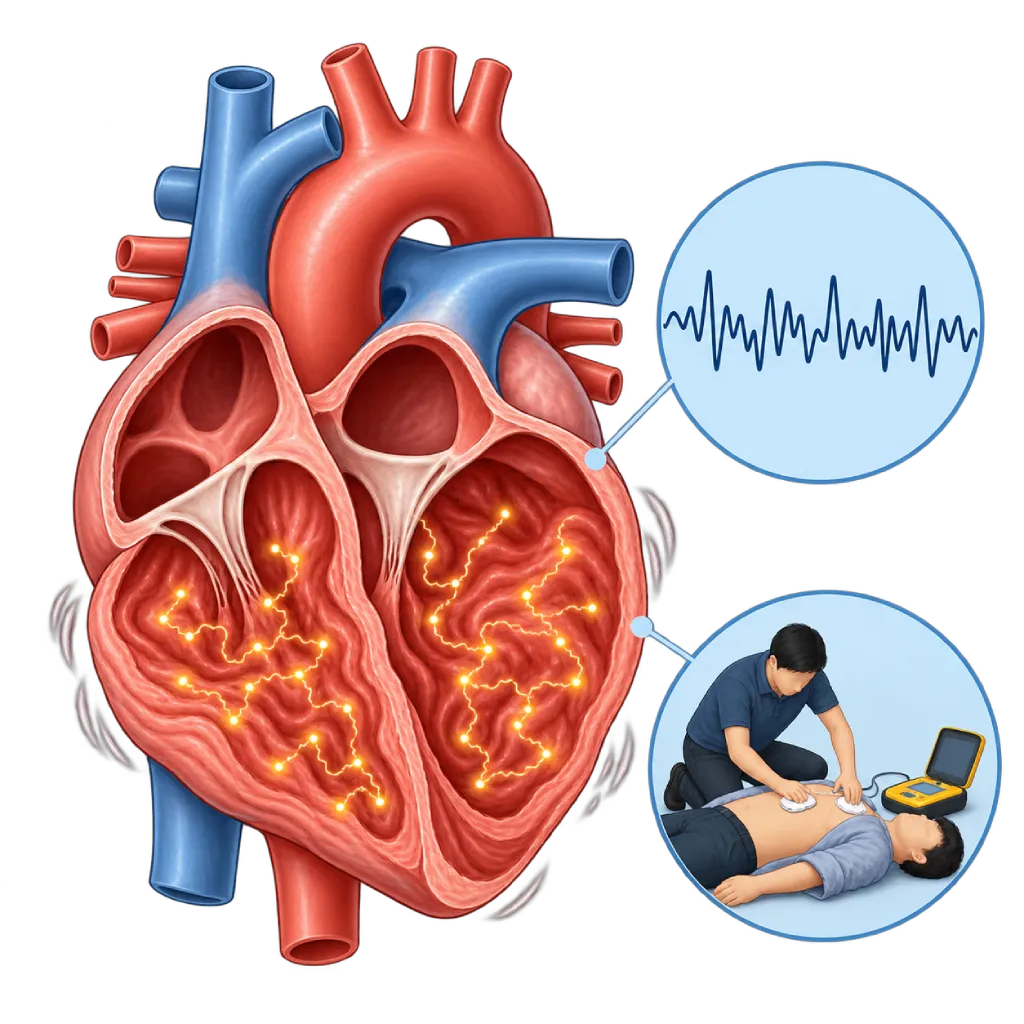
Ventricular fibrillation is a chaotic rhythm in the heart's lower chambers that makes the heart quiver without pumping blood. The person immediately loses consciousness and stops breathing normally. This is cardiac arrest: call emergency services, start chest compressions, and use an AED.
Sources01 / Understanding the condition
About Ventricular Fibrillation
The ventricles are the heart's main pumping chambers that send blood to the whole body. In ventricular fibrillation (VF), the electrical signals in the ventricles become very fast and chaotic. The ventricular muscle no longer contracts in unison but quivers instead. As a result, blood stops being pumped. Within seconds, the person loses consciousness, stops breathing normally, and has no detectable pulse. This state is called cardiac arrest.
Different from a Heart Attack
A heart attack happens when a coronary artery is blocked, so part of the heart muscle does not get enough blood. The person is usually still conscious and feels chest pain. Ventricular fibrillation is an electrical problem that stops the heart's pumping. The two are related: a heart attack can trigger ventricular fibrillation, especially in the first hours. Sudden death from rhythm disorders is covered on the Sudden Cardiac Death page.
What Triggers It
In adults, the trigger commonly found is coronary artery disease, including a heart attack and scarring from a previous heart attack. Other causes are cardiomyopathy, heart failure with a weak pump, inflammation of the heart muscle, and inherited electrical disorders such as long QT syndrome and Brugada syndrome. Severe potassium or magnesium imbalances, the effects of certain medications or substances, electric shock, and a hard blow to the chest can also trigger it. Ventricular fibrillation is often preceded by ventricular tachycardia, covered on the Ventricular Tachycardia page.
Help Within Minutes
Ventricular fibrillation is stopped with an electric shock from a defibrillator. Every minute without help lowers the chance of survival. That is why people near the person play an important role: call emergency services right away, start chest compressions, and use an AED (automated external defibrillator) if one is nearby. An AED gives step-by-step voice instructions and only delivers a shock if the rhythm needs it. Chest compressions keep blood flowing to the brain until a shock is given.
After Survival
Survivors of ventricular fibrillation receive intensive care to stabilize the heart, protect the brain, and find the cause. If the cause is not temporary, doctors generally recommend an ICD, an implanted device that monitors the rhythm and automatically stops dangerous ventricular arrhythmias. Close family members may also be advised to undergo screening if the cause is thought to be inherited.
02 / Understanding the condition
Symptoms to Recognize.
Common Symptoms
Ventricular fibrillation often occurs without warning. Some people have the following signs in the minutes, hours, or days before.
- Chest pain or pressure
- A very fast heartbeat
- Severe dizziness or nearly fainting
- Sudden shortness of breath
- Fainting during exercise or when startled
- Unusual weakness and nausea
03 / Understanding the condition
What Causes This Condition?
- A heart attack caused by a blocked coronary artery
- Scar tissue from a previous heart attack
- Cardiomyopathy, including hypertrophic, dilated, and arrhythmogenic cardiomyopathy
- Inherited electrical disorders, such as long QT syndrome and Brugada syndrome
- Severe imbalances in potassium or magnesium levels
- Effects of medications that prolong the QT interval, poisoning, or illicit drugs such as cocaine
- Electric shock or a hard blow directly to the chest
- Inflammation of the heart muscle (myocarditis)
04 / Understanding the condition
Who Is at Higher Risk?
Medical
Coronary artery disease, a history of heart attack, heart failure with a weak pump, cardiomyopathy, and a history of ventricular tachycardia.
Genetic
A family history of sudden death before age 50 without a clear cause, or inherited electrical or heart muscle disorders in the family.
Lifestyle
Smoking, uncontrolled blood pressure and cholesterol, obesity, and stimulant drugs increase the risk, mainly through coronary artery disease.
Age
The risk increases with age because coronary artery disease becomes more common, but inherited disorders can cause ventricular fibrillation at a young age.
Groups at Higher Risk
- People with Coronary Artery Disease: Especially in the first hours of a heart attack and with extensive scarring from a previous heart attack.
- People with Heart Failure and a Weak Pump: A low ejection fraction increases the risk of ventricular arrhythmias; some patients are advised to have an ICD.
- People with Cardiomyopathy or Inherited Arrhythmias: Hypertrophic and arrhythmogenic cardiomyopathy, long QT syndrome, and Brugada syndrome can trigger ventricular fibrillation at a young age.
- Families of Young Sudden Death Victims: They need heart screening because some causes of sudden death run in families.
- Cardiac Arrest Survivors: The risk of recurrence is high if the cause is not temporary, so an ICD is generally recommended.
05 / Understanding the condition
How Is It Diagnosed?
Ventricular fibrillation is recognized at the time it happens, from the AED recording or the emergency team's monitor. Tests afterward focus on two questions: what caused it, and could it happen again.
After circulation returns, a 12-lead ECG and blood tests, including troponin and electrolytes, look for signs of a heart attack or a potassium imbalance. If a coronary blockage is suspected, coronary angiography is done and the blockage can be opened during the same procedure. Echocardiography assesses the pumping strength. If the cause is still unclear, cardiac MRI looks for scar tissue, inflammation, or cardiomyopathy. In young people without obvious heart disease, the doctor may recommend a drug challenge test, genetic testing, and screening of family members.
During cardiac arrest, an AED or defibrillator monitor reads the rhythm and recognizes ventricular fibrillation within seconds.
Electrocardiogram (ECG)
After circulation returns, a 12-lead ECG looks for signs of a heart attack, long QT, a Brugada pattern, or other abnormalities.
Coronary Angiography
Done urgently or as a planned procedure to look for a blocked coronary artery as the trigger, which can be opened right away.
Echocardiography
Assesses the pumping strength, wall motion, and heart valves after cardiac arrest.
Cardiac MRI
Looks for scar tissue, inflammation, or cardiomyopathy when the cause is unclear.
Blood Electrolyte Test
Checks potassium and magnesium, which can trigger ventricular arrhythmias.
Genetic testing and family screening when an inherited electrical or heart muscle disorder is suspected.
06 / Understanding the condition
Treatment Options.
Treatment is decided by a doctor after an assessment. The categories below can help you follow the conversation with your doctor.
Chest Compressions and AED
First aid by people nearby: push hard and fast in the center of the chest, then use an AED as soon as possible, following its voice instructions.
Defibrillation and Advanced Life Support
The medical team gives electric shocks, breathing support, and injectable medications to restore the rhythm and circulation.
Post-Cardiac Arrest Care
Intensive care to maintain blood pressure, oxygen, and body temperature, and to protect the brain after circulation returns.
Treating the Cause
Opening a coronary blockage through a catheter, correcting electrolytes, or stopping a triggering medication, as decided by the doctor.
Implantable Defibrillator (ICD)
A device that monitors the rhythm and stops ventricular fibrillation with an electric shock if it recurs, recommended for survivors without a temporary cause.
Antiarrhythmic Medications and Ablation
Certain antiarrhythmic medications or catheter ablation are used to reduce recurrences of ventricular arrhythmias in selected patients.
07 / Understanding the condition
Complications to Watch For.
Brain Injury from Lack of Oxygen
The brain begins to be damaged after a few minutes without blood flow. Starting chest compressions right away helps maintain blood flow to the brain.
Sudden Cardiac Death
Ventricular fibrillation rarely stops on its own. Without chest compressions and an electric shock, it ends in death, so fast help makes a big difference.
Heart Problems After Cardiac Arrest
The heart's pumping can weaken temporarily after resuscitation and electric shocks, so support with medication or devices may be needed.
Problems in Other Organs
The kidneys, liver, and other organs can be affected after cardiac arrest and need intensive care.
Recurrent Ventricular Fibrillation
If the cause is not resolved, the arrhythmia can come back. An ICD is implanted to stop it automatically.
08 / Understanding the condition
What Can You Do?
- Control your blood pressure, cholesterol, and blood sugar to prevent coronary artery disease
- Quit smoking and stay away from stimulant drugs
- Learn the signs of a heart attack and go to the emergency room right away if you have chest pain
- Take training in chest compressions and how to use an AED together with your family
- Tell your doctor about any family history of sudden death at a young age
- If you have an ICD, follow the device check-up schedule
- If you have a rhythm disorder, ask your doctor before taking any new medication that can prolong the QT interval
09 / Understanding the condition
When Should You See a Doctor?
Ventricular fibrillation is always an emergency. If you see someone suddenly collapse, not respond, and not breathe normally, call emergency services at 119 right away, start chest compressions, and ask someone else to get an AED.
Make an appointment with a cardiologist to assess your risk if:
- You have fainted during exercise or when startled
- A family member died suddenly before age 50 without a clear cause
- You have heart failure, cardiomyopathy, or a history of heart attack and have never had your arrhythmia risk assessed
- You often feel a very fast heartbeat along with dizziness
10 / Common questions
Questions You May Have.
Frequently asked questions about ventricular fibrillation and cardiac arrest.
What is the difference between ventricular fibrillation and a heart attack?
A heart attack happens because of a blocked coronary artery, so part of the heart muscle does not get enough blood. The person is usually still conscious and feels chest pain. Ventricular fibrillation is an electrical problem that makes the ventricles quiver so the heart stops pumping, and the person immediately loses consciousness. A heart attack can trigger ventricular fibrillation, so chest pain needs to be checked in the emergency room right away.
What should I do if I see someone suddenly faint and stop breathing?
Make sure the area is safe, then tap the person's shoulder and call out to them. If they do not respond and are not breathing normally, call emergency services and ask someone else to find an AED. Start chest compressions: push hard and fast in the center of the chest, about 100 to 120 times per minute. Turn on the AED as soon as it is brought and follow its voice instructions until the medical team arrives.
Is an AED safe for laypeople to use?
Yes. AEDs are designed for people without a medical background. The device gives voice instructions, reads the heart rhythm on its own, and only delivers a shock if it detects a rhythm such as ventricular fibrillation. Make sure no one is touching the person while the device analyzes and delivers a shock. Brief training in chest compressions and AED use helps you feel more confident in an emergency.
Do people who survive ventricular fibrillation need an ICD?
Generally yes, if the ventricular fibrillation was not caused by a temporary problem that has been resolved, such as a heart attack within the first 48 hours or an electrolyte imbalance that has been corrected. An ICD monitors the rhythm continuously and stops ventricular arrhythmias automatically. The decision is made after the doctor assesses the cause, the heart's pumping strength, and your overall condition.
Can ventricular fibrillation run in families?
Ventricular fibrillation itself is not inherited, but some of its causes are, for example long QT syndrome, Brugada syndrome, and certain cardiomyopathies. If a family member has had cardiac arrest or died suddenly at a young age, close relatives should be checked with an ECG, echocardiography, and genetic testing if needed. This screening can find the risk before an event happens.
What is life like after surviving cardiac arrest?
Many survivors return to work and their usual activities after a recovery period. Some experience fatigue, difficulty concentrating, anxiety, or trouble sleeping, which can improve with cardiac rehabilitation and psychological support. If you have an ICD, you need regular check-ups and should follow the driving restrictions your doctor recommends. Family members are also encouraged to learn chest compressions and how to use an AED.
Sources and Medical Review
Translated from the Indonesian edition medically reviewed by Dr. dr. Dicky A. Hanafy, Sp.JP(K).
Sources as cited in the Indonesian edition.
- Zeppenfeld K, Tfelt-Hansen J, de Riva M, Winkel BG, Behr ER, Blom NA, et al. 2022 ESC Guidelines for the management of patients with ventricular arrhythmias and the prevention of sudden cardiac death. Eur Heart J. 2022;43(40):3997-4126.
- Al-Khatib SM, Stevenson WG, Ackerman MJ, Bryant WJ, Callans DJ, Curtis AB, et al. 2017 AHA/ACC/HRS Guideline for Management of Patients With Ventricular Arrhythmias and the Prevention of Sudden Cardiac Death: A Report of the American College of Cardiology/American Heart Association Task Force on Clinical Practice Guidelines and the Heart Rhythm Society. Circulation. 2018;138(13):e272-e391.
- Panchal AR, Bartos JA, Cabañas JG, Donnino MW, Drennan IR, Hirsch KG, et al. Part 3: Adult Basic and Advanced Life Support: 2020 American Heart Association Guidelines for Cardiopulmonary Resuscitation and Emergency Cardiovascular Care. Circulation. 2020;142(16 Suppl 2):S366-S468.
- Olasveengen TM, Semeraro F, Ristagno G, Castren M, Handley A, Kuzovlev A, et al. European Resuscitation Council Guidelines 2021: Basic Life Support. Resuscitation. 2021;161:98-114.
- Soar J, Böttiger BW, Carli P, Couper K, Deakin CD, Djärv T, et al. European Resuscitation Council Guidelines 2021: Adult advanced life support. Resuscitation. 2021;161:115-151.
Doctors Who Treat This Condition

Dr. dr. Dicky A. Hanafy, Sp.JP(K)
Arrhythmia and Electrophysiology
Arrhythmia and Device Center +1 center
Clinical focusElectrophysiology and Arrhythmia Ablation · Pacemaker and ICD Implantation
View Profile
dr. Sunu B. Raharjo, Sp.JP(K), Ph.D.
Arrhythmia and Electrophysiology
Arrhythmia and Device Center
Clinical focusClinical and Interventional Electrophysiology · Cardiac Arrhythmia Ablation
View Profile
Dr. dr. Dafsah A. Juzar, Sp.JP(K)
Interventional Cardiology
Coronary Intervention Procedures +1 center
Clinical focusComplex Coronary Intervention · Cardiac Catheterization
View Profile