
Quick answer
What Is Peripheral Vascular Disease Management?
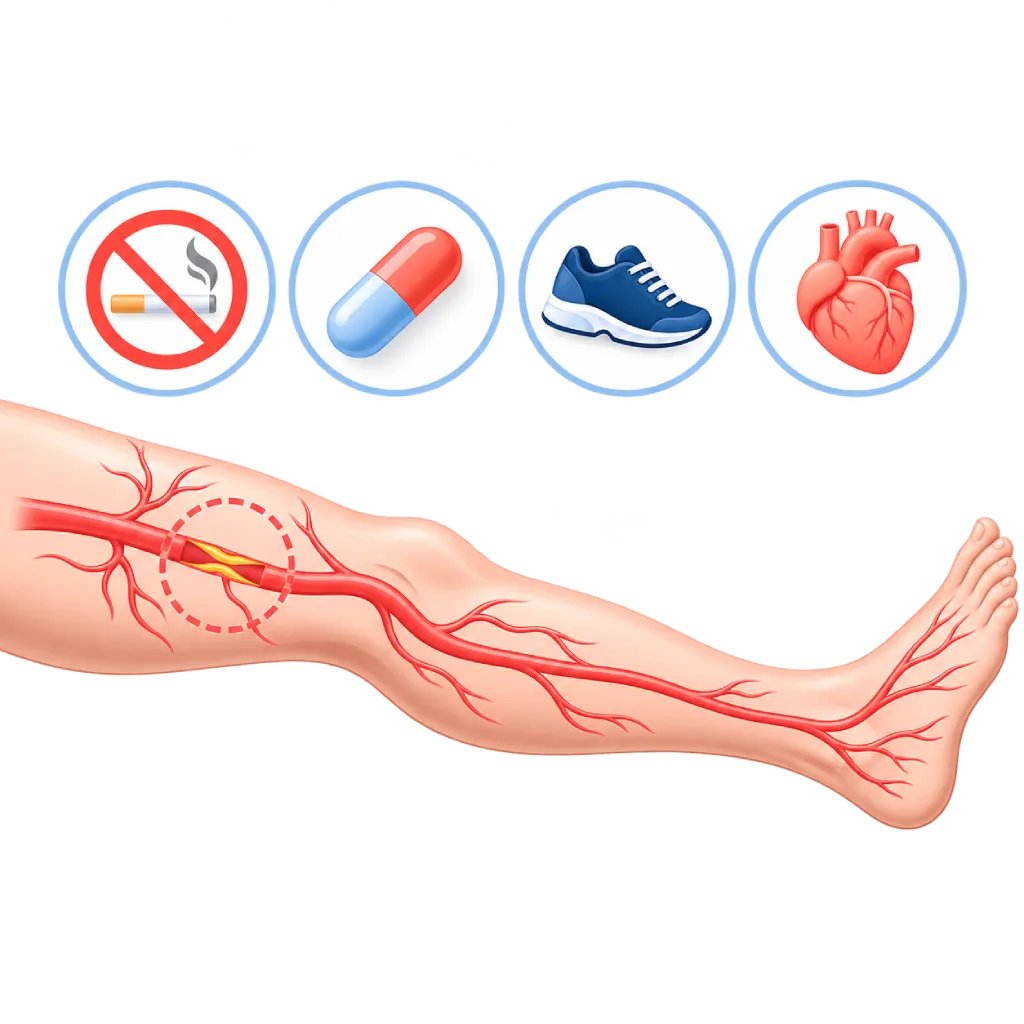
Peripheral vascular disease management is the treatment of leg arteries narrowed by plaque. Its goals are to lower the risk of heart attack and stroke, ease pain when walking, and prevent wounds and amputation. The main steps are quitting smoking, medicines, and structured walking exercise, plus widening the artery or bypass surgery if needed.
Sources01 / Understanding the procedure
About Peripheral Vascular Disease Management
What Is Peripheral Vascular Disease Management
Peripheral artery disease is a narrowing of the arteries that carry blood to the legs, caused by plaque buildup. The typical symptom is pain, aching, or cramping in the calf when walking that goes away after resting, called claudication, but many people with the disease have no symptoms. The same plaque is usually also present in the blood vessels of the heart and brain, so people with this disease are at high risk of heart attack and stroke. Managing this disease protects the legs as well as the heart and brain.
How It Works at a Glance
When the leg arteries narrow, the calf muscles do not get enough blood flow when they work harder, for example when walking. Regular walking exercise trains the muscles to use oxygen more efficiently and helps alternative blood flow routes form around the narrowing. Medicines prevent plaque from growing and blood clots from forming. If the narrowing is very severe, the artery can be widened or a new route can be created.
Treatment Steps
- Quitting smoking: the main step, because smoking speeds up narrowing and increases the risk of amputation.
- Medicines: antiplatelets such as aspirin or clopidogrel, a statin with an LDL cholesterol target below 55 mg/dL, and control of blood pressure and blood sugar. In some patients, the doctor may add low-dose rivaroxaban. This is covered on the Integrated Medication Therapy page.
- Structured walking exercise: walk until the pain is moderate, rest, then walk again, for 30 to 60 minutes, 3 or more times a week for at least 12 weeks, ideally with supervision.
- Foot care: check your feet every day, wear well-fitting footwear, and have any wound checked promptly, especially if you have diabetes.
- Widening the artery or bypass: when symptoms remain bothersome despite medicines and exercise, or when there is pain at rest or a wound that does not heal. This is covered on the Peripheral Angioplasty and Peripheral Bypass Surgery pages.
Tests to Assess Severity
Diagnosis and monitoring use the ABI test, which compares the blood pressure at the ankle and the arm, plus duplex ultrasound to see where the narrowing is. CT angiography or angiography is done when widening the artery or bypass is being considered. This is covered on the Ankle-Brachial Index (ABI) Test and Duplex Ultrasound pages.
When the Condition Threatens the Leg
Leg pain at rest, especially at night, wounds on the foot or toes that have not healed for more than two weeks, and blackened skin indicate critical limb ischemia. This condition needs prompt treatment to save the leg. A foot that suddenly turns cold, pale, very painful, or numb is an emergency.
02 / Understanding the procedure
When Is This Procedure Considered?
A doctor may consider this procedure in the situations below. The decision is always made after a thorough assessment.
- Calf Pain When Walking That Goes Away with RestThe typical symptom of intermittent claudication.
- Low ABI Test ResultAn ABI of 0.90 or lower indicates narrowing of the leg arteries.
- Smokers and People with Diabetes or Chronic Kidney DiseaseGroups with a higher risk of peripheral artery disease.
- Foot Wounds That Are Slow to HealMay indicate that blood flow to the foot is not sufficient.
- Coronary Artery Disease or StrokeOften accompanied by narrowing of the leg arteries.
- After Artery Widening or Leg BypassLong-term treatment and monitoring help maintain the results of the procedure.
Situations to Consider First
- Sudden Cold, Pale, or Very Painful FootThis is an emergency; go to the emergency room right away rather than waiting for a routine follow-up visit.
- Open Wounds or Foot InfectionWalking exercise is postponed or adjusted until the wound is treated.
- Chest Pain or Shortness of Breath When WalkingA heart evaluation is needed before starting walking exercise.
- High Bleeding RiskThe choice and combination of blood thinners are adjusted.
- Joint or Nerve Problems That Limit WalkingExercise can be replaced with a stationary bike or arm exercises.
03 / Before the procedure
How Should You Prepare?
The main preparation is bringing your health records and paying attention to your leg symptoms.
Symptom notes. Estimate how far you can walk before the pain starts, and whether you also feel pain at rest.
Test results. Bring any previous ABI, ultrasound, CT, or angiography results.
Medication list. Especially blood thinners and medicines for cholesterol, blood pressure, and diabetes.
Clothing and footwear. Wear comfortable clothes and shoes, because your feet will be examined and an ABI test may be done.
Wound photos. If you have a wound on your foot, photos of its progress help the doctor assess it.
Unsure about the preparation instructions? Ask our team before the procedure.
04 / During the procedure
How Is the Procedure Done?
Each consultation visit usually takes about 30 minutes. Structured walking exercise is done separately, about 30 to 60 minutes per session.
Leg Examination
The doctor asks about your symptoms, feels the pulses in your feet, checks the skin and any wounds, and then performs or reviews an ABI test.
Heart Risk Assessment
Blood pressure, cholesterol, blood sugar, and smoking habits are assessed, because people with peripheral artery disease are at high risk of heart attack and stroke.
Treatment Plan
The doctor draws up a plan for medicines, quitting smoking, walking exercise, and foot care. If needed, imaging tests are done to plan a procedure.
Regular Follow-Up Visits
Your pain-free walking distance, ABI test, and foot condition are monitored. After a procedure, monitoring is done to make sure the artery stays open.
05 / Benefits and risks
Benefits and Risks Should Be Discussed Together.
Every medical procedure has benefits and risks. Your doctor will explain both for your situation before the procedure.
Benefits You Can Expect
- Protects the Heart and BrainMedicines and quitting smoking lower the risk of heart attack and stroke.
- Walk Farther Without PainStructured walking exercise has been shown to increase walking distance.
- Prevents Wounds and AmputationFoot care and early treatment protect your legs.
- Procedures Only When NeededArtery widening or bypass is chosen based on severity.
- Long-Term MonitoringChanges in blood flow can be detected earlier.
The benefits of a procedure are not a promise of a cure. Ask how the results will affect your care plan.
Risks You Should Know
- BleedingIn people taking antiplatelets or anticoagulants, especially when they are combined.
- Statin Side EffectsSuch as muscle pain, which can usually be managed with adjustments.
- Pain During ExerciseNormal and temporary; exercise is increased gradually.
- Procedure RisksIf artery widening or bypass is done, the doctor explains the risks beforehand.
Risks can differ from person to person. A full explanation and consent are given after an individual assessment.
06 / After the procedure
What Is Recovery Like?
There is no recovery period for a consultation visit. Management continues over the long term alongside your daily activities.
Keep walking even with mild pain. Calf pain during walking exercise does not damage the muscles. Rest until the pain goes away, then continue walking.
Care for your feet every day. Check between your toes and the soles of your feet, keep the skin moisturized, trim your nails carefully, and do not walk barefoot.
Take your medicines regularly. Do not stop blood thinners or statins without your doctor's guidance.
Warning signs. Go to the emergency room right away if you have:
- A foot that suddenly turns cold, pale, very painful, or numb
- Toes or skin on the foot turning black
- A foot wound that is red, swollen, or oozing pus, with fever
- Chest pain, shortness of breath, or facial drooping and arm weakness
Know the Signs That Need Prompt Care.
Follow the team's guidance on warning signs. If severe or sudden symptoms appear after the procedure, go to the nearest emergency department right away or call Heart Attack Center 1500 258.
07 / Team and support
Doctors and Procedure Support
The doctors below are listed for this procedure. Listed by name, not by ranking.

dr. Ayu Amalia U. Putri, Sp.KFR
Physical Medicine & Rehabilitation
Clinical focusCardiac Rehabilitation · Postoperative Rehabilitation
View Profile
dr. Emanoel Oepangat, Sp.JP(K)
Interventional Cardiology
Vascular Diagnostic and Therapeutic Center +1 center
Clinical focusCoronary Intervention · Peripheral Vascular Intervention
View Profile
dr. Suko Adiarto, Sp.JP(K), Ph.D.
Interventional Cardiology
Vascular Diagnostic and Therapeutic Center +1 center
Clinical focusCoronary Intervention · Peripheral Vascular Intervention
View ProfileDoppler Vascular Ultrasound
An ultrasound test of the blood vessels that shows the vessel wall and the blood flow at the same time. Doctors use it to look…
Ankle-Brachial Index (ABI) Testing System
A needle-free test that compares blood pressure at the ankles and arms. The result is an index number that helps doctors detect…
The availability of technology and test support is confirmed with the team. Technology is chosen according to clinical need.
08 / Common questions
Before You Plan the Procedure.
Frequently asked questions about peripheral vascular disease management. The right plan for you is made together with your doctor.
Is calf pain when walking always caused by peripheral artery disease?
Not always. Calf pain can also be caused by problems with the spinal nerves, joints, or muscles. Pain from peripheral artery disease typically appears after walking a certain distance and goes away within a few minutes of stopping. The ABI test, which is simple and needle-free, helps confirm the cause.
Can peripheral artery disease improve without surgery?
Many people improve without a procedure. Quitting smoking, medicines, and structured walking exercise can meaningfully increase the distance you can walk without pain. Artery widening or bypass is considered when symptoms still interfere with daily activities, or when there is pain at rest or a wound that does not heal.
What is the right way to do walking exercise?
Walk at a pace that brings on moderate calf pain, stop until the pain goes away, then walk again. Repeat this for 30 to 60 minutes, 3 or more times a week, for at least 12 weeks. Supervised exercise gives better results. If you develop chest pain or shortness of breath, stop and contact your doctor.
Why does the doctor check my heart when my symptoms are in my legs?
The plaque that narrows the leg arteries is usually also present in the blood vessels of the heart and brain. People with peripheral artery disease are at high risk of heart attack and stroke, and are in fact more likely to die from heart disease than to lose a leg. For this reason, controlling heart risk factors is an important part of treatment.
What are the dangers of continuing to smoke?
Smoking speeds up the narrowing of blood vessels, reduces the benefits of exercise and medicines, lowers the success of artery widening or bypass, and increases the risk of amputation. Quitting smoking is a step with a large benefit. Your doctor can help with counseling and stop-smoking medicines, and it is never too late to quit.
When should I go to the hospital right away?
Go to the emergency room right away if your foot suddenly turns cold, pale, very painful, or numb, because blood flow may have been suddenly blocked. Also get checked promptly if you have pain at rest, a foot wound that does not heal, or toes turning black, because these signs mean your leg is under threat.
Sources and Medical Review
Translated from the Indonesian edition medically reviewed by dr. Emanoel Oepangat, Sp.JP(K).
Sources as cited in the Indonesian edition.
- Mazzolai L, Teixido-Tura G, Lanzi S, et al. 2024 ESC Guidelines for the management of peripheral arterial and aortic diseases. Eur Heart J. 2024;45(36):3538-3700.
- Gornik HL, Aronow HD, Goodney PP, et al. 2024 ACC/AHA/AACVPR/APMA/ABC/SCAI/SVM/SVN/SVS/SIR/VESS Guideline for the Management of Lower Extremity Peripheral Artery Disease. Circulation. 2024;149(24):e1313-e1410.
- Anand SS, Bosch J, Eikelboom JW, et al. Rivaroxaban with or without aspirin in patients with stable peripheral or carotid artery disease: an international, randomised, double-blind, placebo-controlled trial. Lancet. 2018;391(10117):219-229.
- Conte MS, Bradbury AW, Kolh P, et al. Global vascular guidelines on the management of chronic limb-threatening ischemia. J Vasc Surg. 2019;69(6S):3S-125S.e40.