
Quick answer
Hemochromatosis is a condition in which the body absorbs or stores excess iron, causing iron to build up in organs such as the liver, pancreas, joints, skin, and heart. In some people, buildup in heart tissue can disrupt the heart's rhythm and pumping function. Early symptoms are often nonspecific, and high ferritin alone is not enough to confirm the diagnosis, so it needs to be assessed together with transferrin saturation and a doctor's evaluation.
If you often tire easily, have joint pain, or have found high ferritin on a blood test, this article will help answer the most important questions. What is hemochromatosis? How do doctors diagnose it? Can excess iron affect the heart? And when should you not put off a consultation?
If your medical checkup (MCU) results show high ferritin, or you often feel tired for no clear reason, it is natural to wonder: is this just the effect of too little sleep and work pressure, or is there a condition that needs further examination? One condition you may only come across after reading your blood test results is hemochromatosis.
Hemochromatosis is a condition in which the body stores excess iron. The body does need iron to carry out important functions, including helping to form red blood cells. However, when the amount is excessive and builds up over the long term, iron can affect several important organs, such as the liver, pancreas, joints, skin, and heart.
Even so, it is important to understand from the start: not all fatigue means hemochromatosis, and not all high ferritin automatically indicates a harmful buildup of iron. In fact, ferritin can also rise because of inflammation, liver problems, metabolic conditions, or other causes. That is why blood test results should not be read as a single number that stands on its own.
In this article, you will come to understand hemochromatosis in a calmer and more focused way. We cover symptoms that are often nonspecific, possible underlying causes, tests such as ferritin and transferrin saturation, and treatment options, through to when its effects on the heart need further evaluation. With the right information, you do not need to guess on your own; you can take clearer steps to protect your long-term health.
What Is Hemochromatosis?
Hemochromatosis is a condition in which the body absorbs or stores too much iron. In international medical terminology, the condition is referred to as hemochromatosis or iron overload, meaning a buildup of iron that exceeds the body’s needs.
Iron actually plays an important role. The body needs it to form hemoglobin, a protein in red blood cells that helps carry oxygen throughout the body. Iron also supports the function of muscles, bone marrow, organs, and several hormones.
However, problems can arise when there is too much iron and the body cannot get rid of it effectively. Unlike certain nutrients that can be eliminated more easily, excess iron can be stored gradually in body tissues. That is why hemochromatosis should be understood early so that it can be recognized and managed appropriately.
Organs That Can Be Affected by Hemochromatosis
In hemochromatosis, excess iron can build up in several important organs and tissues, such as:
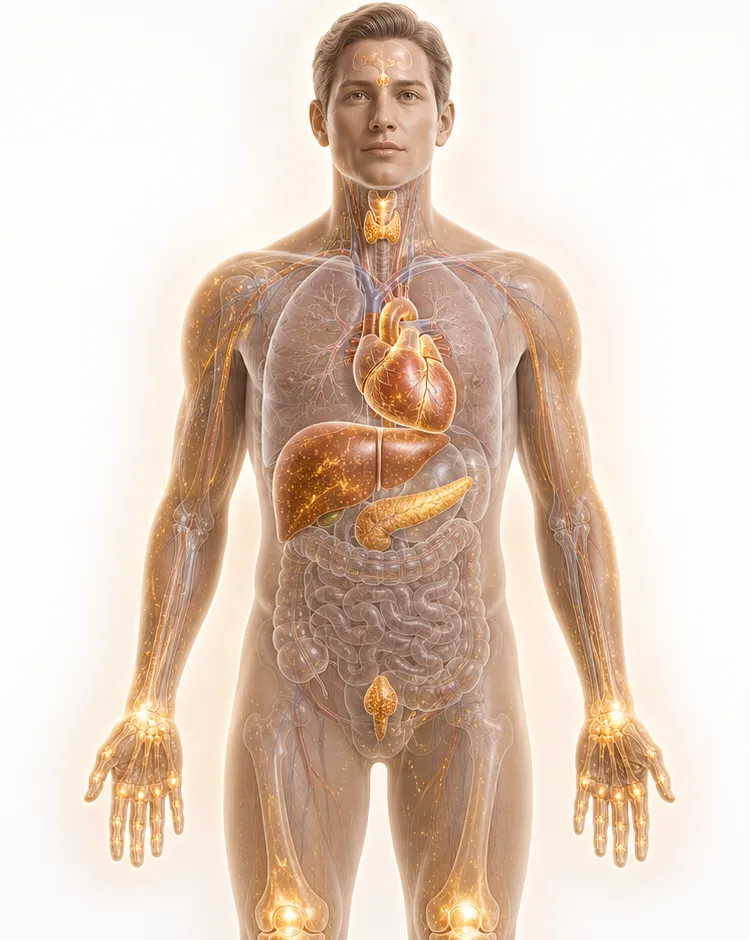
- The liver, which helps process nutrients, filter certain substances, and support the body’s metabolism.
- The heart, which depends on muscle function and a stable electrical rhythm.
- The pancreas, which plays a role in regulating blood sugar.
- The joints, which may feel painful or stiff when affected.
- The skin, which in some people may look darker or grayish.
- Certain endocrine glands, the glands that help regulate the body’s hormones.
Even so, hemochromatosis does not always cause obvious symptoms right away. Some people only become aware of it after a blood test, a high ferritin result, or an evaluation for common complaints such as tiring easily and joint pain. This is why the condition is worth understanding further: not to cause panic, but so you know when to pay attention to your body’s signals and when to see a doctor.
Why Does Hemochromatosis Need Attention?
Hemochromatosis needs attention because its symptoms are often nonspecific in the early stages. A person may tire easily, feel weak, or have joint pain, and then consider it part of their daily routine. Among people who are busy working, complaints like these are often put down to stress, lack of sleep, long-distance travel, or an overly packed schedule.
In hemochromatosis, however, excess iron can build up slowly in the body. This process is not always felt right away. In fact, some people only become aware of it after a blood test, a high ferritin result, or an evaluation for complaints that do not improve.
Signs You Should Not Ignore
Mild complaints do not always indicate a serious condition. Even so, some signs deserve attention if they keep coming back, persist, or are accompanied by abnormal blood test results, such as:
- tiring easily even after enough rest;
- feeling weak for no clear reason;
- recurring joint pain, especially when it is not related to an injury;
- abdominal pain or discomfort;
- skin that looks darker or grayish;
- heart palpitations, tiring quickly during activity, or unusual shortness of breath;
- a family history of hemochromatosis or iron overload disorders.
This is where testing plays an important role. Not all fatigue, joint pain, or high ferritin means hemochromatosis. Similar complaints can appear in many other conditions. That is why the doctor needs to look at the fuller picture: from symptoms, family history, and blood test results to the condition of organs that may be affected.
Early detection helps the doctor assess the risk of complications and determine the appropriate steps. With the right tests, you do not need to guess on your own. You can understand your body’s condition more clearly, make decisions more calmly, and look after your long-term health in a more focused way.
Next, it is important to understand what causes hemochromatosis. This condition is not only linked to hereditary factors; it can also occur as a result of certain medical conditions that affect the body’s iron levels.
Causes of Hemochromatosis
The causes of hemochromatosis can differ from person to person. In general, the condition occurs because the body absorbs or stores too much iron, either due to hereditary factors or because of other medical conditions that cause iron to build up.
Understanding the cause is important because the testing steps are not always the same. For some people, family history is the main clue. For others, however, the doctor needs to assess their history of blood transfusions, blood disorders, liver disease, iron supplement use, or certain medical conditions that affect iron metabolism.
Hereditary Hemochromatosis
Hereditary hemochromatosis means hemochromatosis that is linked to genetic factors or passed down in families. In this condition, the body tends to absorb more iron than it needs, so iron stores can rise slowly over time.
One gene often linked to this condition is HFE, a gene involved in regulating iron. However, you do not need to understand complicated genetic details right away. What matters more is recognizing family patterns: whether a parent, sibling, or close family member has ever been diagnosed with hemochromatosis, iron overload, certain liver diseases, or disorders related to high ferritin.
Information about your family history can help the doctor assess whether you need further testing. This testing may include blood tests to check iron levels, ferritin, and transferrin saturation, or genetic testing if it is truly needed.
However, having a genetic factor does not always mean a person will develop symptoms right away. Some people may carry a genetic risk factor yet have no complaints for years. That is why a doctor’s evaluation is still needed to assess risk on an individual basis, not on worry or assumptions alone.
Secondary Hemochromatosis
Apart from hereditary factors, secondary hemochromatosis can occur as a result of other conditions that cause the body to store excess iron. In this type, the iron buildup is not mainly caused by genetic factors but by disease, medical therapy, or exposure to iron over a certain period of time.
Some factors that can be linked to secondary hemochromatosis include:
- Repeated blood transfusions, because transfused blood brings additional iron into the body.
- Certain blood disorders, especially conditions that make it difficult for the body to form red blood cells normally or that require long-term transfusions.
- Chronic liver disease, because the liver plays an important role in storing and regulating iron.
- Taking iron supplements other than as recommended, especially when used long term without medical evaluation.
- Certain medical conditions that affect iron metabolism, so that the body cannot manage its iron stores properly.
It is important to remember that the exact cause of hemochromatosis cannot be determined from just one symptom or one test result. The doctor needs to look at the fuller picture: medical history, family history, blood test results, medications or supplements used, and the condition of organs that may be affected.
If you are taking iron supplements, consult your doctor before changing the dose. Stopping, increasing, or switching supplements on your own may cause other health problems to be missed, especially if the supplement was given for anemia, pregnancy, recovery after surgery, or another medical reason.
After understanding the causes, the next step is recognizing the symptoms. This is important because hemochromatosis is often not immediately obvious. Early complaints such as fatigue, joint pain, or feeling weak may look like ordinary problems, when in some people they can be a clue that further evaluation is needed.
Symptoms of Hemochromatosis That Often Go Unnoticed
Symptoms of hemochromatosis often appear slowly and are not always specific. In the early stages, a person may tire easily, feel weak, or have painful joints. However, because these complaints are quite common, many people attribute them to their daily routine, lack of sleep, work stress, or heavy physical activity.
Some people have no symptoms in the early stages. In fact, the condition may only be discovered after a blood test, a high ferritin result, or an evaluation prompted by a family history of iron overload. That is why the symptoms of hemochromatosis need to be considered together with medical history, family history, blood test results, and the condition of organs that may be affected.
Common Symptoms of Hemochromatosis
Not everyone experiences the same symptoms. However, some complaints that may appear in hemochromatosis include:
- Tiring easily, even after enough rest.
- Feeling weak, especially when the complaint lasts a long time with no clear cause.
- Joint pain, for example in the hands, knees, or other joints.
- Abdominal pain or discomfort, especially when the liver is also affected.
- Skin that looks darker, grayish, or brownish in some people.
- Reduced sex drive, which can be related to hormonal changes in certain conditions.
- Blood sugar problems, which can appear when iron buildup affects the pancreas.
- Liver-related complaints, such as discomfort in the upper right abdomen or impaired liver function, when the liver is affected.
However, the complaints above do not automatically mean hemochromatosis. Tiring easily, for example, can also be linked to lack of sleep, anemia, thyroid disorders, prolonged stress, infection, blood sugar problems, or other conditions. That is why a medical examination helps the doctor tell whether these complaints are related to iron overload or to another cause.
Read also:
- Understanding Thyroid Disease and Its Impact on Your Heart Health
- Don’t Let Stress Disrupt Your Heart: Strategies for Coping With Excessive Stress
Symptoms That May Be Related to the Heart
In some people, hemochromatosis can be linked to heart problems when excess iron builds up and affects heart tissue. However, heart symptoms are not a definite sign of hemochromatosis. Similar complaints can be caused by many other conditions, ranging from heart rhythm disorders, high blood pressure, valve disease, and coronary artery disease to electrolyte imbalances and anxiety.
Some complaints that may be related to heart problems and deserve attention include:
- Heart palpitations, a heartbeat that feels fast, irregular, or as if it is “skipping”.
- Shortness of breath during activity, especially if you did not previously get short of breath easily.
- Unusual fatigue, for example when light activity feels much harder than usual.
- A heavy feeling in the chest, pressure, or discomfort.
- Reduced exercise tolerance, such as needing to stop sooner when climbing stairs, walking fast, or doing light exercise.
- Swelling in the feet or legs, especially when it appears together with shortness of breath or tiring quickly.
- Severe dizziness, nearly fainting, or fainting, especially when accompanied by palpitations or shortness of breath.
For busy professionals who are used to putting up with complaints because of work, symptoms such as palpitations or tiring quickly are often brushed off as “it will go away on its own”. Even so, if the complaints keep coming back, become more frequent, appear during activity, or are accompanied by abnormal blood test results, try not to guess the cause on your own. Testing helps the doctor assess whether these complaints are related to the heart, iron overload, or another condition that requires different treatment.
Next, there is one question that often worries readers after seeing their lab results: does high ferritin always mean hemochromatosis? The answer is not always. That is why it is important to understand what ferritin means and why the result needs to be read together with other tests.
Does High Ferritin Always Mean Hemochromatosis?
Not always. High ferritin can be found in hemochromatosis, but this result does not automatically mean the body has a harmful buildup of iron. Ferritin needs to be read together with other tests, medical history, family history, symptoms, and the condition of organs that may be affected.
Ferritin is a protein that helps store iron in the body. That is why the ferritin test is often used to estimate iron stores. When the result is high, the doctor does not only ask, “Is this hemochromatosis?”, but also assesses other possible causes that can raise ferritin.
Why Can Ferritin Be High?
High ferritin can indeed be related to iron overload. However, ferritin can also rise because the body is going through other processes, such as inflammation or problems in certain organs.
Some conditions that can be linked to high ferritin include:
- Inflammation in the body.
- Infection or certain immune responses.
- Liver problems, because the liver plays an important role in storing and regulating iron.
- Excessive alcohol consumption, which can affect liver function and the body’s metabolism.
- Metabolic conditions, such as blood sugar problems, obesity, or metabolic syndrome.
- Certain chronic diseases, especially long-lasting inflammatory conditions.
- Repeated blood transfusions or exposure to additional iron from supplements or iron injections.
Because there are many possible causes, a single high ferritin number is not enough to confirm a diagnosis. This is where context matters. The doctor will usually assess whether the ferritin result is consistent with the patient’s symptoms, family history, other test results, and risk factors.
The Role of Transferrin Saturation in Assessing Iron Overload
Besides ferritin, the doctor may assess transferrin saturation. Transferrin is a protein that carries iron in the blood. Transferrin saturation helps show how much iron is currently bound to this carrier protein.
Simply put, ferritin helps describe iron stores, while transferrin saturation helps assess whether iron in the blood is elevated. When high ferritin is accompanied by high transferrin saturation, the doctor may consider further evaluation to look for possible hemochromatosis or other iron overload conditions.
However, interpretation still needs to be done by a doctor. Lab results can be affected by inflammation, liver disease, transfusion history, supplement use, alcohol, certain medications, and other health conditions. That is why you should avoid drawing your own conclusions from a single test result.
What Should You Bring to Your Consultation?
If you have a high ferritin result from an MCU or blood test, bring as many of your test results as possible to your consultation. This helps the doctor see the overall picture of your body, not just one number.
If available, prepare:
- your ferritin result;
- your transferrin saturation result;
- your complete blood count result;
- your liver function test results;
- your history of blood transfusions;
- a list of medications and supplements you are taking;
- any family history of hemochromatosis, liver disease, diabetes, or heart problems;
- notes on symptoms such as tiring easily, joint pain, palpitations, shortness of breath, changes in skin color, or abdominal complaints.
With more complete information, the doctor can determine whether you need regular monitoring, additional tests, genetic testing, or evaluation of certain organs. So high ferritin is not a reason to panic. Instead, this result can be a starting point for understanding your body’s condition more clearly and taking the right steps.
Next, if iron overload is indeed present, one important thing to understand is its effect on the heart. In the next section, we will discuss how hemochromatosis can affect heart function and when complaints such as palpitations, shortness of breath, or tiring quickly need further evaluation.
How Can Hemochromatosis Affect the Heart?
In some people, hemochromatosis can affect the heart when excess iron builds up in heart tissue. The heart itself works through two main components: the heart muscle, which pumps blood throughout the body, and the heart’s electrical system, which regulates the rhythm of its beat.
Like a machine that needs balance, the heart also needs a stable internal environment to work optimally. When iron builds up in the heart muscle, the heart’s ability to pump blood can be impaired. As a result, the body may not receive blood flow and oxygen as efficiently as usual, especially during activity.
In addition, when excess iron affects the heart’s electrical system, the heart rhythm can become irregular. This can be related to arrhythmia, a heart rhythm disorder that may be felt as palpitations, or a heartbeat that is fast, irregular, or feels as if it is “skipping”.
Heart Effects That May Be Linked to Hemochromatosis
Some heart conditions that can be linked to iron buildup include:
- Arrhythmia or irregular heartbeat, when the heart’s electrical system is also affected.
- Cardiomyopathy, changes in the heart muscle that can affect the heart’s ability to pump blood.
- Impaired heart pumping function, when the heart does not work as efficiently as usual.
- Symptoms resembling heart failure in advanced stages, such as shortness of breath during activity, tiring quickly, swelling in the feet or legs, and reduced exercise tolerance.
However, it is important to understand that not all patients with hemochromatosis develop heart complications. Each person’s risk differs, depending on the amount of iron buildup, how long the condition has been present, genetic factors, coexisting conditions, and how quickly the condition is recognized and treated.
When Should Heart Symptoms Be Evaluated?
Complaints such as palpitations, shortness of breath during activity, unusual fatigue, a heavy feeling in the chest, or leg swelling should not be self-diagnosed. These symptoms can be caused by many conditions, not just hemochromatosis.
Heart tests as directed by a doctor help assess whether the complaints are related to heart rhythm, heart pumping function, blood vessels, heart valves, or other factors. This is especially important when complaints recur, become more frequent, occur during activity, or are accompanied by abnormal iron test results.
Understanding the link between hemochromatosis and the heart is not meant to make you anxious, but to help you stay alert in proportion to your risk. If you have abnormal ferritin or transferrin saturation results along with heart symptoms, the next step is to understand how doctors diagnose hemochromatosis through medical history, blood tests, and organ evaluation as needed.
How Do Doctors Diagnose Hemochromatosis?
A diagnosis of hemochromatosis is not made from a single complaint or a single lab value. Doctors usually assess the condition by combining several pieces of information: medical history, family history, physical examination, blood tests, and further tests when needed.
This approach is important because the symptoms of hemochromatosis are often nonspecific. Tiring easily, joint pain, palpitations, or a high ferritin result can be related to iron overload, but they can also appear in other conditions. That is why testing aims to help the doctor understand the cause of the complaints more precisely, rather than leaving patients to guess on their own.
Medical History and Family History
The first step usually begins with a conversation with the doctor. The doctor will ask about the symptoms you are experiencing, when they started, whether they are becoming more frequent, and whether they have begun to interfere with your daily activities.
The doctor may also ask about your family history. This information is especially important if a parent, sibling, or close family member has ever had:
- hemochromatosis;
- iron overload;
- liver disease;
- diabetes;
- heart problems;
- repeatedly high ferritin results.
Also tell the doctor if you have a history of repeated blood transfusions, blood disorders, liver disease, iron supplement use, iron injections, alcohol consumption, or previous MCU results showing abnormal iron levels.
If possible, bring your lab results, MCU records, a list of your medications, and a list of the supplements you are taking. For readers who are busy working and have limited time, this simple preparation can make the consultation more efficient because the doctor can see a more complete pattern of your body’s condition from the start.
Physical Examination
The doctor may also perform a physical examination to look for signs that may be related to hemochromatosis or its effects on certain organs. This examination may include assessing skin color, joint pain or swelling, abdominal complaints, signs of liver problems, and signs pointing to heart or other organ problems.
However, a physical examination alone is not enough to confirm a diagnosis. The findings need to be considered together with your medical history and blood tests.
Blood Tests
Blood tests are an important part of evaluating hemochromatosis. These tests help the doctor assess whether there are signs of iron overload and whether further evaluation is needed.
Some blood tests the doctor may consider include:
- Serum ferritin, to estimate the body’s iron stores.
- Transferrin saturation, to assess how much iron is bound to the iron-carrying protein in the blood.
- Blood iron level, to get a picture of circulating iron.
- Liver function tests, to assess whether there are signs of liver problems.
- Complete blood count, when the doctor needs to assess red blood cells, anemia, infection, or other relevant clues.
Ferritin and transferrin saturation often help the doctor see a pattern of iron overload. However, the results still need to be read together with symptoms, family history, liver condition, medications or supplements used, and other health factors.
Avoid diagnosing yourself from lab results. If you already have test results, bring them to your consultation so the doctor can assess whether the tests need to be repeated, completed, or followed by the next stage.
Genetic Testing
Genetic testing may be considered when the doctor suspects hereditary hemochromatosis, which is hemochromatosis related to inherited factors. This test is especially relevant when blood test results point to iron overload and there is a family history of a similar condition.
Genetic testing is not meant to frighten patients. On the contrary, it can help the doctor understand whether there is an inherited factor affecting how the body regulates iron. In certain situations, the results can also help family members understand whether they should talk with a doctor about the risks they may have.
However, not everyone needs genetic testing. The decision to have this test should be discussed with your doctor, taking into account blood test results, family history, symptoms, and clinical needs.
Organ Evaluation, Including the Heart
If the doctor suspects that iron buildup has affected certain organs, additional tests may be considered as indicated by the doctor. The aim is to assess whether the liver, heart, joints, pancreas, or other organs are also affected.
For the heart, tests may include:
- ECG, to look at the heart’s electrical activity and help detect rhythm disorders.
- Echocardiography, to assess the structure of the heart and its pumping function.
- Holter monitoring, when palpitations come and go and are not captured on a standard ECG.
- Cardiac MRI, in certain cases, especially when the doctor needs a further assessment of heart tissue or function.
For the liver, the doctor may consider tests such as liver function tests, ultrasound, FibroScan, MRI, or other tests depending on the patient’s condition. Other organs may also be examined if symptoms or test results point to specific complications.
Not all patients with hemochromatosis need all of these tests. The doctor will tailor the evaluation to your symptoms, lab results, family history, and clinical condition. With a clearer diagnosis, a hemochromatosis treatment plan can be developed in a more personalized, safe, and measured way.
Treatment of Hemochromatosis
Treatment of hemochromatosis aims to reduce excess iron, help prevent complications, and monitor organs that may be affected. The treatment plan can differ for each person, depending on the type of hemochromatosis, ferritin level, transferrin saturation, liver condition, heart condition, coexisting conditions, and the patient’s tolerance of therapy.
That is why treatment should not be thought of as a single procedure that is the same for every patient. The doctor will assess whether the patient needs therapeutic phlebotomy, chelation therapy in certain conditions, regular monitoring, lifestyle adjustments, or specific treatment if organ complications are already present.
Therapeutic Phlebotomy
Therapeutic phlebotomy is a procedure in which blood is drawn on a scheduled basis to help lower the body’s iron stores. In terms of how the blood is drawn, the procedure is similar to blood donation. However, the purpose is different: phlebotomy is performed as a medical therapy with a schedule, targets, and monitoring determined by the doctor.
Most of the body’s iron is found in red blood cells. When some blood is removed, the body uses its iron stores to make new red blood cells. In this way, excess iron can be reduced gradually.
The frequency of phlebotomy can differ from patient to patient. The doctor usually considers several things, such as:
- ferritin level and transferrin saturation;
- blood iron level;
- the patient’s general condition;
- whether or not anemia is present;
- liver function;
- heart condition;
- the body’s response to previous therapy.
In the early stage, phlebotomy may be done more often until iron stores improve. After that, the patient usually enters a maintenance phase with a less frequent schedule. Even when iron levels are better controlled, regular monitoring is still needed so the doctor can assess whether therapy should be continued, reduced, or adjusted.
It is important to understand that phlebotomy is not “ordinary blood donation” done without medical direction. This procedure needs supervision because the doctor must monitor ferritin levels, blood condition, blood pressure, any complaints after the procedure, and the condition of organs that may be affected.
Chelation Therapy
Chelation therapy is a treatment that uses medication to help bind excess iron so that it can be removed from the body. This therapy may be considered when phlebotomy is not possible or not safe for certain patients.
Chelation therapy is more often relevant in specific conditions, for example secondary hemochromatosis due to repeated blood transfusions or certain blood disorders. In situations like these, patients may not always be suitable for routine blood removal because their underlying condition is related to a blood problem or the need for transfusions.
However, chelation therapy is not the first choice for all cases of hemochromatosis. Chelation drugs come with their own considerations regarding benefits, risks, method of administration, and monitoring needs. That is why the choice of therapy must be based on a doctor’s evaluation, not a personal decision.
Chelation therapy also needs to be understood correctly. Its purpose is to help reduce excess iron, not to serve as a general therapy to “clean the blood vessels” or to treat heart disease directly.
Managing Heart Complications
When hemochromatosis affects the heart, treatment needs to be tailored to the type of problem that develops. Some patients may need evaluation for heart rhythm disorders, while others may need an assessment of heart pumping function or other accompanying cardiovascular conditions.
If there is a heart rhythm disorder, the doctor may consider rhythm monitoring and arrhythmia treatment based on the test results. If there is impaired heart pumping function, the doctor will assess the appropriate therapy to help control symptoms, maintain heart function, and reduce the risk of worsening.
Iron management and heart care need to proceed in a coordinated way. Lowering excess iron is important, but when the heart is already affected, cardiovascular evaluation is still needed so that rhythm problems, pumping problems, or symptoms resembling heart failure are not missed.
Not all heart problems caused by hemochromatosis can fully recover, especially when complications have been present for a long time. However, earlier diagnosis, appropriate therapy, and collaboration between the doctor managing the iron disorder and the cardiologist can help make treatment more personalized, safe, and measured.
Ultimately, the goal of hemochromatosis treatment is not only to lower ferritin numbers. The more important goals are to preserve organ function, reduce the risk of complications, and help patients go through long-term monitoring with greater clarity. That is why, after understanding the medical treatment options, it is also important to know how diet and long-term management can support control of this condition.
Diet and Long-Term Management
Managing hemochromatosis does not depend on diet alone. In many cases, controlling iron overload still requires medical therapy, a doctor’s evaluation, and regular monitoring. However, the right diet, sensible use of supplements, and routine checkups can help support long-term management.
The key point is balance. You do not need to immediately avoid all foods that contain iron. Your body still needs complete nutrition to function well. That is why dietary changes should be made in a realistic and safe way, in line with your doctor’s advice.
Things to Pay Attention to in Your Diet
The following steps can help support the management of hemochromatosis:
- Avoid iron supplements without your doctor’s direction. Iron supplements can increase the body’s iron stores. If you are taking them because of anemia, pregnancy, recovery after surgery, or another medical reason, consult your doctor first before stopping or changing the dose.
- Avoid high-dose vitamin C without your doctor’s recommendation. Vitamin C can increase the absorption of iron from food. However, this does not mean you have to avoid all fruits and vegetables that contain vitamin C. What should be avoided is taking high-dose vitamin C supplements without medical direction.
- Limit alcohol, especially if you have liver problems. The liver plays a major role in storing and regulating iron. That is why excessive alcohol consumption can put an extra burden on the liver, especially when there is already impaired liver function or abnormal liver test results.
- Avoid certain raw seafood, especially raw shellfish. In iron overload, some infections from raw seafood may carry a higher risk. That is why you should choose seafood that is thoroughly cooked and safe.
- Keep eating a balanced, nutritious diet. Focus on an eating pattern that supports general health: good sources of carbohydrates, adequate protein, vegetables, fruit, healthy fats, and enough fluids. Avoid extreme diets that leave your nutrient intake incomplete.
Why Is an Extreme Diet Unnecessary?
Some people may immediately think that people with hemochromatosis must avoid all foods that contain iron. In fact, this approach is not always necessary and can make the diet too restrictive.
What matters more is understanding the context. When someone is undergoing medical therapy such as phlebotomy or routine monitoring, extreme food restriction is usually not the main focus. The doctor will help determine whether any specific adjustments are truly needed based on ferritin results, transferrin saturation, liver condition, heart condition, and other health conditions.
So diet should be seen as a supporting part of care, not the only way to manage hemochromatosis, and not a reason to blame yourself for the condition.
Routine Checkups Remain Important
Long-term management of hemochromatosis requires regular monitoring. Routine checkups help the doctor assess whether iron levels are under control, whether therapy needs to be adjusted, and whether any organs need further examination.
Some things that may be monitored as directed by your doctor include:
- ferritin level;
- transferrin saturation;
- blood iron level;
- liver function;
- signs or symptoms related to the heart;
- blood sugar or metabolic status when needed;
- new complaints such as tiring easily, joint pain, shortness of breath, palpitations, or leg swelling.
With regular monitoring, patients and doctors can make decisions based on data, not guesswork. This is what makes hemochromatosis management more focused: medical therapy lowers excess iron, diet helps support overall health, and routine checkups help ensure that vital organs continue to be monitored properly.
Next, it is important to know when complaints or test results should be brought to a doctor. By understanding the signs that warrant a consultation, you can take steps more quickly, calmly, and appropriately.
When Should You See a Doctor?
A consultation is needed when there are abnormal test results, a family history, or persistent symptoms, especially when accompanied by heart complaints. In hemochromatosis, this step is important because iron overload can develop slowly and does not always cause specific symptoms from the start.
The purpose of a consultation is not to make you worried, but to give you clarity. With the right tests, the doctor can assess whether your complaints or lab results are related to iron overload, another condition, or cardiovascular risk factors that need attention.
Scheduled Consultation
Schedule a consultation if you experience or have any of the following:
- High ferritin on MCU or blood test results.
- High transferrin saturation, especially when it appears together with high ferritin.
- A family history of hemochromatosis or iron overload disorders.
- Prolonged fatigue that does not improve even with enough rest.
- Persistent joint pain, especially when it recurs without a clear injury.
- Skin that looks darker or grayish for no clear reason.
- A history of repeated blood transfusions or certain blood disorders.
- Heart palpitations, especially when they recur or feel unusual.
- Shortness of breath during activity, especially if you did not previously get short of breath easily.
- A heavy feeling in the chest, pressure, or discomfort.
- A history of hypertension, diabetes, high cholesterol, or heart disease, especially when accompanied by abnormal ferritin or transferrin saturation results.
Bring your MCU results, blood test results, and a list of the medications or supplements you are taking. If available, also bring liver function test results, your transfusion history, notes on your family history, and notes on your symptoms: when they appear, how often they occur, and whether they get worse during activity.
Preparation like this helps make the consultation more efficient. The doctor can see a more complete picture of your body’s condition, so the next steps for testing and treatment can be tailored to your needs.
Seek Medical Help Right Away
Not all symptoms of hemochromatosis are emergencies. However, some complaints need prompt attention because they may point to a heart condition or another serious health problem.
Seek medical help right away if you experience:
- Severe or persistent chest pain, especially if it feels like pressing or squeezing, or spreads to the arm, back, neck, jaw, or upper abdomen;
- Severe shortness of breath, whether during light activity or at rest;
- Fainting or nearly fainting;
- Palpitations with severe weakness, cold sweats, severe dizziness, or chest pain;
- Leg swelling with shortness of breath, especially if it appears or worsens within a short time;
- Decreased consciousness, severe confusion, or difficulty waking up.
If symptoms feel severe, come on suddenly, or leave you unsure whether this is an emergency, do not wait for the complaints to go away on their own. Contact emergency medical services right away or go to the nearest healthcare facility.
Conclusion
Hemochromatosis is a condition in which the body stores excess iron that can build up in various organs. This condition needs to be understood correctly because its early symptoms are often nonspecific, such as tiring easily, joint pain, feeling weak, or abdominal complaints that seem like ordinary problems.
However, one symptom or one lab result is not enough to confirm a diagnosis. High ferritin needs to be read together with other information, such as transferrin saturation, medical history, family history, and the condition of organs that may be affected. That is why test results should not be interpreted on your own without full medical context.
If it is not recognized and managed well, iron overload can affect vital organs, including the liver, pancreas, joints, endocrine glands, and heart. In some people, the effects on the heart can be related to rhythm disorders, reduced heart pumping function, or complaints such as palpitations, shortness of breath, and tiring quickly.
The good news is that hemochromatosis can be managed better when it is recognized early. Early detection, the right tests, medical therapy as indicated, and regular monitoring can help lower the risk of complications and preserve organ function over the long term.
If you have abnormal ferritin or transferrin saturation results, a family history of hemochromatosis, or heart symptoms such as palpitations, shortness of breath during activity, a heavy feeling in the chest, or unusual fatigue, a consultation can help give you clarity. You do not need to guess on your own. With the right information and tests, the next steps can be decided more calmly, safely, and purposefully.
Keep as a reminder
Checklist before Your Consultation
Tick what you have prepared.
0 of 6 items checked
Checks are kept only while this page is open.
After reading
Discuss Your Questions with a Doctor.
Bring your notes and any test results you want to discuss. A consultation helps decide which tests and treatment are right for you.
Our team confirms the schedule and what you need for your visit. The information on this page is for educational purposes and does not replace medical consultation, diagnosis, or treatment. For any health concerns, please consult a doctor directly.
Doctors Related to This Topic

dr. Khaira U. Yusrie, Sp.PD-KGEH
Gastroenterology & Hepatology
Clinical focusInternal Medicine · Gastroenterology and Hepatology
View Profile
dr. Debby C. Soemitha, Sp.PD
Internal Medicine
Clinical focusDiabetes and Diabetes Complications · Obesity and Metabolic Disease
View Profile
dr. BRM Ario S. Kuncoro, Sp.JP(K)
Echocardiography & Cardiovascular Imaging
Cardiovascular Diagnostic Center +2 centers
Clinical focusAdvanced and 3D Echocardiography · Transesophageal Echocardiography
View ProfileFrequently Asked Questions.
Here are some frequently asked questions about hemochromatosis and its link to heart health.
What Is Hemochromatosis?
Hemochromatosis is a condition in which the body stores too much iron. If it is left to build up over the long term, excess iron can affect organs such as the liver, heart, pancreas, joints, skin, and certain glands.
What Are the Early Symptoms of Hemochromatosis?
Early symptoms of hemochromatosis are often nonspecific, such as tiring easily, feeling weak, joint pain, abdominal pain or discomfort, skin that looks darker, or reduced sex drive. Some people have no symptoms at all in the early stages and only find out after a blood test.
Does High Ferritin Always Mean Hemochromatosis?
Not always. High ferritin can be related to hemochromatosis, but it can also occur because of inflammation, liver problems, infection, alcohol consumption, metabolic conditions, or certain chronic diseases. That is why ferritin needs to be read together with transferrin saturation, medical history, family history, symptoms, and a doctor's evaluation.
What Is the Link Between Hemochromatosis and the Heart?
In some people, excess iron due to hemochromatosis can build up in heart tissue. When this happens, the heart's pumping function or rhythm can also be affected. However, not all patients with hemochromatosis develop heart problems.
Can Hemochromatosis Cause Heart Palpitations?
It can be related, especially when excess iron affects the heart's electrical system. However, palpitations can also be caused by many other things, such as heart rhythm disorders, stress, caffeine, anemia, thyroid disorders, or other heart conditions. A doctor's examination is needed to find the exact cause.
Is Hemochromatosis Hereditary?
One type of hemochromatosis is hereditary hemochromatosis, a condition related to genetic factors that can be passed down in families. However, there is also secondary hemochromatosis, which occurs because of other conditions, such as repeated blood transfusions, certain blood disorders, chronic liver disease, or exposure to excess iron.
Is Hemochromatosis Contagious?
No. Hemochromatosis is not a contagious disease and does not spread from one person to another through physical contact, the air, food, or sharing eating utensils. In some cases, the condition is related to genetic factors or certain medical conditions that affect iron levels.
How Is Hemochromatosis Treated?
Treatment of hemochromatosis depends on the cause, iron levels, organ condition, and the patient's general health. A commonly used therapy is therapeutic phlebotomy, which is scheduled blood removal to help lower iron stores. In certain cases, especially when phlebotomy is not possible, the doctor may consider chelation therapy.
What Foods Should People With Hemochromatosis Avoid?
People with hemochromatosis do not always have to avoid all foods that contain iron. However, iron supplements, high-dose vitamin C supplements taken without a doctor's direction, excessive alcohol consumption, and certain raw seafood such as raw shellfish need attention. The diet should still be balanced and nutritious, and tailored to your doctor's recommendations.
When Should You See a Cardiologist?
A visit to a cardiologist should be considered when high ferritin or high transferrin saturation is accompanied by palpitations, shortness of breath during activity, unusual fatigue, a heavy feeling in the chest, swelling in the legs, or a history of heart disease. An evaluation helps the doctor assess whether the complaints are related to the heart, iron overload, or another condition that requires different treatment.
Sources and Transparency.
The information on this page is for educational purposes and does not replace medical consultation, diagnosis, or treatment. For any health concerns, please consult a doctor directly.
If you find information that needs clarifying, let us know through our Contact Us page.