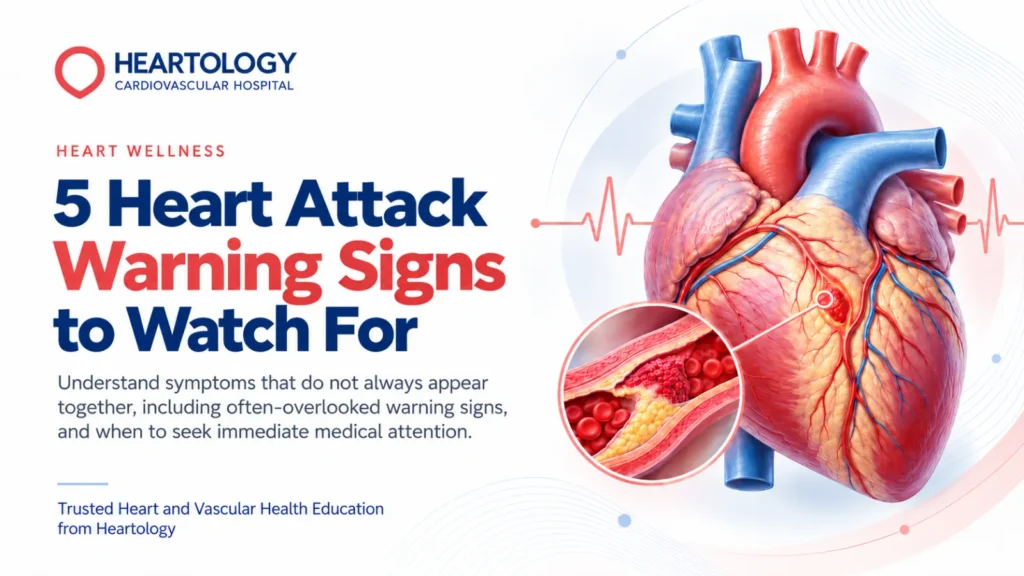
Quick answer
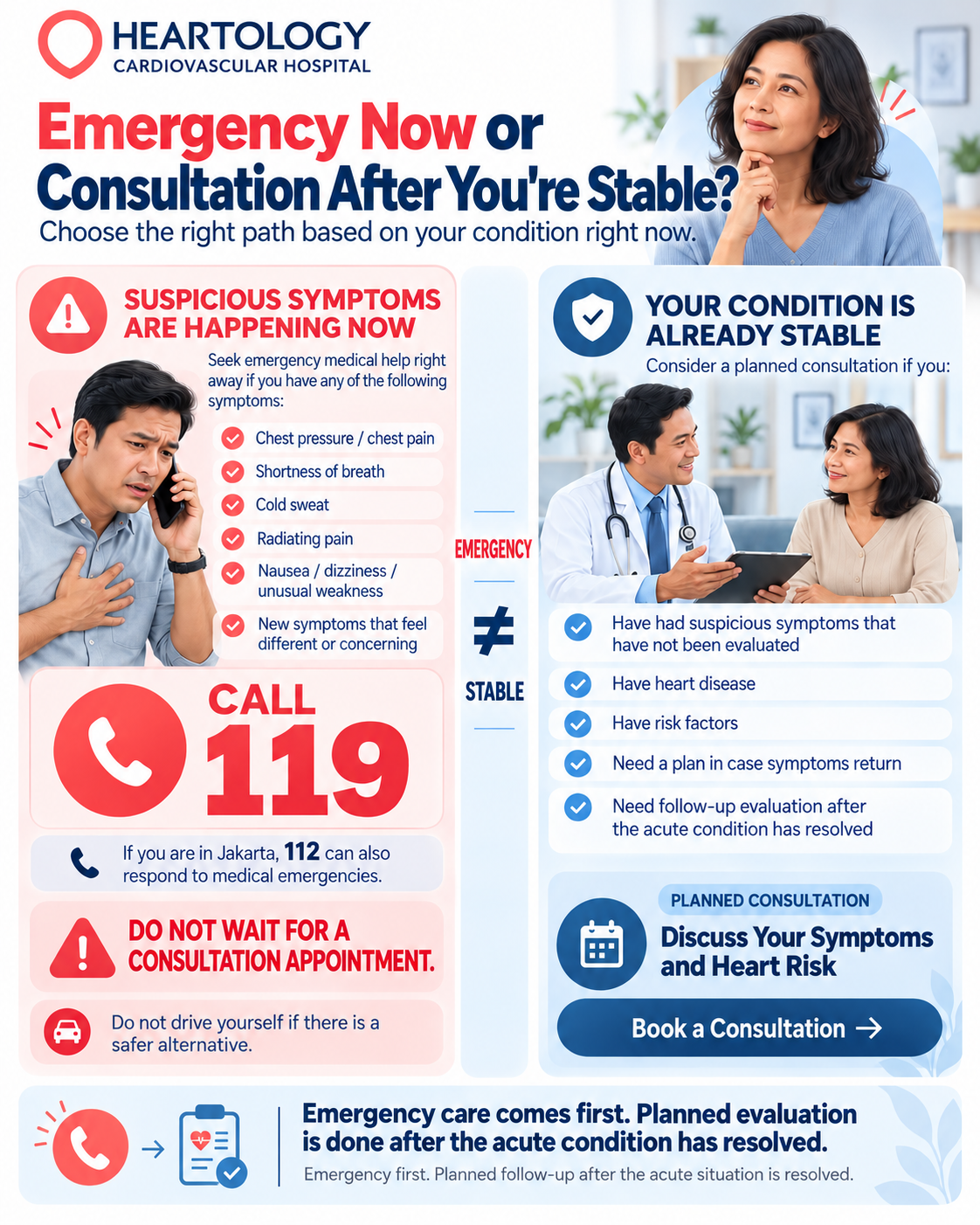
If you experience symptoms of a possible heart attack while alone, immediately call Indonesia's medical emergency number, 119, or 112 if you are in Jakarta. Stop all physical activity, do not drive yourself, and follow the emergency operator's instructions. Never delay seeking medical assistance to try medications or self-administered techniques.
See sourcesCertain Signs May Need Urgent Help.
If symptoms are severe or come on suddenly, go to the nearest emergency department right away or call Heart Attack Center 1500 258. Do not wait for a scheduled consultation.
Understanding what to do if you have a heart attack while alone does not mean trying to stop the heart attack yourself. If you experience chest pain or pressure, shortness of breath, cold sweats, or other concerning symptoms, the priority is to obtain emergency medical assistance as quickly as possible.
The situation can understandably be confusing. Should you wait a few minutes? Call a family member? Take medication? Or go to the hospital on your own? However, you do not need to confirm that your symptoms are definitely caused by a heart attack before seeking help. Heart attack symptoms can appear suddenly, develop gradually, feel mild, or come and go.
The safest course of action is therefore to call 119, Indonesia’s emergency medical service, stop your activities, and follow the emergency dispatcher’s instructions. This article explains what to do, which warning signs should never be ignored, how to approach aspirin use, why cough CPR is not recommended, and how to prepare if you frequently spend time alone.
Indonesia’s Ministry of Health states that the 119 emergency medical service can be accessed from all regencies and cities throughout Indonesia. Calls are received by the 119 call center, after which emergency needs are handled by the local Public Safety Center (PSC). The 119 service can also be accessed through the Medical Emergency feature in the SATUSEHAT Mobile application.
Emergency Steps to Take When You Are Alone
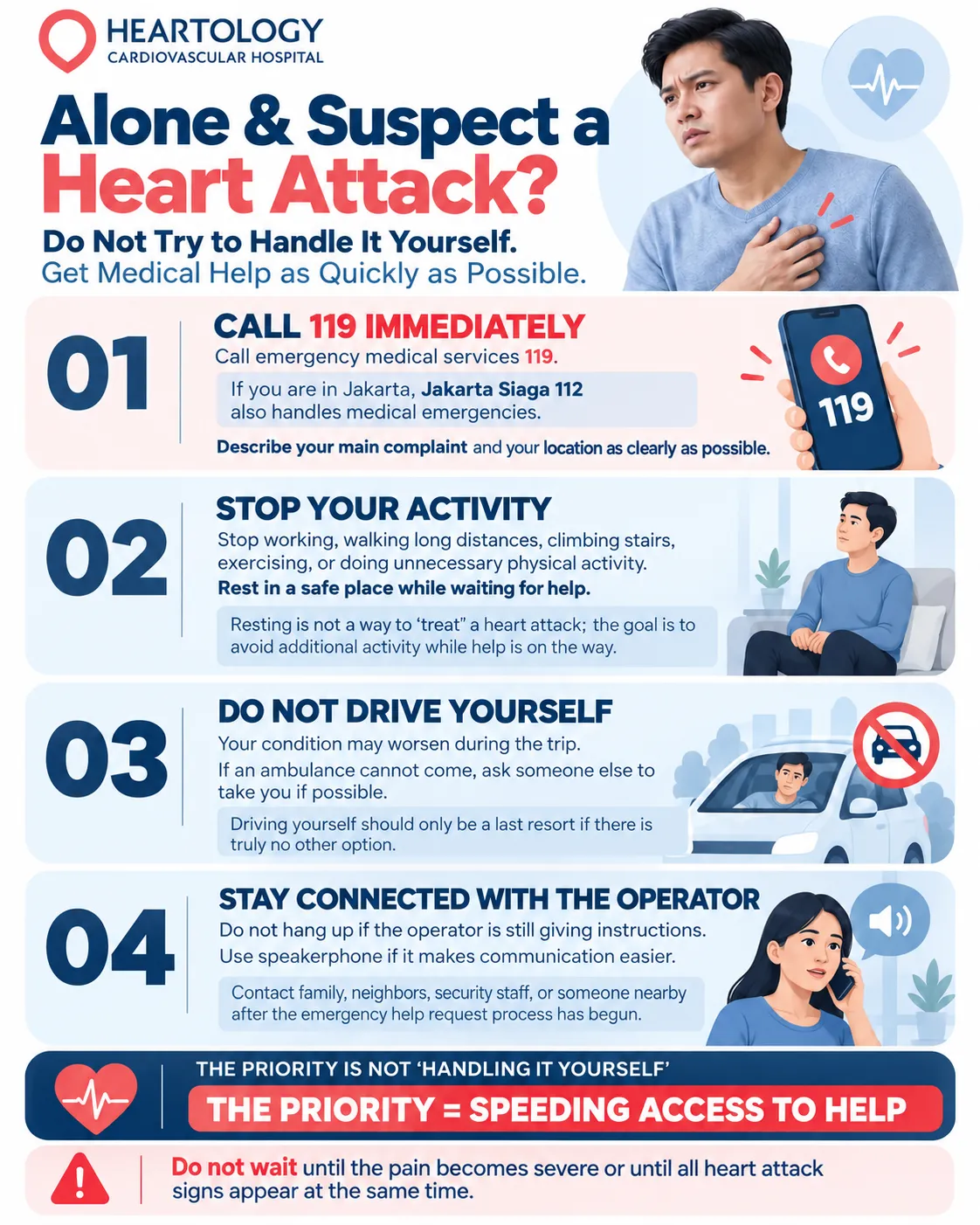
If you suspect you are having a heart attack while alone, call 119 first, stop your activities, and do not drive yourself to the hospital. First aid guidelines from the American Heart Association (AHA) and the American Red Cross recommend activating emergency medical services for adults experiencing acute chest pain so that transportation and medical assessment can begin as quickly as possible.
1. Call Emergency Services Immediately
Call the emergency medical service at 119 immediately. Briefly explain your symptoms and provide your location.
If you are in Jakarta, 112 is an integrated emergency hotline that also handles medical emergencies. Jakarta Siaga 112 operates 24 hours a day and is free to call.
When speaking with the dispatcher:
- Describe your main symptoms.
- Provide your location as clearly as possible.
- Answer the dispatcher’s questions.
- Follow the instructions given.
- Use your phone’s speakerphone function if it makes communication easier.
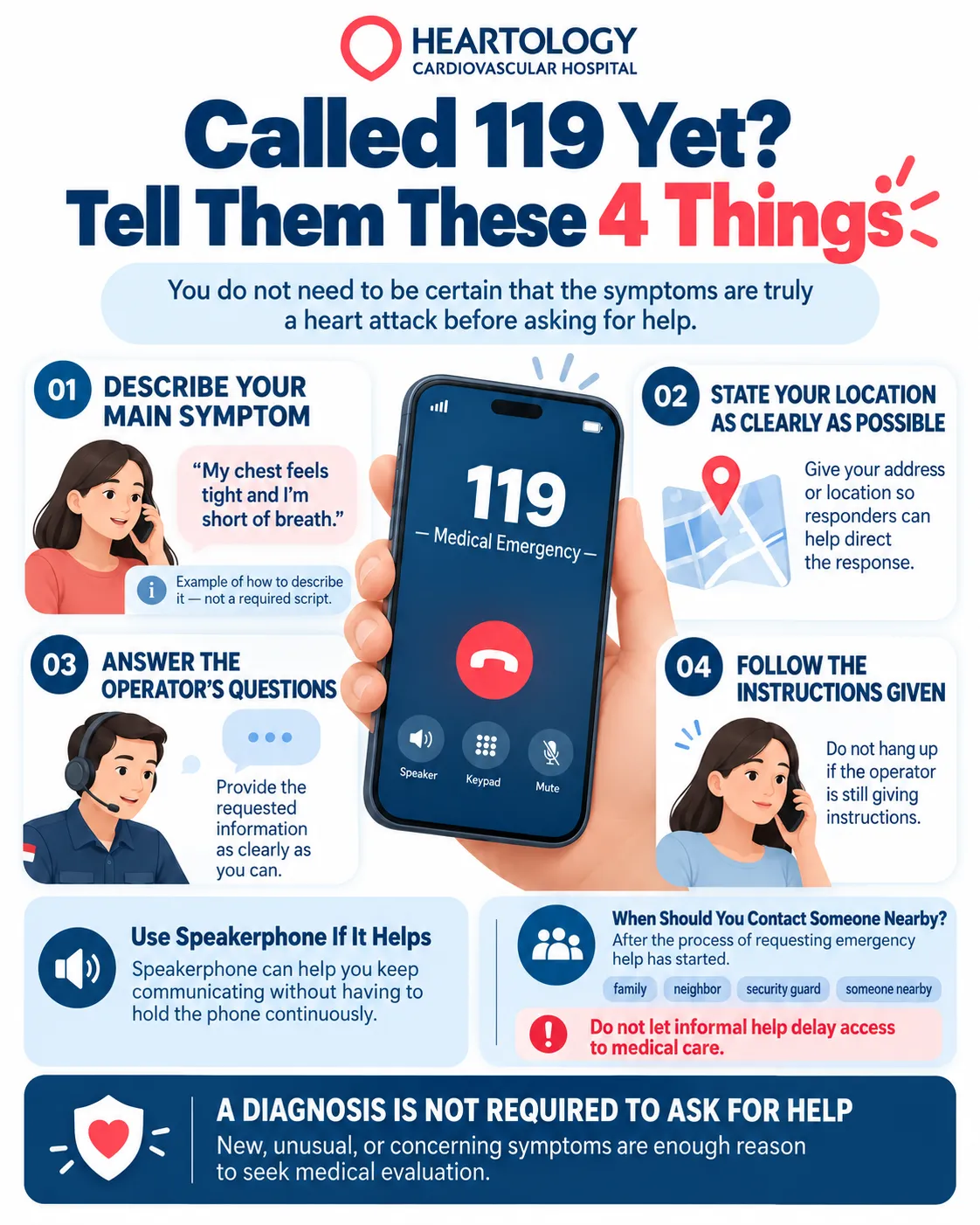
Do not wait until the pain becomes extremely severe or until all the warning signs of a heart attack appear together.
2. Stop Your Activities
Stop working, walking long distances, climbing stairs, exercising, or engaging in any other unnecessary physical activity.
Then rest in a safe place while waiting for help. The purpose is not to “treat” a heart attack through rest, but to avoid additional physical exertion while your condition remains uncertain and emergency assistance is on the way.
3. Do Not Drive Yourself
Do not drive yourself to the hospital if safer alternatives are available.
Your condition could deteriorate during the journey. Emergency medical personnel, on the other hand, can begin assessing your condition and providing assistance before you reach the hospital.
If an ambulance genuinely cannot reach you, ask someone else to take you to a healthcare facility. Driving yourself should only be considered when no other option is available.
4. Stay Connected With Emergency Personnel
Do not end the call while the dispatcher is still providing instructions.
If you need to notify family members, neighbors, security personnel, or someone nearby, do so after you have initiated the emergency assistance process. Seeking informal help should never delay access to emergency medical services.
What If You Are Unsure About Your Symptoms?
You do not have to determine on your own whether your symptoms are actually caused by a heart problem. If they are new, unusual, or concerning, uncertainty is a reason to seek medical evaluation rather than wait.
The 2024 guidelines from the Indonesian Heart Association (PERKI) explain that acute coronary syndrome is assessed using a combination of clinical symptoms or signs, electrocardiogram findings, and cardiac biomarkers such as troponin.
In other words, the sensations a patient experiences are not always sufficient on their own to confirm or rule out a heart attack.
Symptoms That Should Be Taken Seriously
Heart attack symptoms may include:
- Pressure, heaviness, fullness, squeezing, pain, or discomfort in the chest.
- Discomfort spreading to one or both arms, shoulders, back, neck, jaw, or upper abdomen.
- Shortness of breath, with or without chest pain.
- Cold sweats.
- Nausea or vomiting.
- Dizziness or lightheadedness.
- Unusual fatigue or weakness.
These symptoms do not have to appear together. Furthermore, pain that is not particularly severe does not necessarily mean the underlying cause is minor.
A Heart Attack Does Not Always Cause Severe Symptoms
A heart attack does not always resemble a movie scene in which someone suddenly clutches their chest and collapses.
Some heart attacks do begin suddenly. Others start gradually, with mild discomfort or symptoms that temporarily subside before returning. In some women, older adults, and people with diabetes, symptoms may also be less typical or may not be dominated by chest pain.
Therefore, being able to speak, stand, or finish your work does not prove that your condition is safe.
If you are accustomed to postponing medical evaluations because of a busy schedule, do not use your ability to continue working as a measure of how serious your condition may be.
Heart Attack or GERD?
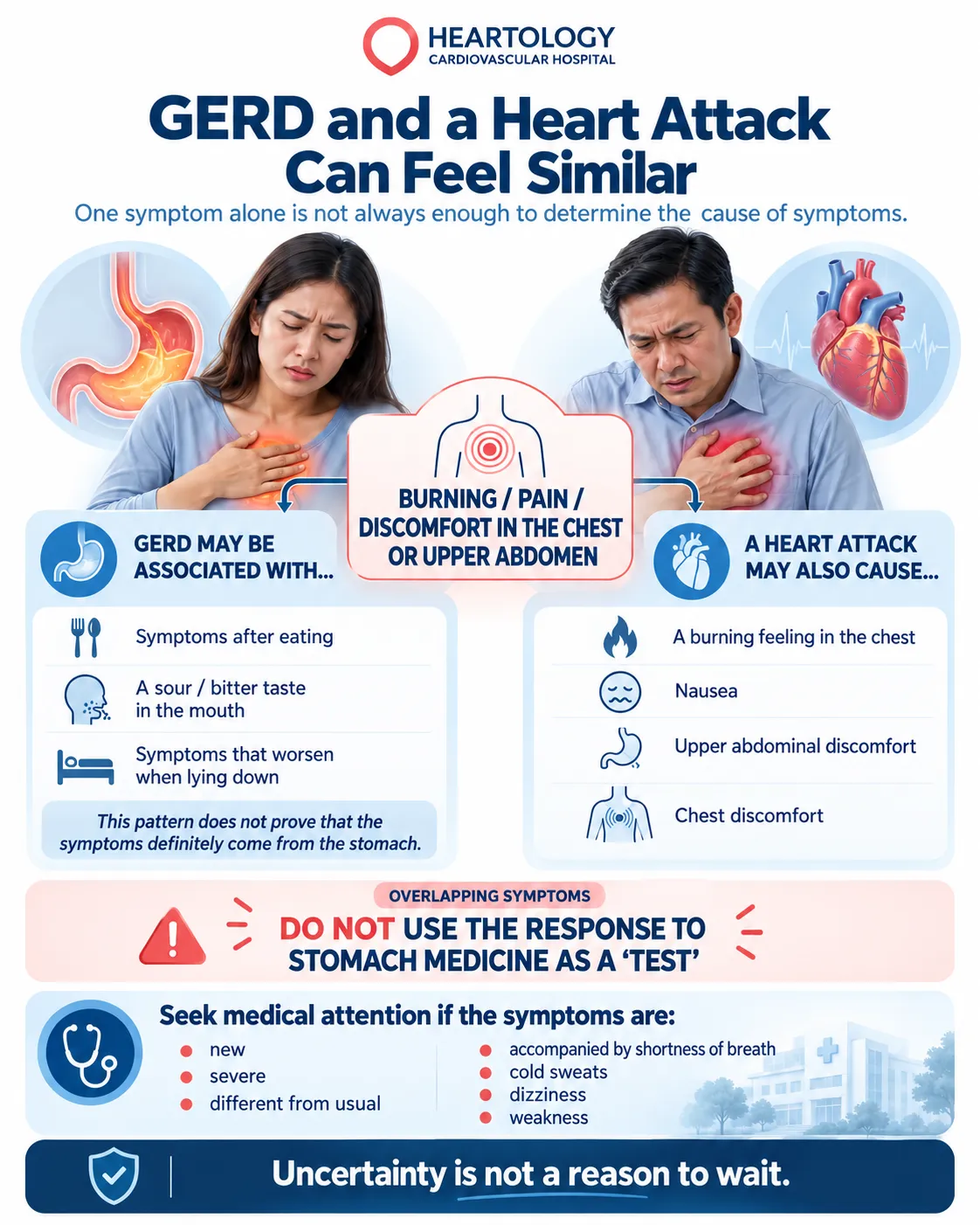
Gastroesophageal reflux disease (GERD) and a heart attack can both cause discomfort in the chest or upper abdomen. It is not always possible to distinguish safely between them based solely on how the symptoms feel at home.
GERD is more often associated with patterns such as discomfort after eating, a sour or bitter taste in the mouth, or symptoms that worsen when lying down. However, a heart attack can also cause a burning sensation, nausea, or upper abdominal discomfort. Therefore, no single characteristic is enough to establish the cause.
Also, do not use your response to acid reflux medication as a “test” to rule out a heart problem. If your symptoms are new, severe, different from usual, or accompanied by shortness of breath, cold sweats, dizziness, or weakness, seek medical attention.
Should You Take Aspirin If You Suspect a Heart Attack?
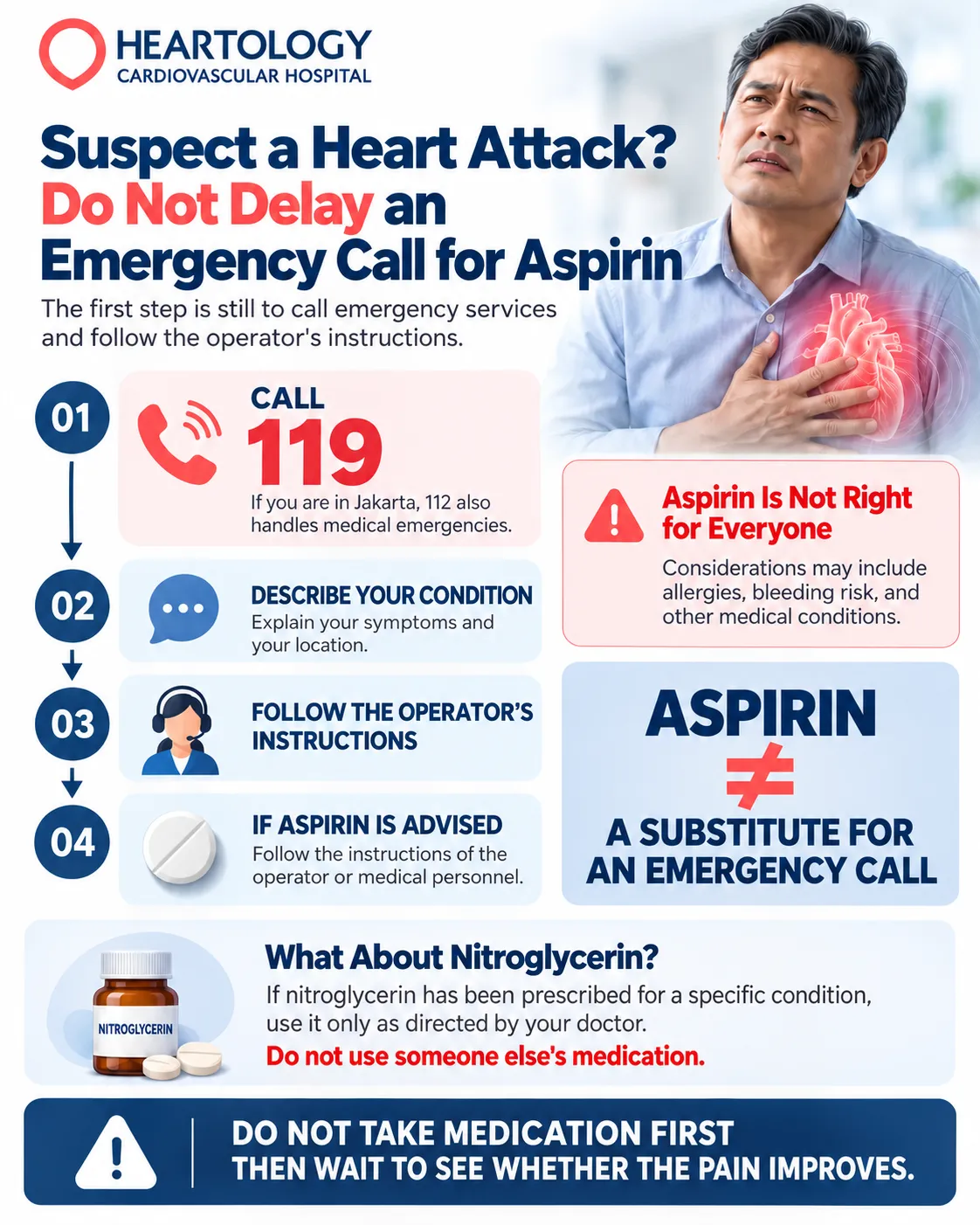
Do not delay calling emergency services to take aspirin. Contact the emergency medical service at 119 first.
The 2024 first aid guidelines from the AHA and the American Red Cross state that aspirin may be considered in certain circumstances for conscious adults experiencing acute chest pain that is not caused by an injury. However, if you are alone, the first step remains contacting emergency services and following the instructions of the dispatcher or healthcare professionals.
Aspirin is not appropriate for everyone. The AHA emphasizes that someone experiencing warning signs of a heart attack should not take aspirin first and then wait to see whether the pain improves. If the dispatcher or medical personnel advise you to take aspirin, follow their instructions.
Call 119 → Explain your condition → Follow the dispatcher’s instructions
If you have nitroglycerin that has been specifically prescribed for a medical condition, use it only as directed by your doctor. Do not take medication prescribed to someone else.
What You Should Avoid
When people panic, they may be tempted to try anything that sounds quick and simple. However, some actions can delay the medical care they need.
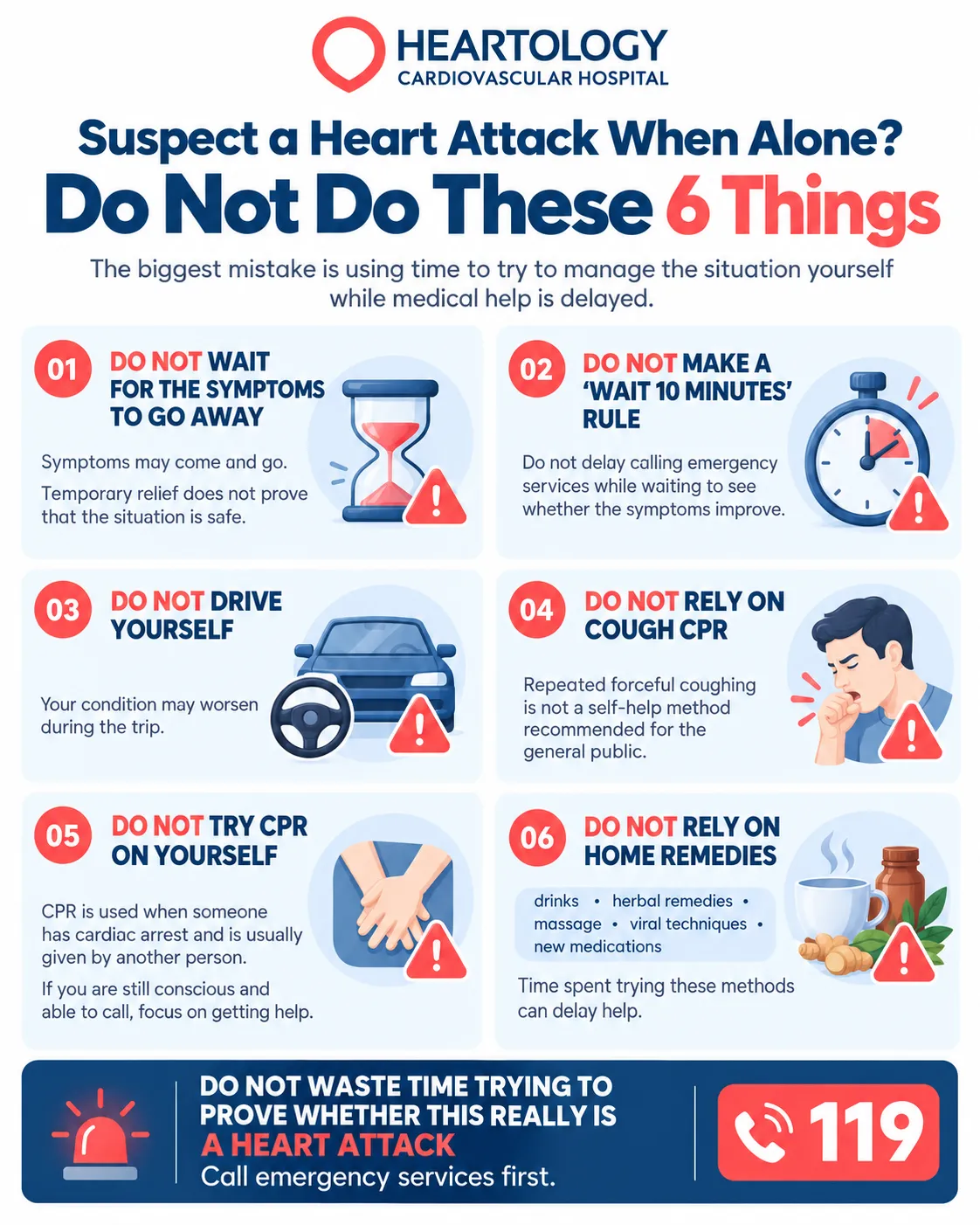
Do Not Wait for Symptoms to Disappear
Heart attack symptoms can come and go. Therefore, a temporary improvement in pain does not prove that your condition is safe.
Do not create your own waiting rule, such as “wait 10 minutes first,” before seeking help.
Do Not Drive Yourself to the Hospital
Even if the hospital seems close, your symptoms could worsen during the journey. Emergency medical services or assistance from another person remain safer options.
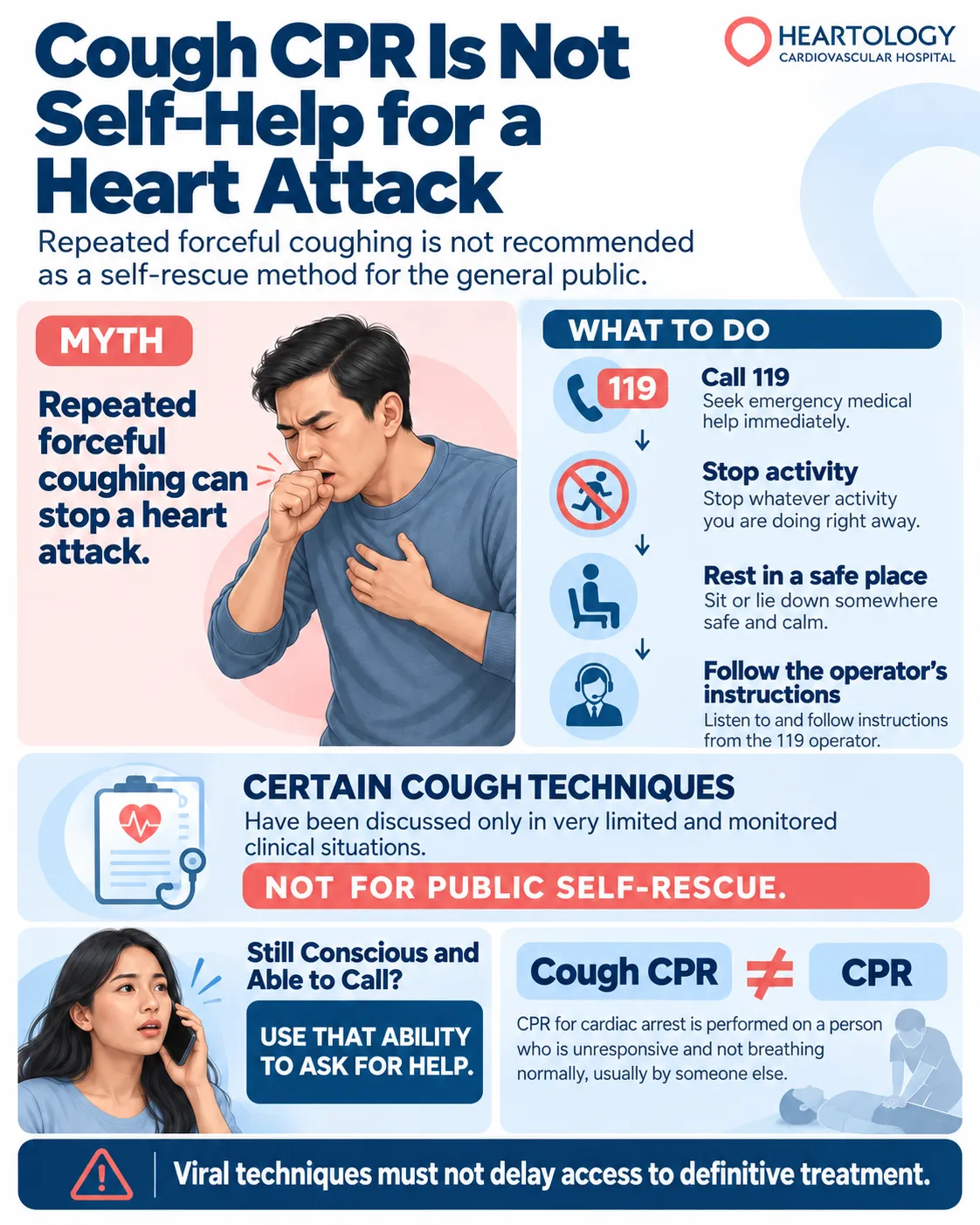
Do Not Rely on Cough CPR
Information circulating on social media sometimes claims that repeatedly coughing forcefully can “save yourself” during a heart attack.
This claim is misleading. The AHA does not recommend cough CPR as a self-help technique for the general public. Certain coughing techniques have only been discussed in very limited, monitored clinical circumstances and must never delay definitive treatment.
Do Not Attempt to Perform CPR on Yourself
Cardiopulmonary resuscitation (CPR) is used when someone experiences cardiac arrest, typically becoming unresponsive and either not breathing normally or only gasping for air. In that situation, CPR is performed by another person.
If you are still conscious and able to make a phone call while experiencing symptoms of a heart attack, focus on obtaining medical assistance.
Do Not Rely on Home Remedies
Certain drinks, massage techniques, herbal remedies, or viral internet techniques are not substitutes for medical treatment for a heart attack.
The concern is not simply whether these methods work. The time spent trying them can delay an emergency call.
Heart Attack vs. Cardiac Arrest
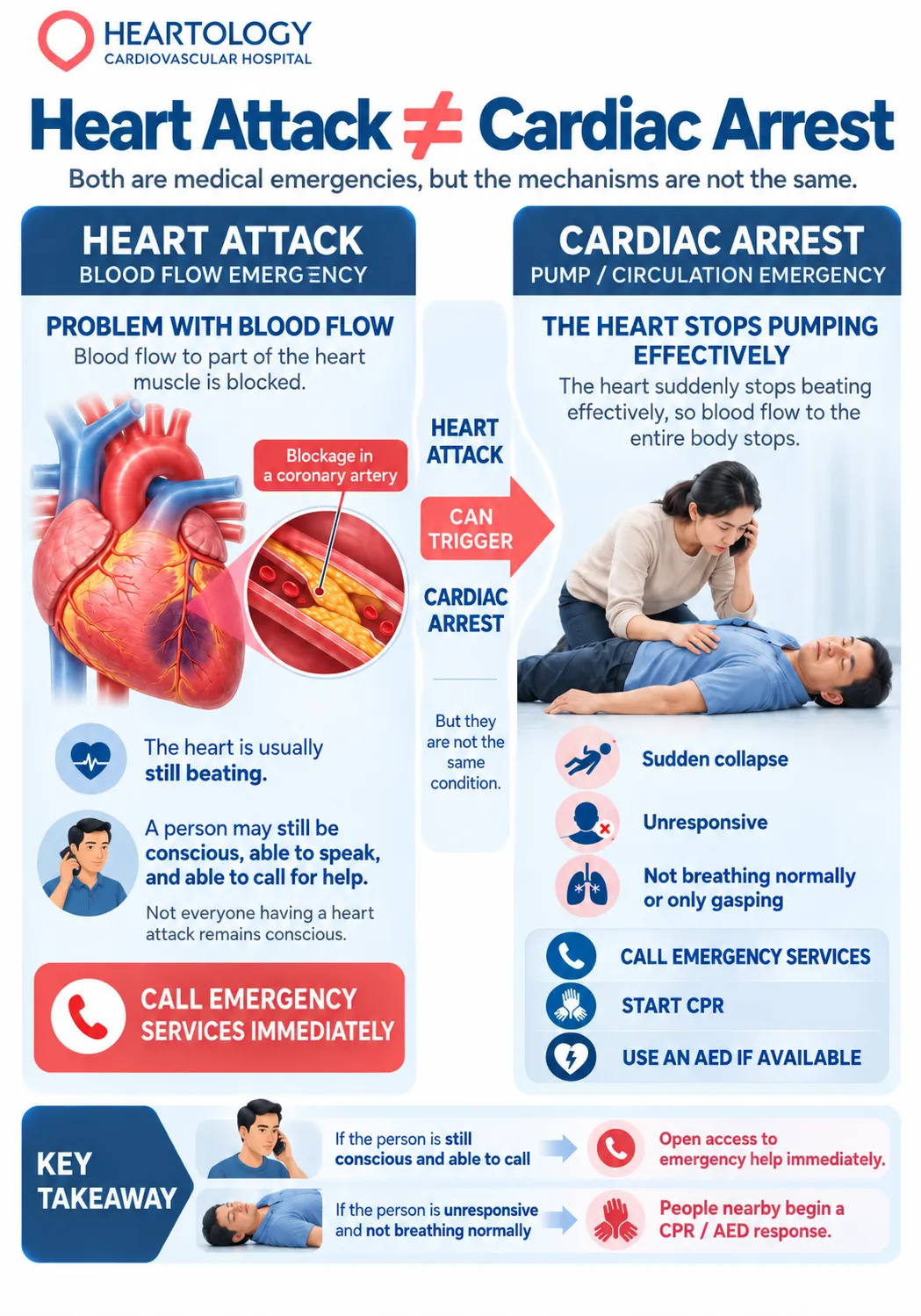
A heart attack is a problem involving blood flow, whereas cardiac arrest occurs when the heart suddenly stops pumping blood effectively. Both are medical emergencies, but they are not the same condition.
During a heart attack, blood flow to part of the heart muscle is obstructed. The heart generally continues beating.
In contrast, someone experiencing cardiac arrest will usually:
- Suddenly collapse.
- Become unresponsive.
- Stop breathing normally or only gasp for air.
If someone experiences cardiac arrest, call emergency services immediately, begin CPR, and use an automated external defibrillator (AED) if available.
A heart attack can trigger cardiac arrest, but the two conditions are not the same.
While Waiting for Medical Assistance
After contacting emergency services, focus on staying safe and following the instructions of emergency personnel.
In practice, knowing what to do if you have a heart attack while alone centers on obtaining medical assistance as quickly as possible, rather than attempting to treat yourself.
While waiting for help:
- Stop your activities.
- Rest in a safe place.
- Stay connected with the dispatcher if instructed.
- Do not drive yourself.
- Do not try new medications or home remedies.
- Notify someone nearby if doing so does not interfere with emergency assistance.
If you have prescribed heart medication, use it only according to the treatment plan previously provided by your doctor or the instructions of medical personnel.
Additionally, do not spend time trying to “prove” that your symptoms are actually caused by a heart problem. A medical evaluation is necessary to determine the cause.
How to Prepare If You Are Often Alone
If you live alone, frequently work by yourself, or often travel alone, having a simple emergency plan can help reduce confusion when an urgent situation arises.
Save Emergency Contact Numbers
Save the following numbers:
- 119: National medical emergency service.
- 112: Emergency service if you live or spend time in Jakarta.
- Contact numbers for one or two people close to you.
In addition to telephone access, Indonesia’s Ministry of Health provides access to 119 through the Medical Emergency feature in the SATUSEHAT Mobile application.
Keep Important Medical Information Accessible
Make sure the following information is easy to find:
- Medications you take regularly.
- Medication allergies.
- Known medical conditions.
- Family contact information.
- The name of your doctor or the healthcare facility where you receive regular care.
Having this information readily available can make communication easier when you need to explain your condition quickly.
Develop an Emergency Plan With Your Doctor
If you have heart disease or certain risk factors, discuss an emergency response plan before an emergency occurs.
Questions to discuss may include:
- Which symptoms should you watch for?
- When should you call emergency services?
- How should you use your prescribed medications?
- Whom should you contact?
- What should you do if symptoms appear while you are alone?
Preparing in this way is not intended to make you feel constantly anxious. Its purpose is to help you understand what steps to take if an urgent situation actually occurs.

Next Steps After the Emergency Has Been Managed
Once the emergency phase has been managed, further evaluation aims to identify the cause of the symptoms, determine whether acute coronary syndrome has occurred, and establish the next steps in treatment.
The 2024 PERKI guidelines define acute coronary syndrome as a spectrum of conditions involving changes in clinical symptoms or signs that may be accompanied by ECG changes and/or elevated cardiac troponin levels. The 2025 ACC/AHA guidelines also emphasize evaluation, acute treatment, and secondary prevention after the patient’s condition has stabilized.
If you have experienced chest pain, shortness of breath, cold sweats, or other concerning symptoms that have since subsided but have never been medically evaluated, do not simply assume the problem has resolved. A medical evaluation can help determine whether further testing is necessary.
If you are currently experiencing symptoms suggestive of a heart attack, do not wait for a scheduled consultation. Contact emergency medical services first.
Kesimpulan
Serangan jantung tidak selalu datang dengan nyeri dada yang sangat hebat. Gejalanya dapat samar, berkembang perlahan, atau sempat mereda. Karena itu, bila keluhan mencurigakan sedang terjadi, jangan menunggu sampai Anda yakin mengenai diagnosisnya.
Hubungi layanan darurat medis 119 atau Jakarta Siaga 112 bila berada di Jakarta, hentikan aktivitas, dan ikuti arahan petugas. Jangan mengemudi sendiri, jangan menunda meminta bantuan demi minum aspirin atau mencoba pengobatan rumahan, dan jangan mengandalkan cough CPR.
Pada akhirnya, memahami cara mengatasi serangan jantung saat sendirian berarti mengetahui kapan harus berhenti mencoba menilai kondisi sendiri dan segera membuka akses ke pertolongan medis. Setelah keadaan darurat teratasi, evaluasi dokter membantu menentukan penyebab keluhan, faktor risiko, serta langkah lanjutan yang sesuai.
Get Urgent Help First.
If symptoms are severe or come on suddenly, do not wait for a scheduled consultation. Go to the nearest emergency department right away.
The information on this page is for educational purposes and does not replace medical consultation, diagnosis, or treatment. For any health concerns, please consult a doctor directly.Doctors Related to This Topic

Dr. dr. Dafsah A. Juzar, Sp.JP(K)
Interventional Cardiology
Coronary Intervention Procedures +1 center
Clinical focusComplex Coronary Intervention · Cardiac Catheterization
View Profile
Dr. dr. Faris Basalamah, Sp.JP(K)
Interventional Cardiology
Coronary Intervention Procedures +1 center
Clinical focusComplex Coronary Intervention · Cardiac Electrophysiology
View Profile
Dr. dr. Jajang Sinardja, Sp.JP(K)
Interventional Cardiology
Coronary Intervention Procedures
Clinical focusAcute Coronary Syndrome · Primary Coronary Intervention
View ProfileFrequently Asked Questions.
The following frequently asked questions address common concerns about experiencing or preparing for a heart attack while alone. The answers focus on essential emergency steps, aspirin use, the risks of driving yourself to the hospital, the difference between a heart attack and cardiac arrest, and actions to avoid so that potentially lifesaving medical treatment is not delayed.
What Should You Do First If You Are Alone?
Call the emergency medical service at 119 first. If you are in Jakarta, 112 also handles medical emergencies. Then stop your activities and follow the dispatcher's instructions.
Should You Call 119 or 112?
For medical emergencies nationwide, the 119 emergency medical service can be used in all regencies and cities throughout Indonesia. If you are in Jakarta, 112 is an integrated emergency service that also handles medical emergencies.
Can You Drive Yourself to the Hospital?
It is best not to. If emergency medical services cannot reach you, ask someone else to take you to the hospital. Driving yourself should only be a last resort when no other alternatives are available.
Should You Take Aspirin?
Do not delay calling emergency services to take aspirin. Make the emergency call first. If the dispatcher or medical personnel advise you to take aspirin, follow their instructions. Aspirin is not appropriate for everyone.
Can Forceful Coughing Help?
Not as a self-help method for a heart attack. The AHA does not recommend cough CPR for the general public.
Can You Perform CPR on Yourself?
Not in the sense of CPR used to treat cardiac arrest. Someone experiencing cardiac arrest is usually unresponsive and not breathing normally, so CPR must be performed by another person.
Does a Heart Attack Always Cause Chest Pain?
No. Although chest pain or discomfort is common, some people experience other symptoms, such as shortness of breath, nausea, fatigue, or pain in the jaw, back, or arms.
Can a Heart Attack Feel Like GERD?
Yes. Both conditions can cause discomfort in the chest or upper abdomen. Because their symptoms may overlap, new or concerning discomfort should not automatically be attributed to GERD.
Should You Be Concerned About Mild Chest Pain?
Yes. A heart attack can begin with mild symptoms. The intensity of the pain alone is not enough to determine whether the condition is safe.
Do You Still Need Medical Attention If the Symptoms Disappear?
Yes, in certain circumstances. Heart attack symptoms can come and go. If you have experienced a concerning episode that has not been evaluated, consult a healthcare professional. If the symptoms return or are currently occurring, contact emergency services.
What Should You Do While Waiting for an Ambulance?
Stop your activities, rest in a safe place, follow the dispatcher's instructions, and do not drive yourself or try anything that could delay medical assistance.
What If You Live Alone?
Save emergency contact numbers, the contact details of someone close to you, and lists of your medications and allergies. If you have heart disease or certain risk factors, develop an emergency response plan with your doctor.
Sources and Transparency.
Reviewer
Translated from the Indonesian edition medically reviewed by Dr. dr. Jajang Sinardja, Sp.JP(K), Cardiology and Vascular Medicine.
Sources as cited in the Indonesian edition.
- Kementerian Kesehatan Republik Indonesia. (2024). Akses Darurat Medis 119 Kini Bisa Melalui SATUSEHAT Mobile. Kementerian Kesehatan RI. Artikel resmi Kemenkes diterbitkan 5 Oktober 2024 dan menjelaskan akses nasional 119, mekanisme call center/PSC, serta akses melalui SATUSEHAT Mobile.
- Perhimpunan Dokter Spesialis Kardiovaskular Indonesia (PERKI). (2024). Pedoman Tata Laksana Sindrom Koroner Akut 2024. Indonesian Heart Association.
- Hewett Brumberg EK, Douma MJ, Alibertis K, et al.; on behalf of the American Heart Association and American Red Cross. (2024). 2024 American Heart Association and American Red Cross Guidelines for First Aid. Circulation, 150, e519–e579. doi:10.1161/CIR.0000000000001281.
- Rao SV, O’Donoghue ML, Ruel M, et al. (2025). 2025 ACC/AHA/ACEP/NAEMSP/SCAI Guideline for the Management of Patients With Acute Coronary Syndromes: A Report of the American College of Cardiology/American Heart Association Joint Committee on Clinical Practice Guidelines. Journal of the American College of Cardiology, 85(22), 2135–2237. doi:10.1016/j.jacc.2024.11.009.
- American Heart Association. (2024). Warning Signs of a Heart Attack. American Heart Association.
- American Heart Association. (2025). Aspirin and Dual Antiplatelet Therapy. American Heart Association.
- American Heart Association. (2026). What Is Cardiac Arrest? American Heart Association.
- Armas GC. (2026). Why ‘cough CPR’ doesn’t work (and what to do instead). American Heart Association News.
- Pemerintah Provinsi DKI Jakarta. (n.d.). Jakarta Siaga 112. Pemerintah Provinsi DKI Jakarta.
The information on this page is for educational purposes and does not replace medical consultation, diagnosis, or treatment. For any health concerns, please consult a doctor directly.
If you find information that needs clarifying, let us know through our Contact Us page.